AI Designs, Ruđer Tests: The Search for New Therapeutic Molecules from the Sea
Could the toxic molecules that marine organisms use to defend themselves against predators or capture prey provide the starting point for new therapies? This is the question scientists and experts working on ToxiCode are seeking to answer. The project brings together marine biodiversity research, artificial intelligence and experimental chemistry. Coordinated by the University of Zagreb's Faculty of Food Technology and Biotechnology (FFTB), which is leading the development of AI models in collaboration with technology partner In Silico d.o.o., the project also places the Ruđer Bošković Institute (RBI) at the heart of its experimental research. RBI scientists will synthesise new peptides designed with the help of artificial intelligence and test their biological activity in the laboratory.
Animal venoms contain complex mixtures of biologically active molecules, including peptides – short chains of amino acids capable of interacting with biological targets in highly specific ways. The very properties that make some of these compounds toxic also make them attractive candidates for medical research. There is already a precedent: ziconotide, a drug used to treat severe chronic pain, is a synthetic version of a peptide originally discovered in the venom of a marine cone snail.
Yet natural venoms remain a vast and largely unexplored resource. Discovering biologically active compounds using conventional methods involves time-consuming sample collection, extensive analysis and numerous laboratory experiments. ToxiCode aims to accelerate this process by training artificial intelligence models on existing and newly collected data to recognise relationships between peptide structure and biological activity, and then use these insights to propose new molecules with desired properties.
“Over millions of years of evolution, nature has developed molecules whose potential we are only beginning to uncover. Through ToxiCode, we want to harness that knowledge, using artificial intelligence to develop new molecules with potential medical applications. Our collaboration with scientists at the Ruđer Bošković Institute is essential to this effort. They will synthesise the molecules designed computationally and test their biological activity in the laboratory,” explains Professor Antonio Starčević, ToxiCode Project Coordinator.
From Computer Models to Real Molecules
At the centre of the project is the development of an advanced computational platform combining large language models adapted to analyse protein sequences with graph neural networks. Development of this hybrid AI architecture is led by the research team at the Faculty of Food Technology and Biotechnology, working alongside In Silico d.o.o., which is responsible for scaling up the computational system and developing its software infrastructure.
The platform will be designed to predict interactions between peptides and biological targets and generate new molecular candidates, while taking into account their potential efficacy, selectivity and toxicity.
It is at the crucial transition from computational prediction to laboratory experimentation that the Ruđer Bošković Institute takes centre stage.
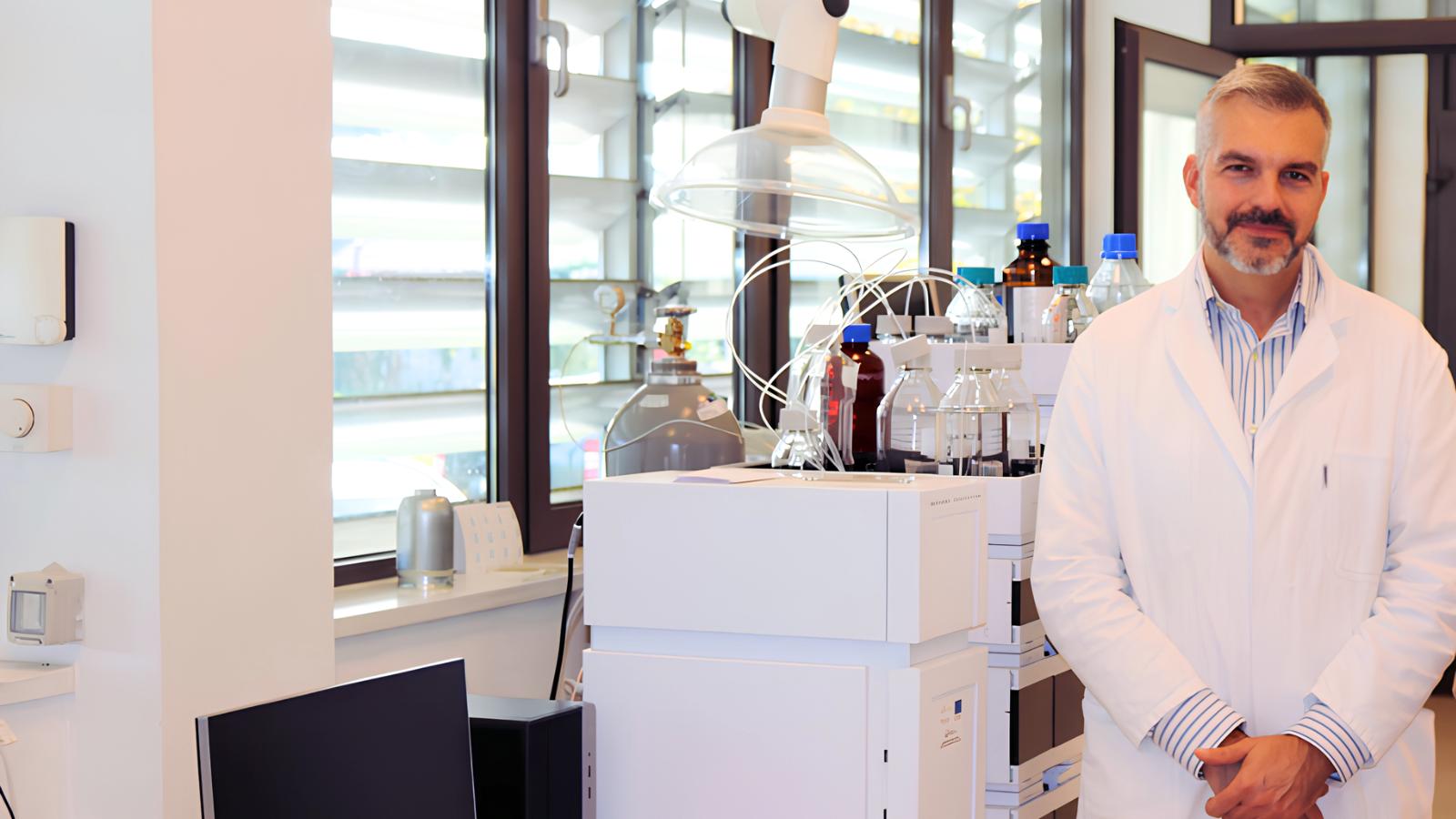
Led by Dr Marin Roje, Senior Research Scientist and Head of the Laboratory for Chiral Technologies, the RBI team will prepare selected peptides using solid-phase peptide synthesis (SPPS). Their properties will then be assessed through appropriate enzyme-based and cell-based assays to determine whether the experimental results match the AI models' predictions.
“Artificial intelligence can propose thousands of molecules that, according to computational models, have promising biological properties. But it is only when we synthesise a molecule and test its activity that we can begin to assess its true potential. This is one of our team's key responsibilities at the Ruđer Bošković Institute.
“We want to establish whether we can build on the chemical solutions developed by nature to design new peptides with beneficial biological properties, while achieving the greatest possible selectivity and the lowest possible toxicity. There is still a long road from such findings to an approved medicine, but this kind of experimental validation is where the serious development of a therapeutic candidate begins,” explains Dr Marin Roje.
Adriatic Biodiversity as a Source of Scientific Data
One of the project's distinctive strengths lies in combining advanced digital technologies with the rich biodiversity of the Adriatic Sea.
Researchers will investigate poorly characterised peptides found in the venoms of marine organisms, particularly cnidarians, a group that includes jellyfish and related species.
The research will draw on publicly available scientific databases, existing proteomic datasets and new data generated through the analysis of marine organism samples. The project also includes scientific collaboration with King's College London, whose research expertise and collections of data on cnidarian venoms will provide an important foundation for developing the computational model.
Over the course of the project, the team aims to generate at least 2,000 molecular candidates computationally, before selecting the most promising peptides for synthesis and experimental testing.
The ultimate goal is to develop a functional, validated platform and identify molecules that could provide a foundation for further preclinical development.
Reducing the Need for Sampling from Marine Wildlife
Sustainability is another important aspect of ToxiCode.
Rather than relying on extensive venom collection from animal populations, researchers aim to develop a system that uses data derived from nature as the basis for computational molecular design, with only selected candidates subsequently synthesised in the laboratory.
This approach seeks to reduce the need for animal-derived samples and large numbers of experiments, while applying the principles of responsible research and biodiversity conservation.
ToxiCode is being implemented under the Challenge Programme (DIGIT.2.1.02), part of the Digital, Innovation and Green Technology (DIGIT) programme, jointly implemented by Croatia's Ministry of Science, Education and Youth and the Croatian Science Foundation.
The project is financed through a loan from the International Bank for Reconstruction and Development (IBRD), part of the World Bank Group.

Contact Us
More info