Could Antimicrobial Peptides Help Fight Acne? RBI Researchers Seek Answers
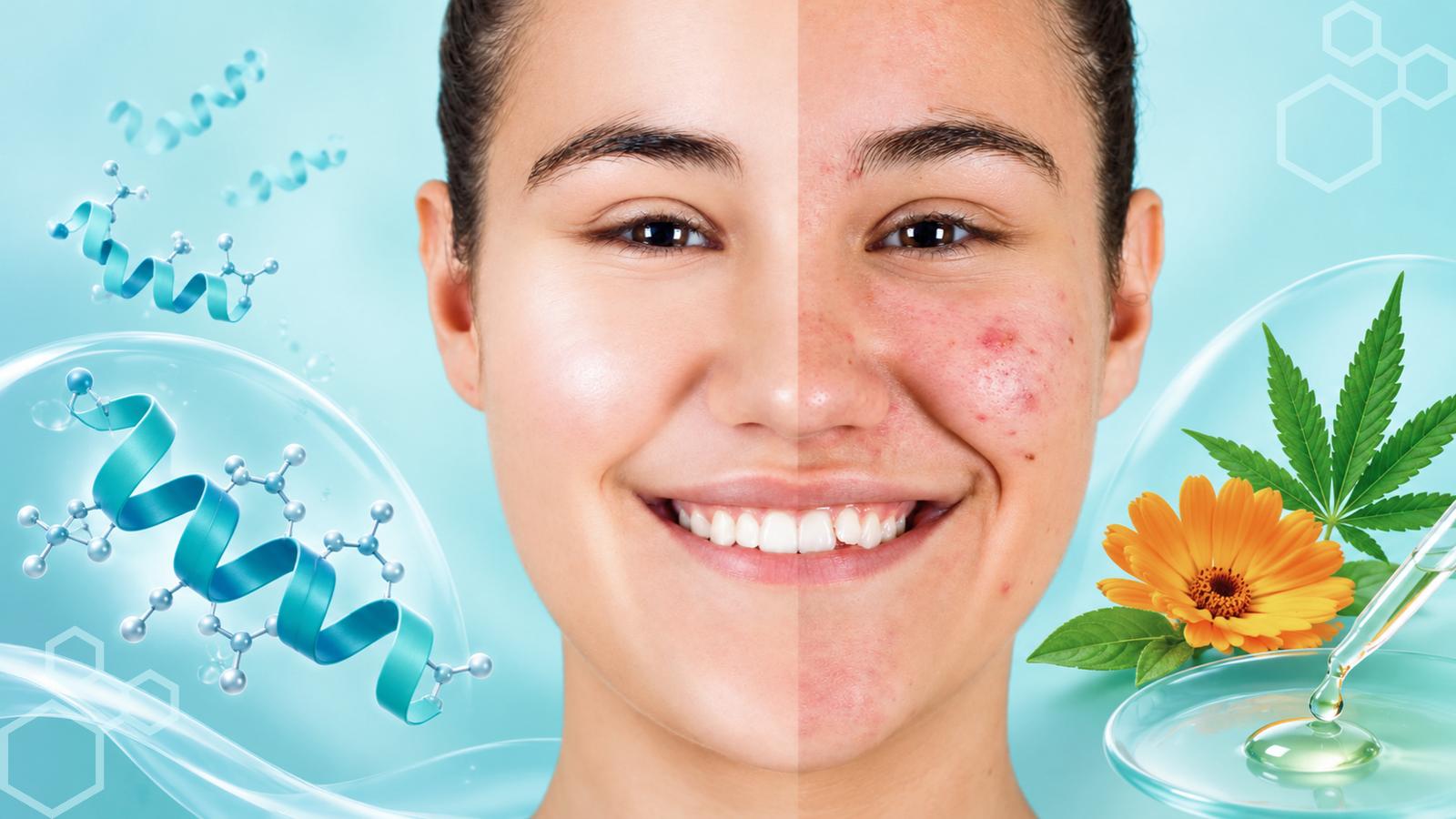
Acne affects millions of adolescents and adults, and for many, it is a persistent condition that can cause scarring and affect quality of life. Although effective treatments are available, some can irritate the skin, while the use of antibiotics raises concerns about antimicrobial resistance. Finding new, safe and effective solutions therefore remains an important research challenge. Scientists at the Ruđer Bošković Institute (RBI) will be tackling this challenge as part of InPAcT, a new research project worth nearly €1.1 million, investigating the potential of antimicrobial peptides in developing innovative formulations for acne-prone skin.
Acne is a complex inflammatory skin condition involving several factors, from excess sebum production and blocked hair follicles to changes in bacterial activity and inflammatory processes. Developing new formulations therefore requires an understanding of how biologically active ingredients interact, how they affect microorganisms and what impact they have on the skin itself.
This intersection of chemistry and biology lies at the heart of InPAcT – Innovative Product for Acne Treatment, a research project coordinated by the University of Split that brings together research teams from the Ruđer Bošković Institute and the Faculty of Food Technology Osijek, alongside industrial partner PROTECO.
The project aims to investigate whether combining natural hemp and calendula extracts with antimicrobial peptides could lead to a new generation of dermocosmetic formulations, with their safety and efficacy assessed through rigorous scientific testing.
Small Molecules, Big Potential: What Will RBI Researchers Investigate?
One of the project's main research areas will focus on antimicrobial peptides, small molecules made up of amino acids that can act against bacteria. They are particularly promising because their chemical structures can be modified, allowing scientists to enhance their antimicrobial activity and selectivity while minimising unwanted effects on human cells.
This is precisely the field in which researchers at RBI's Laboratory for Chiral Technologies, within the Division of Organic Chemistry and Biochemistry, specialise. Led by Dr Marin Roje, the team investigates the synthesis of biologically active molecules, studies their properties and develops antimicrobial peptides, including those inspired by naturally occurring compounds.
This expertise will be essential for investigating the peptide components of future formulations and understanding their potential use in combination with plant extracts. One of the main scientific challenges will be finding the right balance between targeting bacteria associated with acne and protecting healthy skin cells.
“Antimicrobial peptides offer exciting possibilities because we can modify their structures to influence their biological properties in a targeted way. The challenge is to identify molecules that are sufficiently effective against unwanted bacteria while remaining safe for skin cells. Through InPAcT, we will bring this expertise together with research into natural plant extracts to help develop new formulations with clearly defined, scientifically validated properties. Bringing fundamental research closer to practical applications is one of the most interesting aspects of this project,” explains Dr Marin Roje, who leads the project at RBI.

Foto: UNIST
From Laboratory Research to New Formulations
Alongside research into antimicrobial peptides, the project will involve extracting biologically active compounds from hemp and calendula using supercritical carbon dioxide (CO₂) extraction. This technique makes it possible to isolate specific plant compounds while reducing the need for conventional organic solvents.
“Interestingly, many organisms, including humans, are capable of producing antimicrobial peptides as part of their natural defence against pathogens. Our previous research has involved synthesising and evaluating the biological activity of various bioactive peptides, with peptides derived from marine organisms being of particular scientific interest,” says Dr Andreja Jakas, a member of the project team.
Researchers will investigate how the properties of these extracts can be harnessed in combination with antimicrobial peptides, and how such combinations affect biological systems relevant to acne-prone skin.
The safety and efficacy of the resulting formulations will be evaluated through in vitro and ex vivo testing, as well as advanced three-dimensional skin models. These models allow researchers to examine the effects of new ingredients in greater detail before considering their potential further application.
The project is expected to generate new knowledge about combining antimicrobial peptides with natural extracts and provide a scientific foundation for developing safe and effective dermocosmetic products.
Over €1 Million to Bring Science and Industry Together
InPAcT is led by Professor Igor Jerković of the University of Split and will be carried out at the University's Mediterranean Institute for Life Sciences (MedILS). With a total budget of €1,098,174.69, the project will run from 5 October 2026 to 5 October 2029.
The project was approved under the Collaborative Scientific Research call launched by the Ministry of Science, Education and Youth, with funding provided through Croatia's National Recovery and Resilience Plan.
By bringing together expertise in chemistry, biotechnology, natural product research and industrial development, InPAcT aims to bridge the gap between laboratory discoveries and practical applications. For RBI researchers, the project offers an opportunity to translate their work on antimicrobial molecules into the development of products that could one day provide new options for caring for acne-prone skin.
Contact Us
More info
Ministarstvo znanosti, obrazovanja i mladih