

David M. Smith confirmed for a third term as Director General of IRB
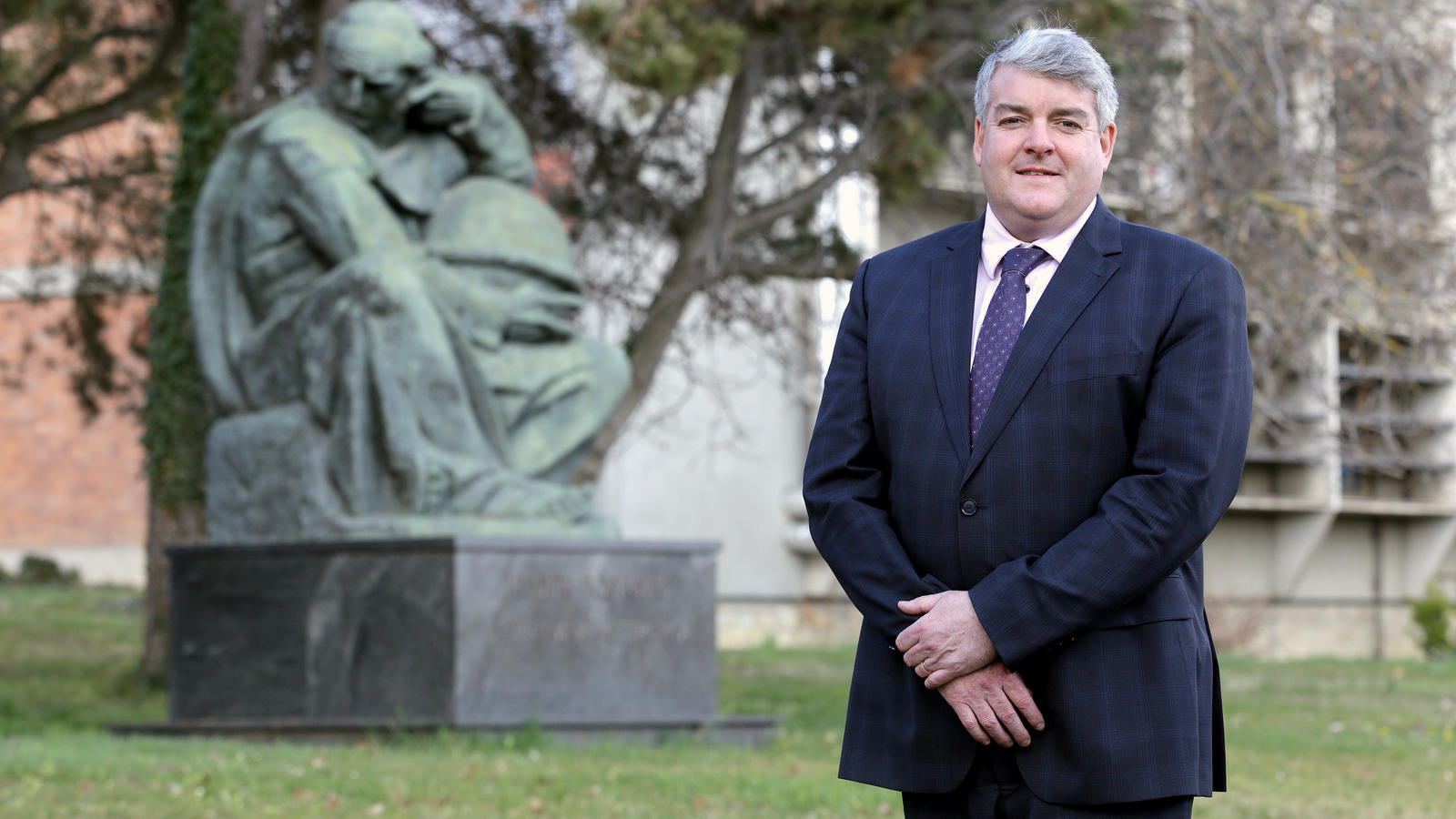
At a session held on 16 February 2026, the Board of Governors of the Ruđer Bošković Institute (IRB), following consideration of the positive opinion of the Selection Committee and the unanimous decision of the IRB Scientific Council, confirmed a new four-year term for Dr. David M. Smith as Director General of IRB. This confirms continuity in the Institute’s leadership during a period of intensive infrastructure modernisation, strengthened international partnerships, and further connection of science with the needs of the economy and society.
“I thank the Board of Governors and the Scientific Council of IRB for their trust, and especially the Institute’s employees for the support that has been decisive in recent years. In the eight years I have led IRB, we have learned that there is always a ‘next challenge’, and that there is no room for complacency. That is precisely why I continue to stand behind the approach I have called stability, alignment, and progress, aimed at ensuring solid foundations and an environment in which employees can focus as much as possible on their primary work, excellent science, and the development and transfer of knowledge to society and the community,” emphasised Dr. David M. Smith.
During Dr. Smith’s leadership to date, alongside a series of extraordinary circumstances, from the earthquake and the pandemic to complex infrastructure and organisational processes, IRB has achieved measurable advances in infrastructure development, stabilisation of institutional funding, and strengthening of its international position.
Among the most important achievements in Dr. David M. Smith’s first two terms is the progress of the major capital infrastructure project O-ZIP, with a total value of nearly EUR 108 million, including the procurement of almost the entire portfolio of scientific equipment worth around EUR 18 million. In parallel, IRB has signed and is implementing a Programme Contract with the Ministry of Science, Education and Youth for the period 2024 to 2027, bringing a new level of strategic planning to the Institute, with a strong emphasis on strengthening human capacities, especially young researchers, and a series of internal competitive calls focused on excellence, projects, young researchers, and cooperation with the business sector.
This project momentum is also accompanied by international projects. Since the end of 2021, 31 projects have been contracted under Horizon Europe, ensuring the Institute a stable and continuous project portfolio and further consolidating its position among the most active Croatian coordinators and beneficiaries of European research projects.
In addition, in early 2025 the Institute was admitted to the EU-LIFE alliance, a network of independent leading institutes in the life sciences, placing IRB among 17 member organisations from 16 European countries and providing a platform for stronger positioning of Croatian science within European research and innovation policies in the life sciences. At the same time, in November 2025 in Madrid, the Multilateral International Agreement on DONES (MIDA) was signed, establishing a firm institutional and legal framework for the governance of the DONES project, a key infrastructure for testing materials needed for future fusion power plants, important for science as well as for domestic companies.
The latest step forward came at the end of January 2026, when it was announced that Croatia, through joint coordination by IRB and DIH Innovamare, is taking on the role of the regional coordination centre CLC South within the newly established EIT Water, one of Europe’s largest consortia for seas, water, and the blue economy, with a total value of EUR 150 million over six years, and 50 founding partners from 24 countries.
In the third term, the focus will be on completing and fully commissioning O-ZIP, continuing the implementation of the Programme Contract, particularly measures for young researchers, strengthening international excellence and project competitiveness, and continuing the Institute’s digital and organisational modernisation. “We will build results calmly, systematically, and as a team, because IRB’s greatest strength remains the people who make it,” concluded Dr. David M. Smith.
From the biography of Dr. David M. Smith
Dr. David M. Smith is a distinguished scientist in the field of chemistry with an international reputation. To date, he has published 75 scientific papers indexed in the Web of Science (WoS), cited 2,038 times, with an h-index of 25.
He began his scientific career at the Australian National University (ANU) in Canberra, where he earned degrees in chemistry and economics in 1994, completed a master’s degree in chemistry in 1995, and later obtained his PhD. He received the Dean’s Prize for Chemistry for the best doctoral thesis in 2000. After completing his doctorate, he undertook postdoctoral training at the Ruđer Bošković Institute, followed by further development through the Alexander von Humboldt Foundation, including a postdoctoral specialisation in Munich, 2001 to 2004.
Since joining IRB, he has progressed through all career ranks, from postdoctoral researcher and research associate to senior research advisor, and has held a number of leadership roles. He served as Head of the Quantum Organic Chemistry Group, Assistant Director General for International Cooperation and Projects, and Head of Division, and was first elected Director General of IRB in 2018.
For his work and contributions, he has received multiple awards and recognitions, including the annual Croatian Academy of Sciences and Arts award “Lavoslav Ružička” for 2008. He is also the recipient of numerous scholarships and grants, including two Alexander von Humboldt Foundation fellowships, as well as a donation from the same foundation in the form of a computing cluster installed at IRB.
Alongside his regular scientific and managerial engagement, Dr. Smith serves as a reviewer for numerous international scientific journals and as a visiting lecturer in computational chemistry. He has successfully led a range of domestic and international projects, including those focused on the professional development of young researchers, projects funded by the Croatian Science Foundation, and international projects within European programmes.
He is also active in expert bodies and committees at national and European levels, including programme and working groups related to Horizon Europe, and the development of the legislative framework for science and higher education. Since 2025, he has also been involved in international governance structures through EU-LIFE, and among his more recent memberships are roles in advisory and governance bodies associated with the University of Rijeka, the University of Split, and the University of Zagreb.