

From a problem in fishing nets to fertiliser for fields from jellyfish and comb jellies
A few years ago, fishers in Istria warned that they were no longer pulling only fish from the sea. Their nets were also filling with tonnes of jellyfish. Heavy gelatinous masses clogged the nets, damaged equipment, slowed down work and caused losses.
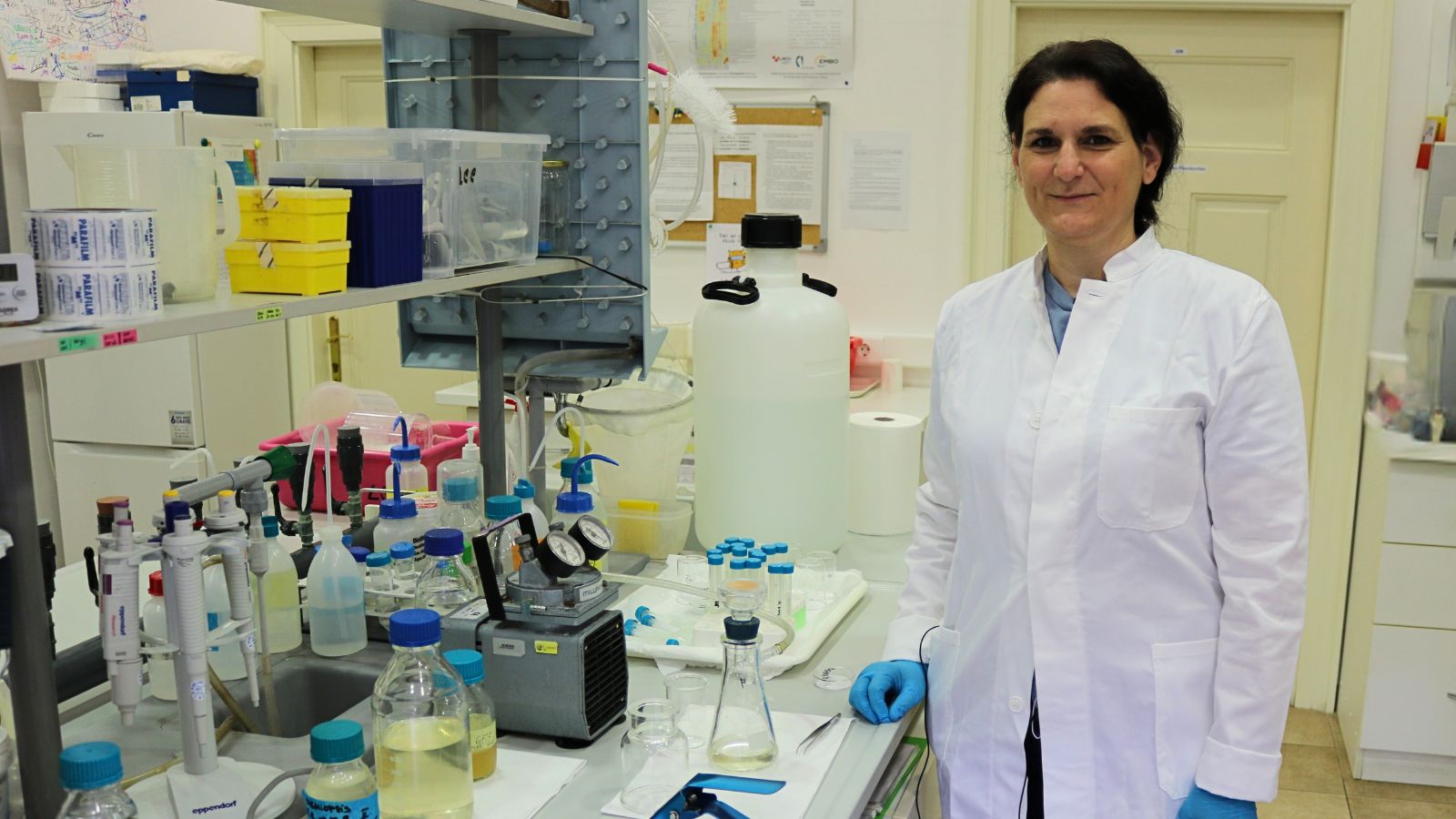
Today, this same marine biomass is viewed at the Ruđer Bošković Institute (IRB) not as a problem, but as a potential resource. Researchers from the IRB Centre for Marine Research in Rovinj are investigating, through the NutriGel project, how biomass from jellyfish and comb jellies can be used to produce sustainable fertiliser for agriculture.
From a marine nuisance to a potential resource
Mass occurrences of jellyfish and comb jellies are most often associated with problems for fisheries, tourism and coastal areas. In the NutriGel project, however, researchers are looking at them as a potential raw material, because their biomass contains nitrogen and phosphorus, two elements essential for plant growth.
“Jellyfish and comb jellies, including species that can form mass occurrences in the sea, are most often perceived as a problem for the marine environment, fisheries and coastal areas. However, their biomass is rich in nitrogen and phosphorus, elements without which plants cannot grow. Through the NutriGel project, we want to show that marine biomass can become a valuable resource for the development of sustainable fertiliser,” said Dr Tjaša Kogovšek, NutriGel project leader from the IRB Centre for Marine Research in Rovinj.
The concept has been confirmed under controlled laboratory conditions
The growth of the global population and the increasing need for a secure food supply pose one of the key challenges of our time for agriculture: how to produce more food while reducing pressure on the environment.
Fertilisers are indispensable in this process because they provide plants with the nutrients they need. However, conventional fertiliser production also relies on non-renewable sources.
Phosphorus, for example, is mainly obtained from phosphate rock, a limited natural resource. This is why there is growing interest in new, sustainable, non-synthetic and non-fossil sources of nutrients that can reduce the environmental impact of agriculture and contribute to the circular economy.
NutriGel fits precisely into this line of research. The project brings together marine ecology, chemistry and sustainable agriculture to examine whether marine biomass can be used as a nutrient source for the production of new fertilisers.
“So far, we have been successful. We have confirmed that nitrogen and phosphorus can be precipitated under controlled laboratory conditions and that it is possible to obtain a material without unwanted contaminants in the precipitate. This is an important step because we want to show that biomass can be used to obtain a high-quality and safe product,” explained Dr Kogovšek.
What is the next step?
“If we have biomass that appears in large quantities and, at the same time, contains nutrients that agriculture needs, it is logical to ask: why should we not try to use it? In some areas, comb jellies have become invasive and cause damage. With this approach, we are trying to turn the story around and examine whether they can become a renewable source of phosphorus,” said Dr Kogovšek.
NutriGel is a proof-of-concept project, which means that its goal was to verify the scientific and technological feasibility of the idea. The research team has confirmed this feasibility. The next step will be to find partners to continue the research and develop the process towards wider application.
The research team also aims to examine whether the same or a similar process can be applied to other types of biomass, or to other organic substrates that could serve as a source of nutrients.
PROJECT FUNDING: The NutriGel project is financed under the call “Proof of Innovative Concept, Third Call”, with European Union funding through NextGenerationEU and the Recovery and Resilience Facility. The call is implemented by the Ministry of Science, Education and Youth as the competent authority under the National Recovery and Resilience Plan. The total value of the project is EUR 49,974.09, and it is being implemented from 30 June 2025 to 31 July 2026.