

Parkinson’s disease is linked to changes in immune cells in the blood
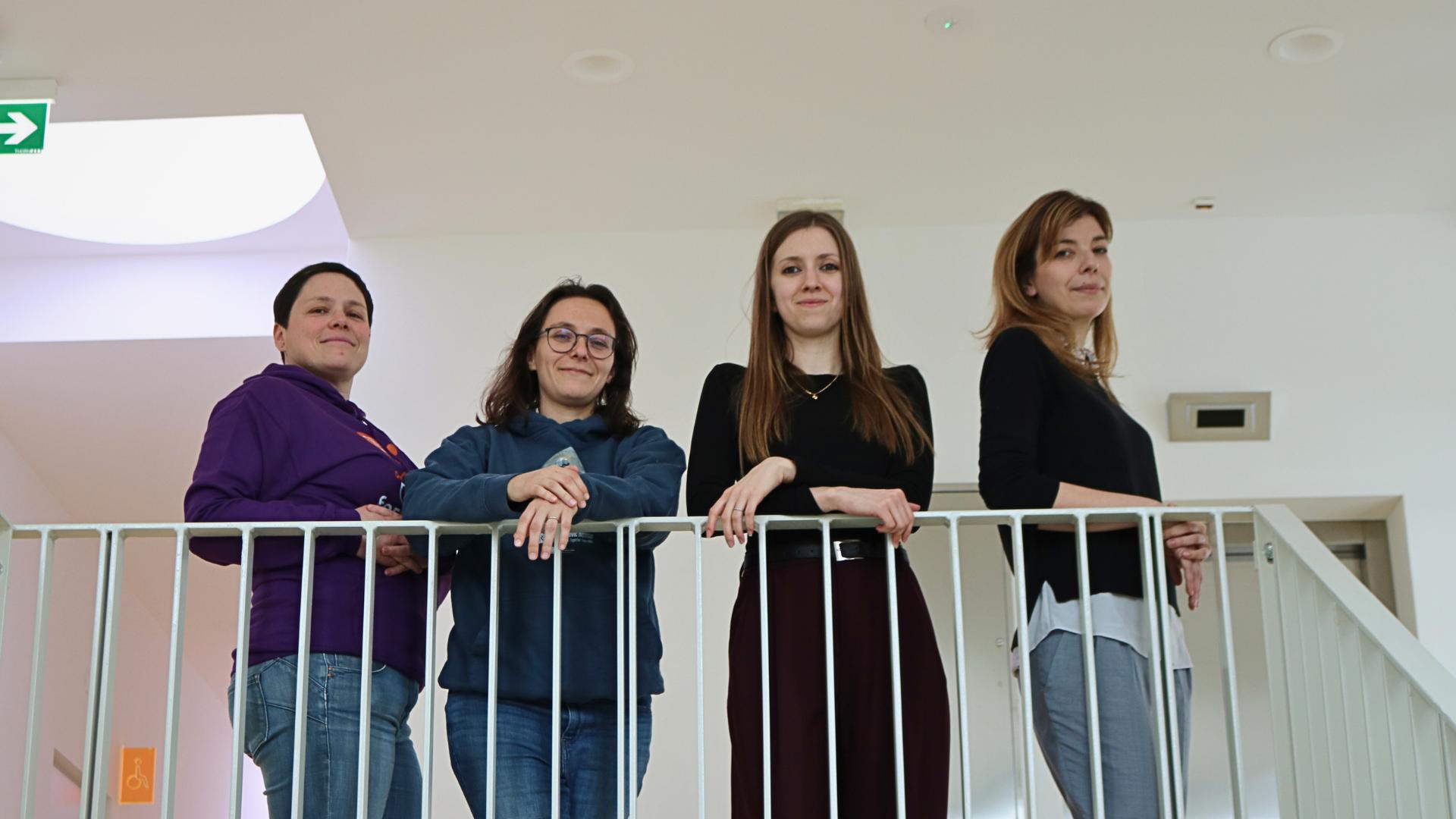
Anja Barešić, Katarina Madić, Sarah Meglaj Bakrač and Antonela Blažeković
A team of scientists, doctors and clinicians from Zagreb University Hospital Centre and the University of Zagreb School of Medicine, the Ruđer Bošković Institute, RBI, and the Dr Fran Mihaljević University Hospital for Infectious Diseases has shown that Parkinson’s disease is associated with measurable changes in specific immune cells in the blood. The results are important because they further link Parkinson’s disease with inflammatory processes outside the brain and help direct future research more clearly toward the groups of cells that stand out most strongly in this comparison. The study was published in the journal npj Parkinson’s Disease, published by Springer Nature.
In Parkinson’s disease, which is most commonly recognized by tremor, slowness and other movement difficulties, processes take place in the brain for years that are not visible from the outside. These include the accumulation of the protein alpha-synuclein, the degeneration of nerve cells that produce dopamine, which is crucial for movement control, and chronic inflammation in the nervous system. It is precisely this inflammation that is in the focus of research by clinicians and scientists, as one of the mechanisms that may influence the course of the disease.
What the researchers were looking for in the blood
In this study, the scientists wanted to determine to what extent inflammation-related changes are visible only in the brain, and to what extent they are also visible in the rest of the body, especially in the blood. This is important because the brain is normally protected by the blood-brain barrier, a kind of “checkpoint” between the blood and the brain. When this protection is impaired, it is assumed that immune cells from the blood can enter the brain more easily. Such “traffic” through a weakened barrier has already been linked to neurological diseases, and the authors of this study focused on what the peripheral immune profile looks like in Parkinson’s disease. More specifically, which types of immune cells in the blood are altered and what signals of activity they carry.
In the study, the researchers therefore monitored two types of immune cells, those that “direct” the immune response and those that “coordinate” it. The first are dendritic cells, which can be described as the scouts of the immune system because they recognize danger signals and pass this information on to other cells, thereby directing the overall immune response. The second are CD4+ T cells, a kind of coordinators of immune defense because they help the body decide when to strengthen and when to calm the response. Some of these T cells also create a kind of immune memory, so in certain situations they can react more quickly and more strongly.
Single-cell RNA sequencing
In this study, the researchers compared blood samples from people with Parkinson’s disease and control participants, tracking the cells that direct the immune response and the cells that coordinate it.
“We first isolated the targeted immune cells from blood by magnetic separation, and then analyzed them using flow cytometry and single-cell RNA sequencing. This approach allowed us to detect even rare subgroups that can easily be lost in average results,” says Sarah Meglaj Bakrač from the University of Zagreb School of Medicine, who, together with Katarina Mandić from RBI, is the first author of the paper.
There are several highly specialized subtypes of CD4 T cells and dendritic cells, but they are present in the blood in very small numbers, which makes them difficult to study. In this research, the scientists enriched the samples specifically for these rare cells in order to analyze them more precisely and track their role in immune processes in Parkinson’s disease.
“The clearest finding was that there is a specific group of dendritic cells and CD4 T cells that become activated in the immune processes of people with Parkinson’s disease,” emphasizes Associate Professor Antonela Blažeković, the corresponding author of the paper, from the University of Zagreb School of Medicine.
Key bioinformatics analysis carried out at RBI
For the author team, bioinformatics analysis was crucial in order to investigate what was happening within individual cell subtypes and what biological processes were emerging in them. That is why RBI scientists Katarina Mandić and Dr Anja Barešić carried out the gene expression analysis, in other words, they identified which instructions in the cells were currently active. They did this at the level of each individual cell.
“At RBI, we took over the computational processing and analysis of the data obtained from single-cell analysis. We used our supercomputer to reliably extract differences between patients and the control group from a large quantity of data, several tens of thousands of cells and genes. In this way, we identified the genes, cell subgroups and biological processes that stand out the most in Parkinson’s disease,” explain Katarina Mandić and Dr Anja Barešić from the Ruđer Bošković Institute.
“The results of the study show that Parkinson’s disease is associated not only with changes in the brain, but also with measurable changes in the immune system in the blood, which fit into the broader picture of inflammatory processes. It is important to emphasize that our study does not claim that a new therapy has been found, but rather identifies ‘where to look’ and which immune components in the blood stand out most clearly when comparing patients and controls,” emphasizes Professor Fran Borovečki, Director of Zagreb University Hospital Centre.
A multidisciplinary team
This study is the result of the work of a multidisciplinary team of doctors, clinicians and researchers that brought together clinical experience, laboratory methods and bioinformatics data analysis. Alongside Sarah Meglaj Bakrač, Associate Professor Antonela Blažeković, Professor Fran Borovečki, and Katarina Mandić and Dr Anja Barešić from RBI, the team also included Dr Lidija Cvetko Krajinović and Dr Željka Mačak Šafranko from the Dr Fran Mihaljević University Hospital for Infectious Diseases.
FUNDING NOTE: The research was conducted as part of the project Molecular mechanisms of immune response and inflammasome activation in Parkinson’s disease (IP-2020-02-8475), funded by the Croatian Science Foundation. Sarah Meglaj Bakrač was funded through the Croatian Science Foundation programme for the career development of young researchers (DOK-2021-02-5343), and Katarina Mandić through the Croatian Science Foundation project (UIP-2020-02-1623).
Contact Us
Read more