

They Returned to Croatia. Now They Are Bringing 200 Young Researchers to the EMBO Forum in Dubrovnik
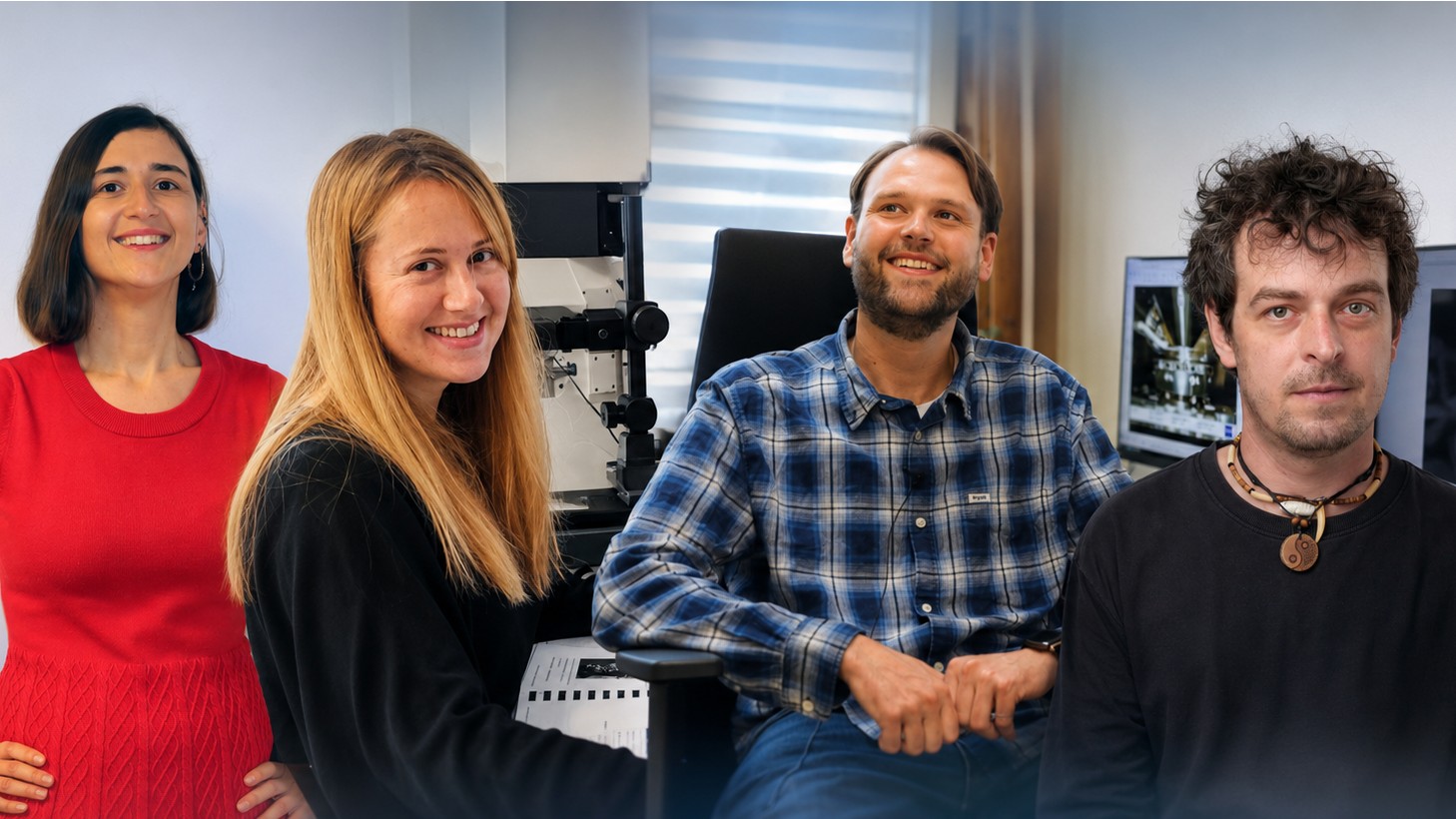
Four young researchers based at Croatian scientific institutions, all recipients of research funding from the European Molecular Biology Organization (EMBO), are bringing the EMBO Young Scientists’ Forum to Croatia this year. The event will take place in Dubrovnik from 28 to 30 October 2026 and will welcome up to 200 PhD students, postdoctoral researchers and early-career research group leaders from across Europe.
EMBO is one of Europe’s most influential scientific organisations. Its membership includes more than 2,100 leading researchers from Europe and around the world. Through fellowships, Installation Grants and funding for scientific events, EMBO supports the international mobility of early-career scientists, the establishment of new research groups and the development of scientific capacity across its member states.
The EMBO Young Scientists’ Forum, or EYSF, is held in a different country each year. The 2026 edition will be the first to take place in Dubrovnik.
From the United Kingdom, the United States, Switzerland and Panama to Their Own Laboratories in Croatia
Their research spans immunology, climate change, ocean biology and genome evolution, yet the four scientists organising the conference share an important connection: support from EMBO.
Dr Marko Šestan of the University of Rijeka Faculty of Medicine is investigating whether the immune system can be trained to respond more rapidly to infection by associating an immune response with an olfactory stimulus.
At the Ruđer Bošković Institute, Dr Jelena Bujan studies how ants adapt to temperature extremes associated with climate change, while Dr Jelena Godrijan examines microscopic marine algae and their role in the global carbon cycle. Dr Damir Baranašić investigates the genetic mechanisms that enabled complex forms of life to emerge during evolution.
Jelena Bujan and Marko Šestan have also received grants from the European Research Council, or ERC. Because of their exceptional competitiveness, ERC grants are frequently described as the “Oscars of science”. They support frontier research with the potential to challenge existing knowledge and open entirely new lines of scientific inquiry.
The organisers completed parts of their education and careers at international institutions including Imperial College London, the University of Oklahoma, the Bigelow Laboratory for Ocean Sciences, the Champalimaud Foundation in Portugal, and research institutions in Panama and Switzerland.
After returning to Croatia, they established or developed their own research groups with support from prestigious EMBO and European Research Council programmes. Their careers illustrate how international experience, competitive research funding and stable working conditions can support the return of researchers and the development of new fields of scientific inquiry in Croatia.

Iva Tolić to Open the Forum Bringing Leading International Scientists to Dubrovnik
The Forum will open with a plenary lecture by Professor Iva Tolić of the Ruđer Bošković Institute, a member of the Croatian Academy of Sciences and Arts and an internationally recognised scientist whose research focuses on the mechanisms of cell division.
Professor Tolić has received two ERC grants, including a €10 million ERC Synergy Grant supporting research into the origins of chromosome segregation errors associated with cancer. The project is being conducted in collaboration with researchers from the Massachusetts Institute of Technology.
The programme also features scientists from leading European institutions.
Professor Stuart A. West of the University of Oxford studies the evolution of cooperation and altruism in organisms ranging from bacteria to social insects. Professor Angela Falciatore of France’s National Centre for Scientific Research, CNRS, investigates diatoms, a group of microalgae that make a major contribution to global carbon fixation. Professor Ana Conesa of the Spanish National Research Council is a pioneer in bioinformatics and computational biology.
The immunology programme will include Professor Marc Schmidt-Supprian of the Technical University of Munich, Dr Monika Wolkers of the Oncode Institute and Amsterdam University Medical Center, and Associate Professor Siniša Volarević of the University of Rijeka Faculty of Medicine.
Computational biology and genomics will be represented by Dr Fran Supek of the University of Copenhagen and Associate Professor Kristian Vlahoviček of the University of Zagreb Faculty of Science.
Young researchers will also hear from Dr Lesley Lancaster of the University of Aberdeen, who studies the evolutionary effects of climate change on species distribution, and Dr Vlatka Antolović of the Ruđer Bošković Institute, whose work explores the cell biology of unconventional model organisms.
The Forum programme covers four main areas: computational genomics, the immune system, adaptation and global change, and protists and other unconventional model organisms. Alongside plenary and invited lectures, the event will include oral presentations and poster sessions in which early-career researchers will present their own findings.
The Forum is designed as a space for sharing research, developing new collaborations and connecting young scientists with peers and research group leaders from across Europe.
Participation is limited to 200 attendees. Early registration at a reduced fee is open until 15 July 2026, while the regular registration deadline is 30 September 2026.
Further information is available on the conference website.