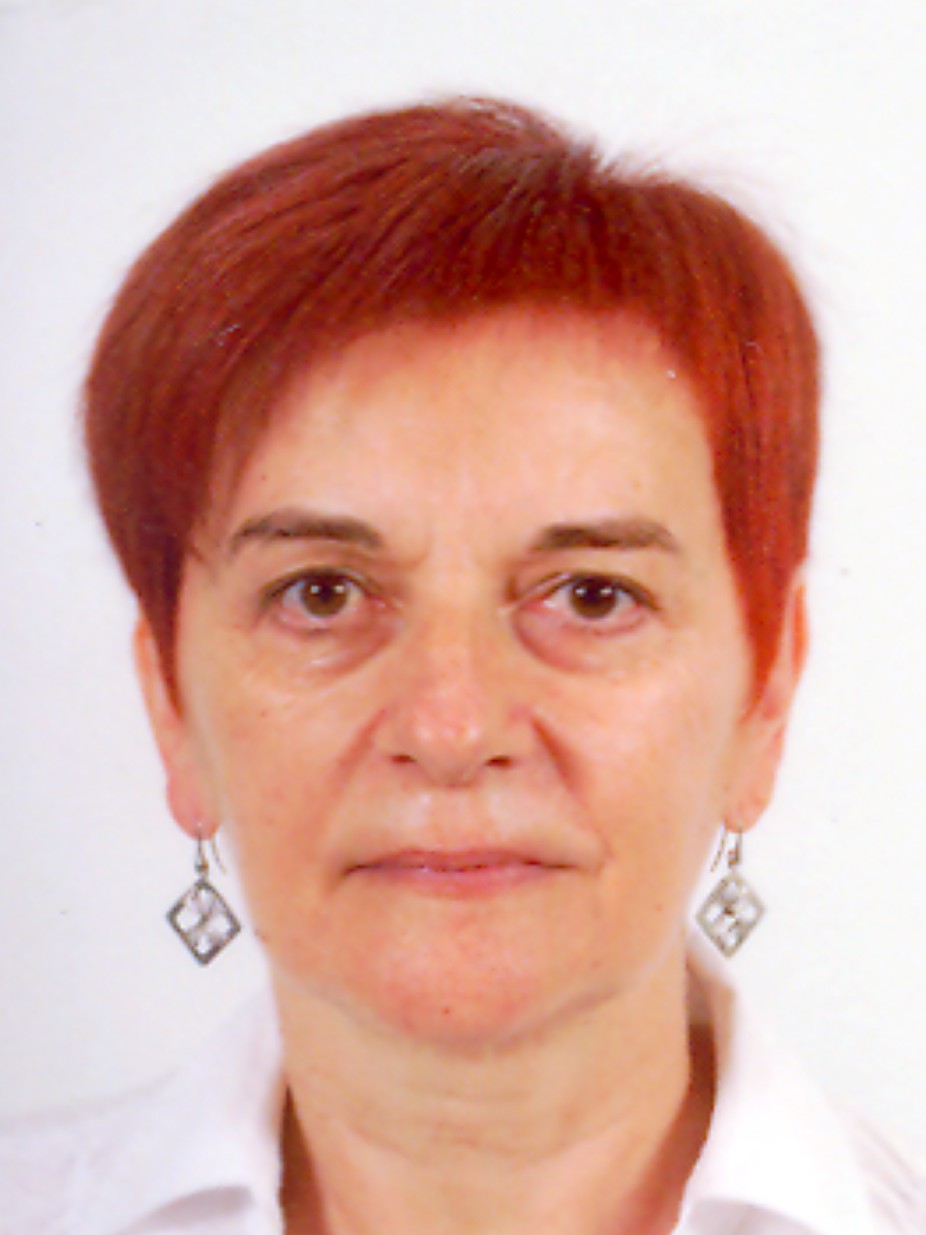

Dr. sc. Đurđica Ugarković
Dr. sc. Đurđica Ugarković was born in 1959 in Gospić, where she attended primary and secondary school. She completed her studies in chemistry at the Faculty of Science, University of Zagreb, in 1982. Since 1983, she has been employed at the Ruđer Bošković Institute (RBI) in Zagreb, where she completed her master's thesis (1985) and doctoral dissertation (1988) in the field of biochemistry. From 1988 to 1991, she was a postdoctoral fellow at the Laboratory for Applied Molecular Biology at the Johannes Gutenberg University in Mainz, Germany. As a FEBS fellow, in 1992 she was at the University of the Balearic Islands, Palma de Mallorca, Spain, and in 2008, as a visiting scientist at the Mediterranean Institute for Advanced Research, also in Palma de Mallorca.
Dr. Đurđica Ugarković spent her entire career, with breaks during specializations abroad, at the Ruđer Bošković Institute; after employment, first at the Department of Organic Chemistry and Biochemistry, and then at the Department of Molecular Biology. From 2003 until her retirement in 2024, she held the position of scientific advisor in a permanent position. She was elected to the title of full professor of biochemistry in 2005 at the Faculty of Science, University of Zagreb. Since 2018, she has been a full professor in a permanent position at the Department of Biology, Josip Juraj Strossmayer University in Osijek.
Đ. Ugarković is one of the initiators of non-coding DNA research in Croatia. She began her research at the IRB shortly after completing her doctoral dissertation and has been internationally recognized for it. Her main scientific interest is studying the evolution and function of satellite DNAs, which are the main component of DNA in heterochromatin. Her research on the model organism, the flour beetle Tribolium castaneum, showed for the first time that satellite DNA, or rather its transcripts in the form of small RNAs, regulate gene activity in conditions of recovery after thermal stress. This discovery gives a new physiological meaning to satellite DNA and assumes its role during the process of organism adaptation to changed environmental conditions. This is supported by the discovery of changes in the methylation status of satellite DNA induced by thermal stress. She predicted the presence of functional elements such as promoters and binding sites for transcription factors in satellite DNA, which indicates their role in gene regulation. Together with her collaborators, she experimentally proved for the first time the existence of a "library" of satellite DNA within related species and explained the mode of their evolution based on random amplification from a shared "library". Her team also discovered the unexpected evolutionary conservation of certain satellite DNAs, as well as their possible role in population divergence and the emergence of new species. She proved the existence of scattered satellite DNA elements in the genomes of the insect T. castaneum and in the human genome, and clarified the mechanisms of their spread. The possible application of human alpha satellite DNA as a tumor marker and target for the therapy of certain tumors was also demonstrated. She participated in the development and introduction of new research methods and techniques, and the first DNA sequence made in Croatia was published in a scientific paper whose first author is Đ. Ugarković.
Đ. Ugarković has published 87 scientific papers and book chapters that have been cited >2600 times, with an h-index of 29 (data according to the WoS database as of 2025). Papers were published in reputable journals such as EMBO J., EMBO Rep., Nucleic Acids Res., Semin. Cancer Biol., Mol. Biol. Evol., PloS Genet. etc. She is the editor of books published by Springer Verlag: "Centromere: structure and evolution" (2009), "Long non-coding RNAs" (2011) and "Satellite DNAs in Physiology and Evolution" (2021). Based on her contributions to the research of non-coding satellite DNA, she was elected to the European Molecular Biology Organization (EMBO) in 2000 as the first scientist from Croatia. From 2002 to 2007, she was the president of the Croatian Genetics Society, and since 2016, an associate member of the Croatian Academy of Sciences and Arts. She received the City of Gospić Award for exceptional scientific achievements in 2011. Đ. Ugarković is the leader of 15 domestic and international projects. Of particular note is her leadership of the EC FP6 Marie Curie Transfer of Knowledge project “Structural and functional analysis of noncoding heterochromatic DNA in insect Tribolium castaneum”, one of the first large European scientific projects funded under the European Community's Science Framework Programmes, the main coordinator of which is a scientist from Croatia.
She teaches 5 courses at the undergraduate and doctoral studies of the Faculty of Science, University of Zagreb, and the University of Osijek, and is the mentor of 7 doctoral, 3 master's and 22 diploma theses, respectively. Her doctoral students, Dr. sc. Branka Bruvo Mađarić and Dr. sc. Željka Pezer Sakač, as well as graduate student Dr. sc. Barbara Milutinović, are distinguished scientists at the RBI. Doctoral student Dr. sc. Martina Podnar Lešić is a curator at the Croatian Museum of Natural History and a research associate at the Faculty of Philosophy, University of Zagreb, and doctoral student Dr. sc. Josip Brajković is the head of medical affairs for the company CEE & IL. Former junior researcher, Dr. Tomislav Domazet-Lošo, professor at the Catholic University of Croatia and scientific advisor at the RBI, is a respected, internationally recognized scientist. Thanks largely to younger collaborators, Dr. B. Bruvo Mađarić, Prof. Dr. T. Domazet-Loši, Dr. Ž. Pezer Sakač and Dr. B. Milutinović, the RBI Laboratory for Evolutionary Genetics, which Dr. Ugarković led from its founding in 2008 to 2024, is today one of the best biological laboratories in Croatia. In addition to leading the Laboratory, she held the positions of Head of the RBI Department of Molecular Biology (2001-2005) and Assistant Director of the RBI for Science and Education (2010-2012).
Đ. Ugarković is the representative of Croatia in the UNEP (United Nations Environment Programme) section entitled "Convention on Biological Diversity, Working group on Biosafety", 1995-1999. She is a member of: the EMBO section dedicated to the promotion of science "Science & Society Committee" (2006-2010), the Standing Committee for Life Sciences of the ESF (European Science Foundation (2008-2012) and the Selection Committee of the National Scholarship Program L'Oréal-UNESCO "For Women in Science" (since 2018). She is a reviewer of projects for international agencies: EMBO, European Commission, Czech Science Foundation, Telethon Italy, Fundación Juan March (Spain), Agence Nationale de la Recherche (ANR France), Slovenian Research Agency (ARRS).
She led projects for the popularization of science among young people: “The Wonderful World of Genes - Guardian of Our Health” (2017-2018), “Civitas, Scientists and Media for the Promotion of Knowledge and Science” (2011-2014), and together with Prof. Dr. Ivan Đikić, the project “Civitas, Scientists and Media against Violence” (2008-2014). These projects were successfully implemented in 50 elementary schools in seven Croatian counties under the auspices of the Ministry of Education, Science and Sports. She participated in a series of media presentations by commenting on her research or other important scientific discoveries (printed media or portals, television and radio, more than 100 reports). Đ. Ugarković is a consultant for the popular science series "Forever Young" on Croatian National Television (2023) and an expert associate for the popular science magazine GEO (2006-2012). She has participated in the "Open Days of the RBI" and Science Festivals on several occasions, and has also published several popular science papers in the journal Priroda.
For her contribution to science, development and reputation of the Institute, she was elected to the honorary title of Distinguished Scientist of the Ruđer Bošković Institute in 2025.