

New species are arriving in the Adriatic, and scientists want to detect them before they become a problem
At first glance, the transparent body of the sea walnut may resemble a jellyfish. In fact, it is a comb jelly native to the western Atlantic that is now also found in the Adriatic. Its presence is part of a much broader change that scientists are observing with increasing frequency: species that have never previously lived in the Adriatic are appearing in its waters.
Non-indigenous, or alien, species are organisms that have been introduced beyond their natural range, most often as a result of human activity. They may reach the Adriatic in ships’ ballast water or attached to vessel hulls. The presence of a non-indigenous species is not necessarily a cause for concern, because not every alien species is automatically invasive. Problems arise when a newly introduced species successfully establishes itself, begins to spread and has harmful effects on native organisms, ecosystems or economic activities.
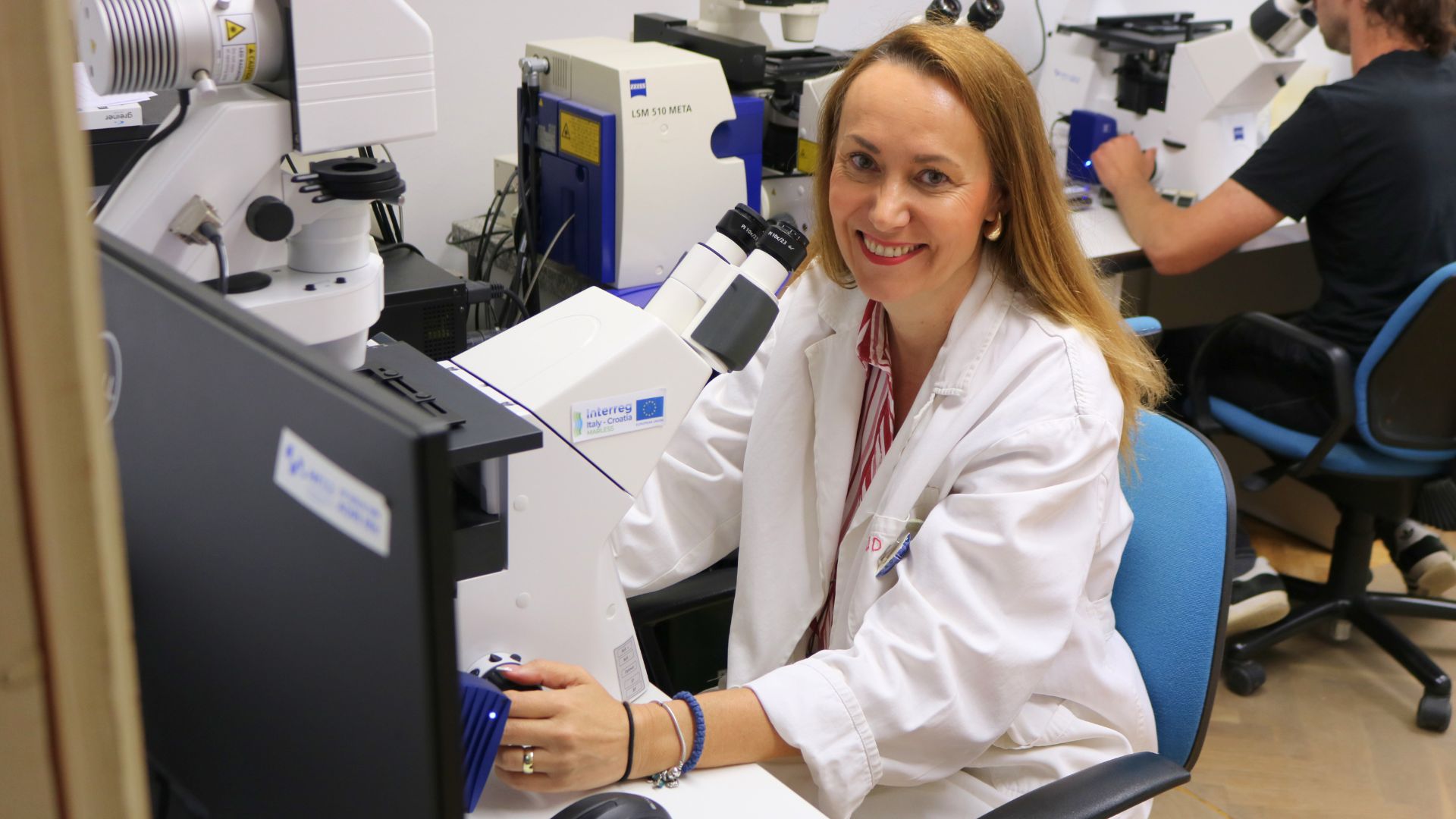
“Invasive species can compete with native Adriatic species for food, habitat and other resources. If, for example, they rely on the same food source, less remains available to native species. This is particularly important for species such as small pelagic fish, a resource people in this region have relied on for centuries,” explains Dr Daniela Marić Pfannkuchen of the Center for Marine Research in Rovinj at the Ruđer Bošković Institute.
When does a newcomer become a problem?
The sea walnut is one of the target species being studied within the ALIENA project. It feeds on zooplankton, tiny animals drifting in the water that form a crucial link in the marine food web. Fish also depend on zooplankton, meaning that very large sea walnut populations can increase pressure on the same food resources needed by native species.
For scientists, simply recording the arrival of a non-indigenous species is therefore not enough. It is equally important to establish where it occurs, how abundant it is, whether it is spreading and how quickly that spread is taking place.
“When we find a species at a new location, we add another point to the map of its spread. If an invasion began in the southern Adriatic, for example, we can monitor whether the species is moving northwards from year to year. Species introduced through ballast water can follow a very different pattern, as they may appear directly in a port and establish a population there,” says Dr Daniela Marić Pfannkuchen.
Early detection gives not only scientists but also responsible authorities more time to act. When a species appears for which existing regulations do not yet provide appropriate measures for removal or control, the regulatory framework may also need to be adapted.
From observations to an early-warning system
This is the central idea behind ALIENA – ALIgning Efforts to control Non-indigenous species in the Adriatic sea. Scientists and institutions from Croatia and Italy are working together to develop a shared knowledge base and a more coordinated system for monitoring non-indigenous species in the Adriatic.
Field observations are combined with computer models that assess when environmental conditions are favourable for the presence and spread of particular non-indigenous species. The first version of the forecasting tools has already been developed, and the models are now being validated against data collected during pilot studies conducted in four areas of the Adriatic.
The aim is not simply to compile a list of new marine inhabitants, but to support the earlier detection of ecological change and the development of an early-warning system, giving scientists and competent authorities more time to assess risks and, where possible, take appropriate action.
At the same time, the tools scientists use to detect marine life are evolving. Molecular methods can now reveal the presence of organisms that are difficult to identify using traditional approaches because they are very small, occur in low numbers or closely resemble other species.
“Molecular methods are giving us an entirely new view of biodiversity in the Adriatic. We are detecting species that were not previously included on our lists, but that does not necessarily mean they are new or invasive. Some may have been here all along, but we were simply unable to identify them using the methods available to us in the past,” emphasises Daniela Marić Pfannkuchen.
Citizens can help too
Chance observations by members of the public can also provide valuable information for marine monitoring. Anyone who notices an unfamiliar or unusual organism while swimming or diving can help scientists by taking a clear photograph and recording where and when it was observed.
Sightings can easily be submitted through the Crafting the Sea app, which enables citizens to contribute directly to monitoring changes in the Adriatic.
FUNDING
The ALIENA project is implemented under the Interreg Italy–Croatia 2021–2027 Programme, which supports cross-border cooperation between Croatia and Italy. The project has a total budget of €2,624,458, of which €2,099,566.40 is financed by the European Regional Development Fund (ERDF).
The Apulia Region is the lead partner, and the consortium brings together seven partners, five from Italy and two from Croatia. The Croatian partners are the Ruđer Bošković Institute, through its Center for Marine Research in Rovinj, and the Institute of Oceanography and Fisheries.