

45th Anniversary of the Martinska Research Station Marked, Four and a Half Decades of Adriatic Research
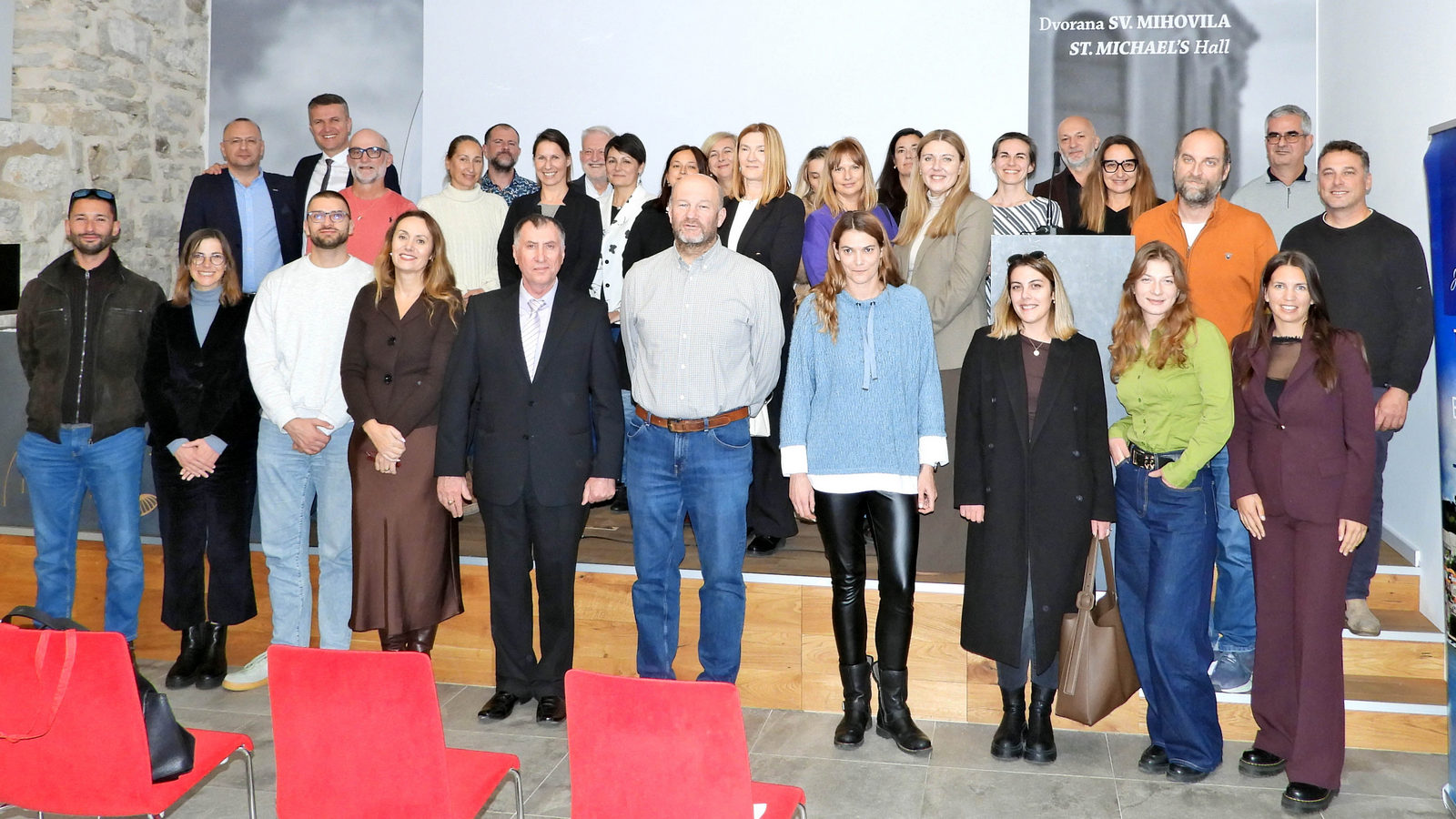
On Tuesday, 9 December, the 45th anniversary of the founding of the Martinska Research Station of the Division for Marine and Environmental Research of the Ruđer Bošković Institute (IRB) was solemnly marked at the “Civitas Sacra” Interpretation Centre of the Cathedral of St James in Šibenik. The ceremonial scientific and expert meeting brought together scientists, representatives of universities, national institutes and the business sector, who through their work are shaping the future of the Adriatic Sea.
The anniversary programme included a retrospective of research carried out to date, as well as a series of presentations on current projects in marine science. Researchers from IRB and their colleagues from the Faculty of Electrical Engineering and Computing, the Institute of Oceanography and Fisheries, the Croatian Hydrographic Institute, the Croatian Geological Survey, and the universities of Zagreb, Split, Zadar, Pula and Dubrovnik, as well as international partners from the University of Haifa, presented their work.
The participants were welcomed by Paško Rakić, Prefect of Šibenik-Knin County, and Željko Burić, Mayor of Šibenik. The Mayor underlined that Martinska is not only “an infrastructure point on the map”, but a symbol of commitment to preserving the Adriatic, a place where scientific excellence, local interests and the needs of sustainable development come together.
From Aquaculture to a Modern Research Station
The history of Martinska dates back to 1979, when the then Municipal Assembly of Šibenik adopted a proposal to establish the scientific and research unit “Group for Aquaculture Research and Development Šibenik”. The Šibenik area was chosen because of its central position on the Croatian part of the Adriatic and its unique connection of fresh, brackish and marine waters, which makes it an ideal natural laboratory for aquaculture and scientific research. The laboratory facilities at Martinska were opened on 22 December 1980.
Field Extension of IRB for Marine and Environmental Research
Today, the Martinska Research Station serves as a field extension of the laboratories of the Division for Marine and Environmental Research and other IRB laboratories, dedicated to fundamental and applied research of estuaries and coastal areas. Its work is strongly linked to the development of Šibenik and several Adriatic counties, from Šibenik-Knin to Dubrovnik-Neretva.
The station’s mission is to collect reliable scientific information and communicate it to society, from estuaries and rivers that flow into the sea, through fresh and salt lakes, to the coastal sea. In this way, Martinska contributes to a better understanding and prediction of changes in the marine environment, as well as to the sustainable management of natural resources.
Scientific Contribution and International Cooperation
The long-standing work at Martinska is also reflected in the figures. On the basis of collected and processed data on research into the Krka River and its estuary, 1,359 papers have been published over a period of approximately 80 years, from 1927 to 2010. Since 1980, IRB scientists have published 364 papers. According to the international databases SCOPUS and Web of Science, the Institute’s collaborators are the authors of about 80% of all scientific papers on the Šibenik coastal area.
In addition to its scientific productivity, Martinska is recognised for its intensive international cooperation. Through various projects and research activities at the station, institutions from Germany, France, the USA, Canada, Italy, China, India and the United Kingdom have taken part, making Martinska an internationally open research platform.
Martinska as a Partner to the Local Community and the “Blue” Economy
Continuous research at Martinska provides an expert basis for decision making that is crucial for the conservation of biodiversity, fisheries management, spatial planning and adaptation to climate change. Cooperation between local and regional self-government, scientific institutions and the business sector demonstrates how scientific knowledge can be translated into concrete public policies for marine conservation, support to fisheries, the development of sustainable tourism and safety along the coast.