

AI4Health.Cro Delivers Over 2,000 Services in Three Years to Advance Healthcare’s Digital Transformation

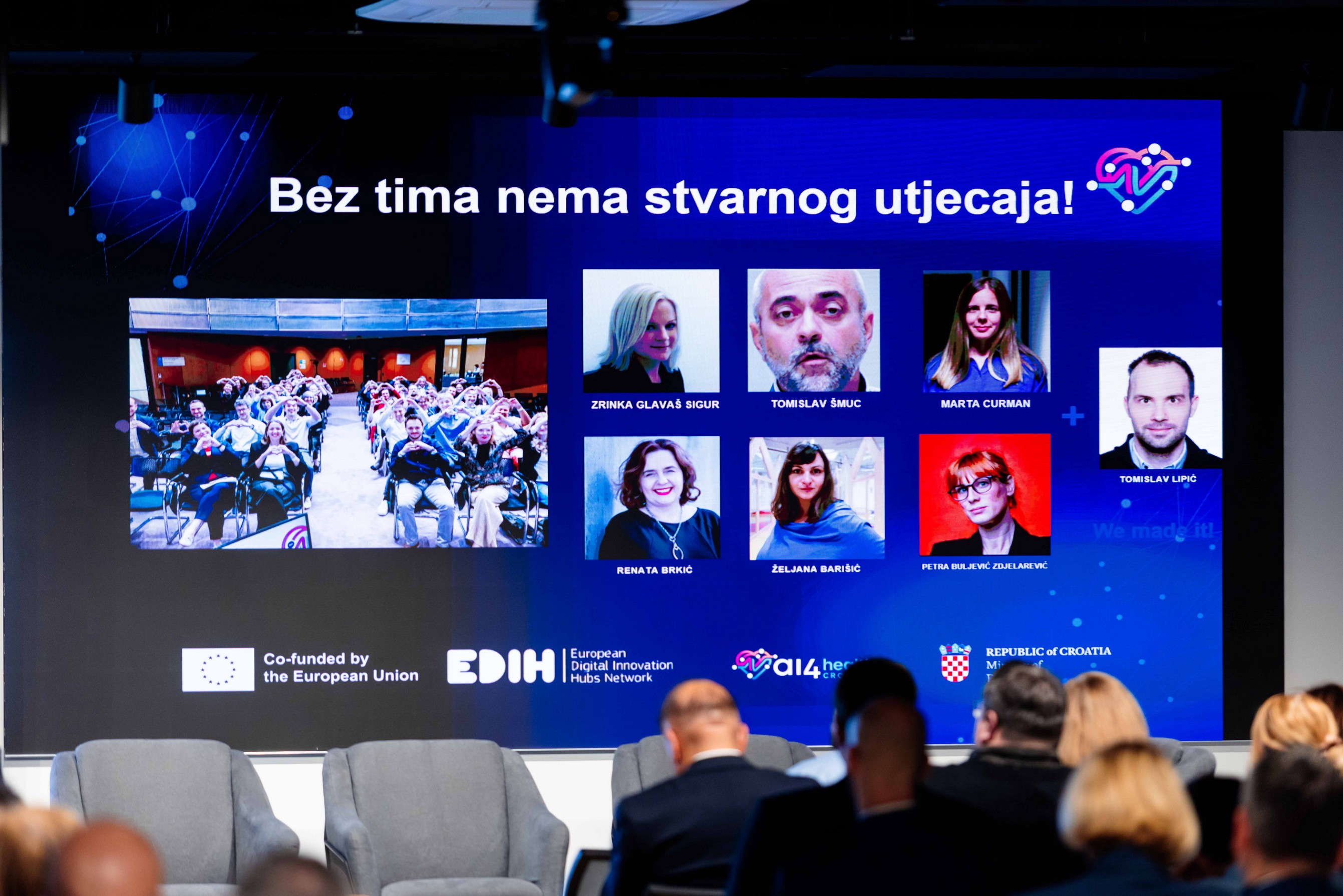
More than 2,000 digital transformation services delivered, including approximately 100 innovation testing activities, alongside development support, investment readiness services and specialised training for 136 physicians. These are among the key results of the first three years of AI4Health.Cro, the European Digital Innovation Hub for Artificial Intelligence in Healthcare and Medicine. Coordinated by the Ruđer Bošković Institute (RBI), the initiative helps startups, technology companies and healthcare institutions develop, validate and prepare digital solutions for real-world use.
More than 2,000 digital transformation services delivered, including around 100 innovation testing activities prior to investment, development and investment readiness support, as well as specialised training for 136 physicians. These are among the key results of the first three years of AI4Health.Cro , the European Digital Innovation Hub for Artificial Intelligence in Healthcare and Medicine. Coordinated by the Ruđer Bošković Institute (RBI), the initiative helps startups, technology companies and healthcare institutions develop, validate and prepare digital solutions for real-world application.
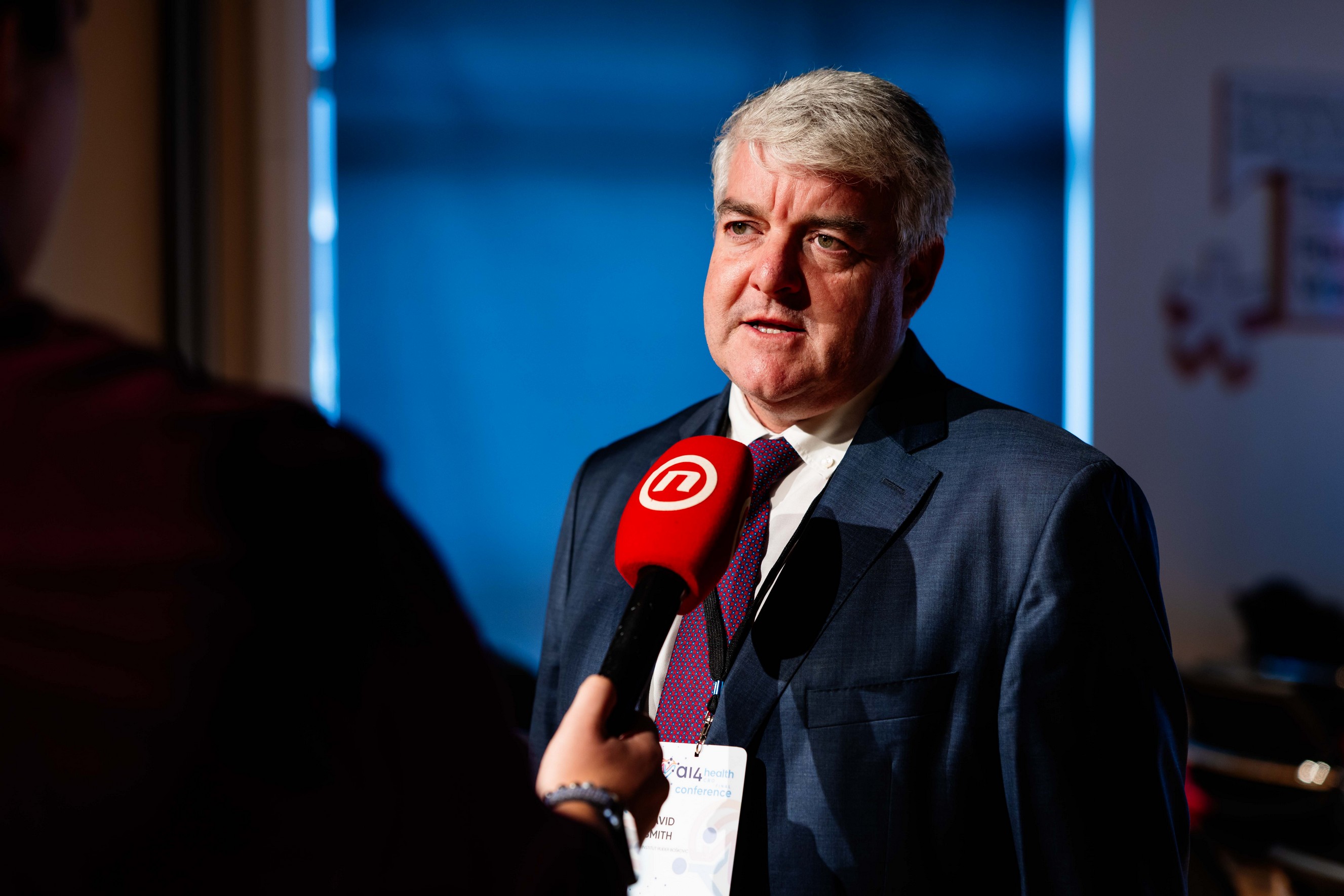
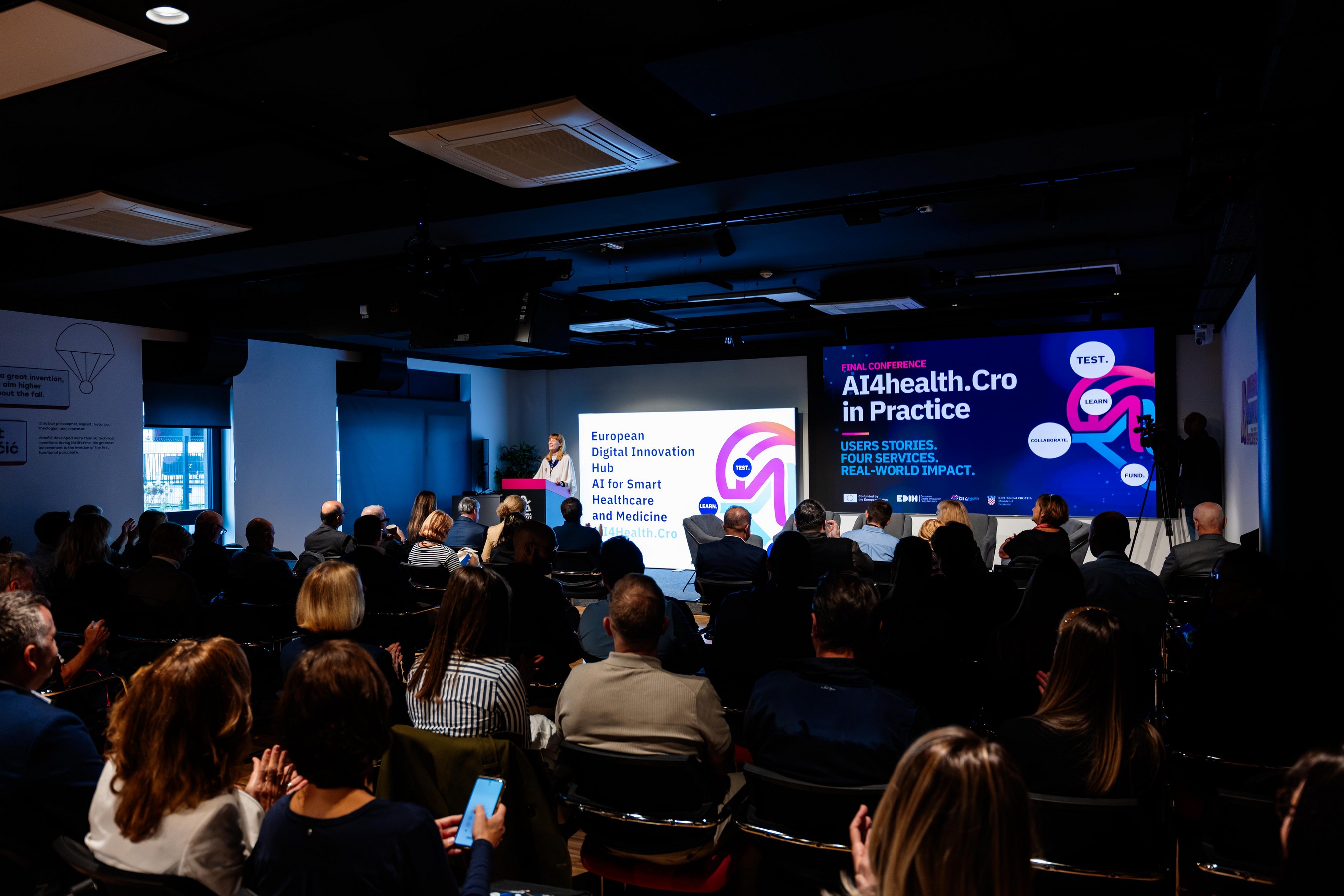
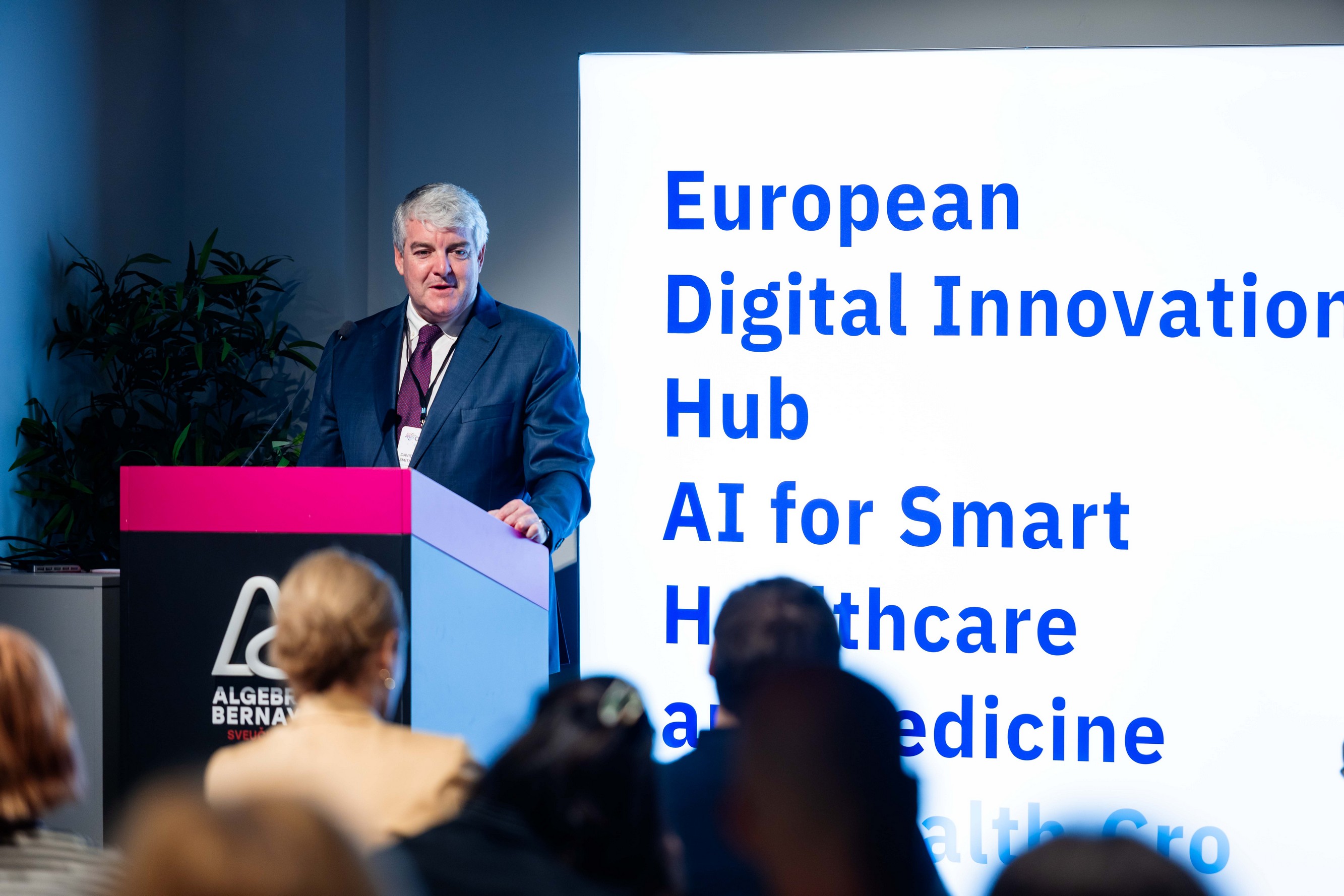
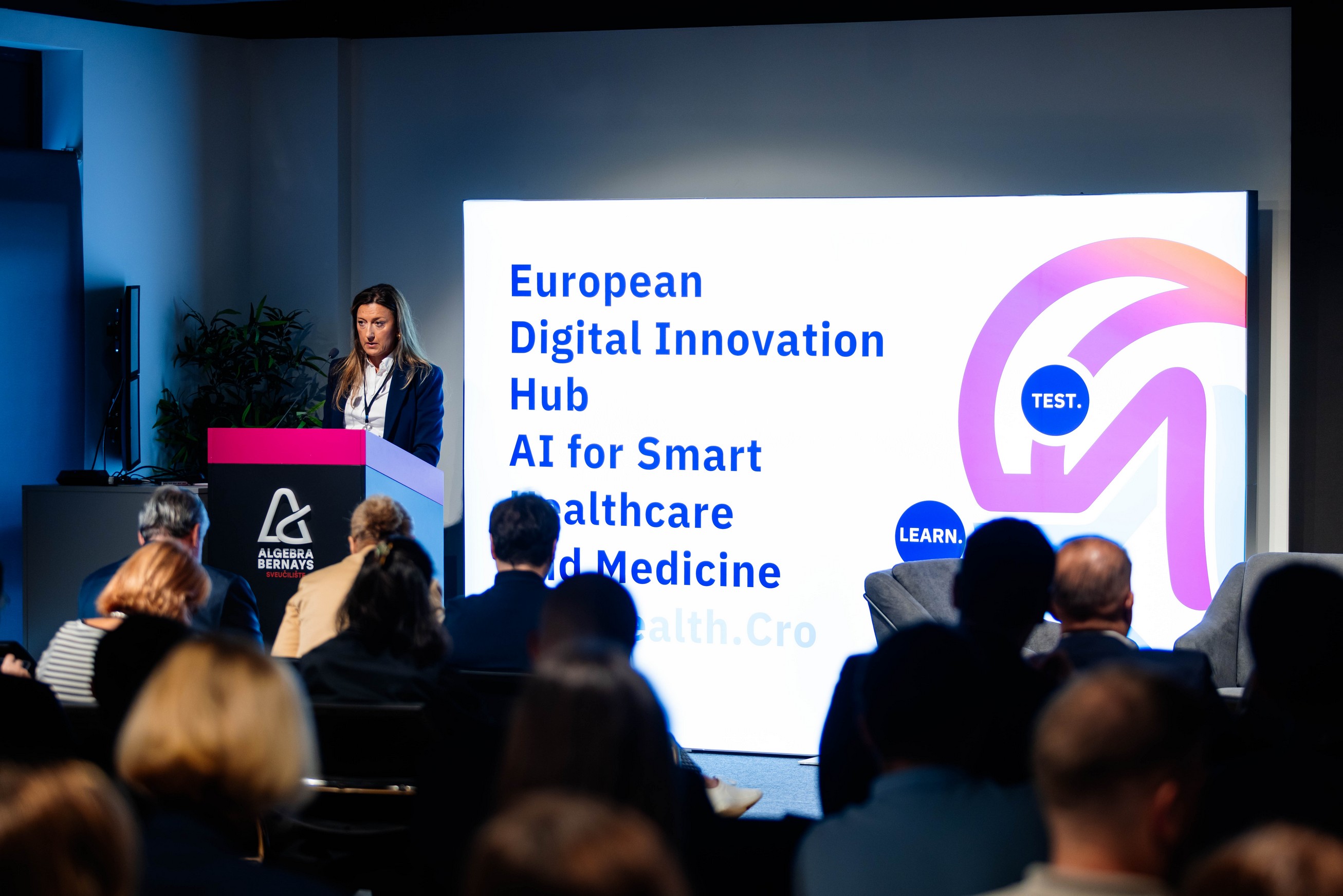
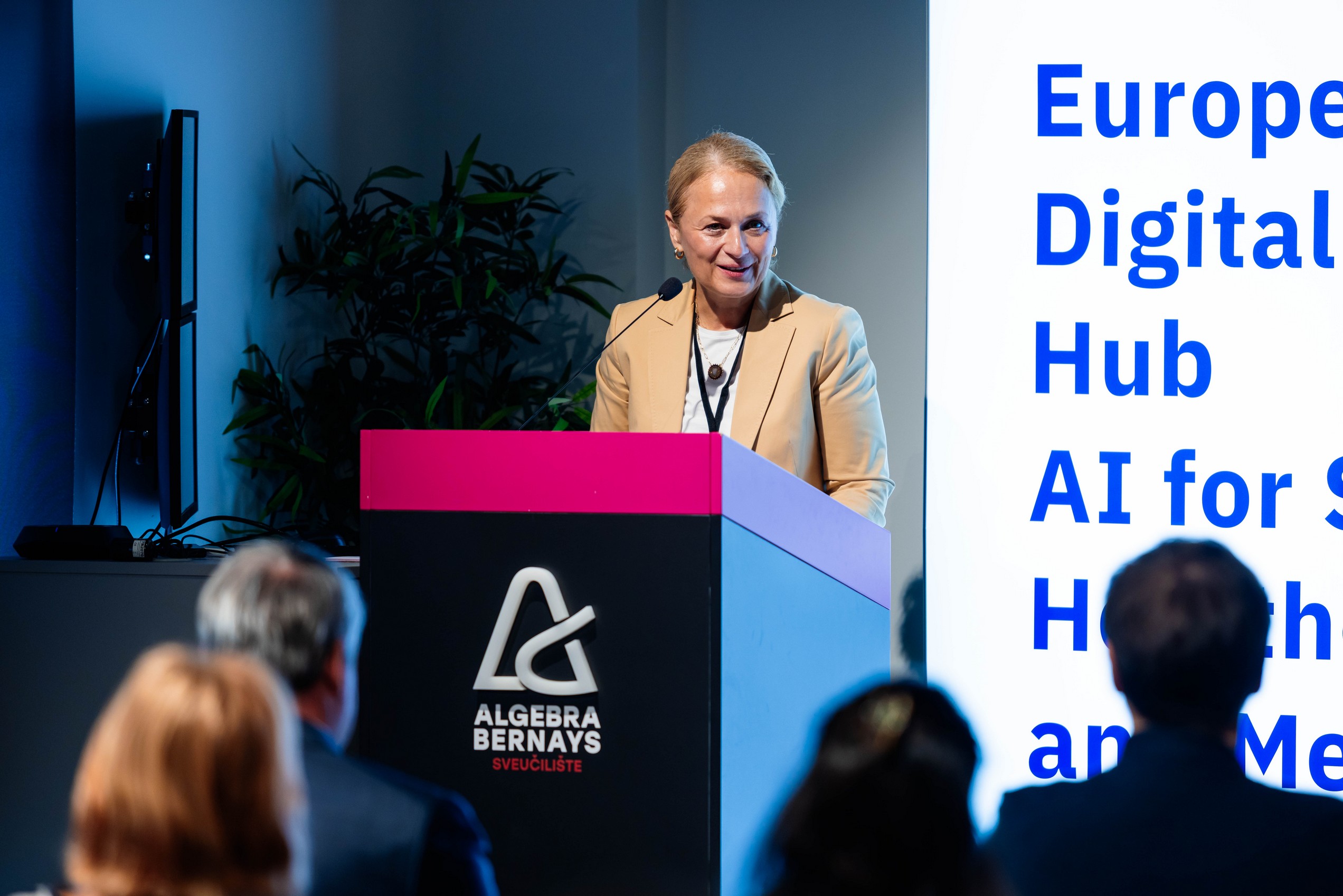
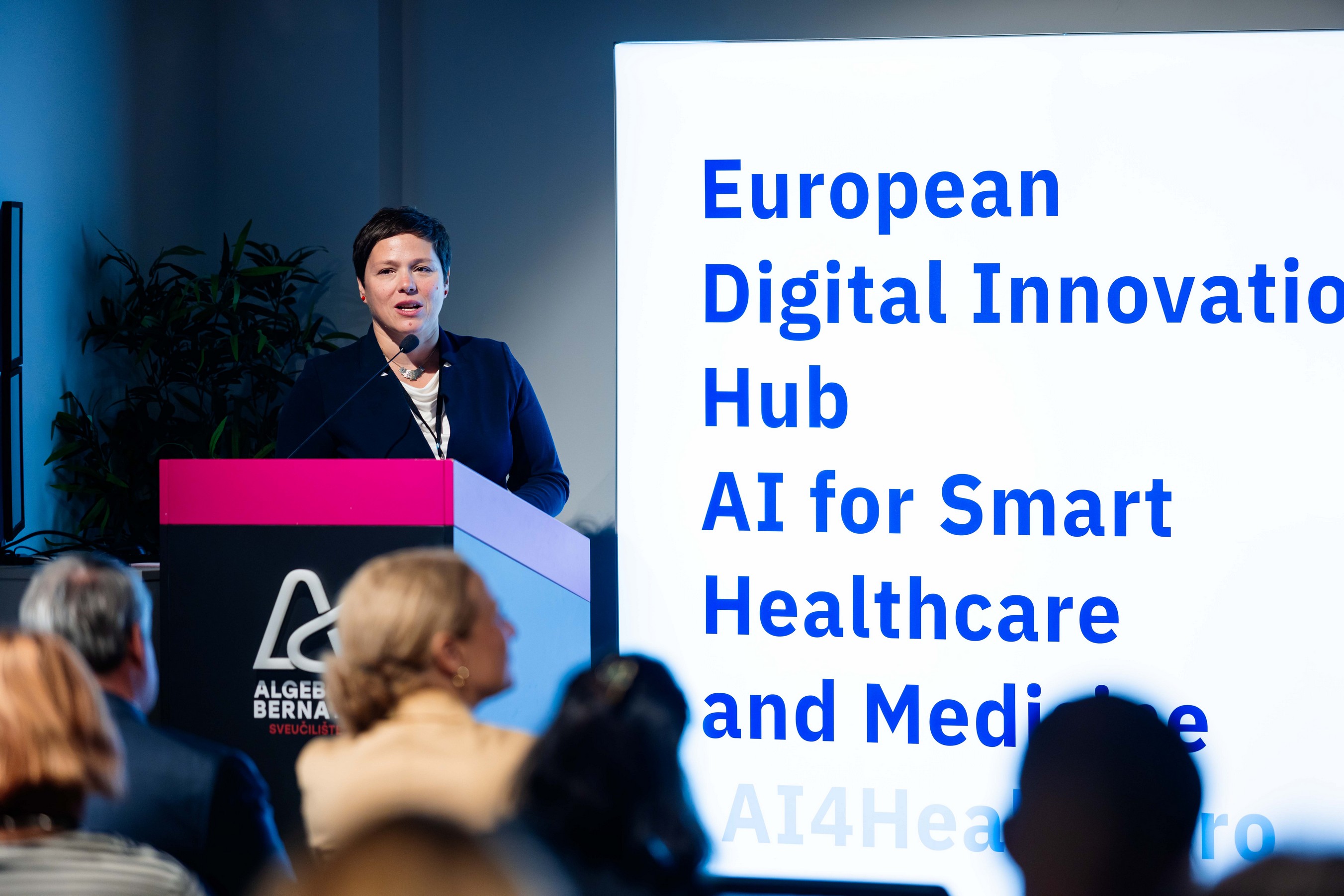
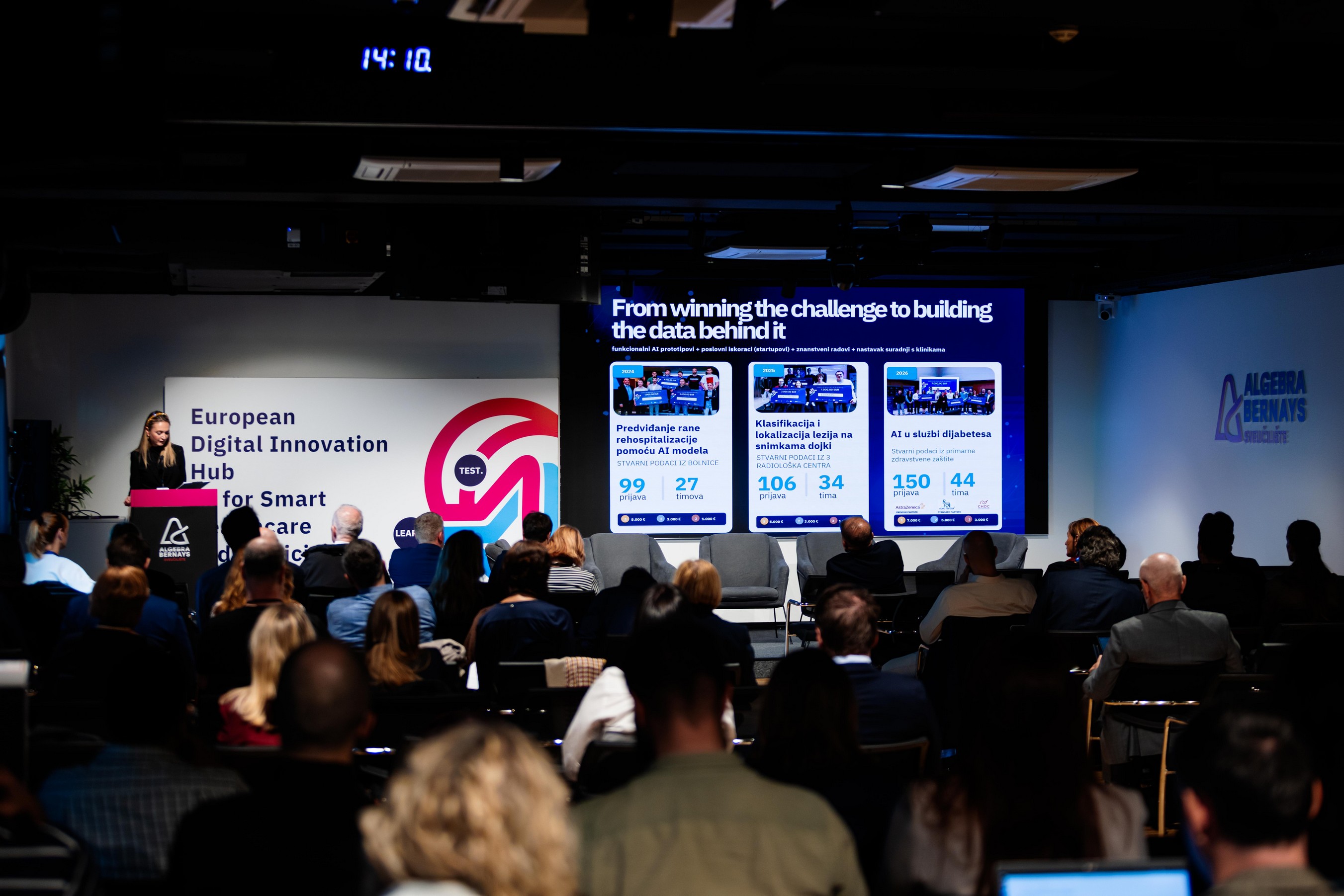
At its final conference, held at Algebra Bernays University in Zagreb, six participating organisations showcased solutions at different stages of development, from early prototypes to products approaching commercialisation and those already on the market. The conference was opened by David M. Smith, Director of the Ruđer Bošković Institute, and Diana Krčmar, Head of the Innovation Sector at the Ministry of Economy.
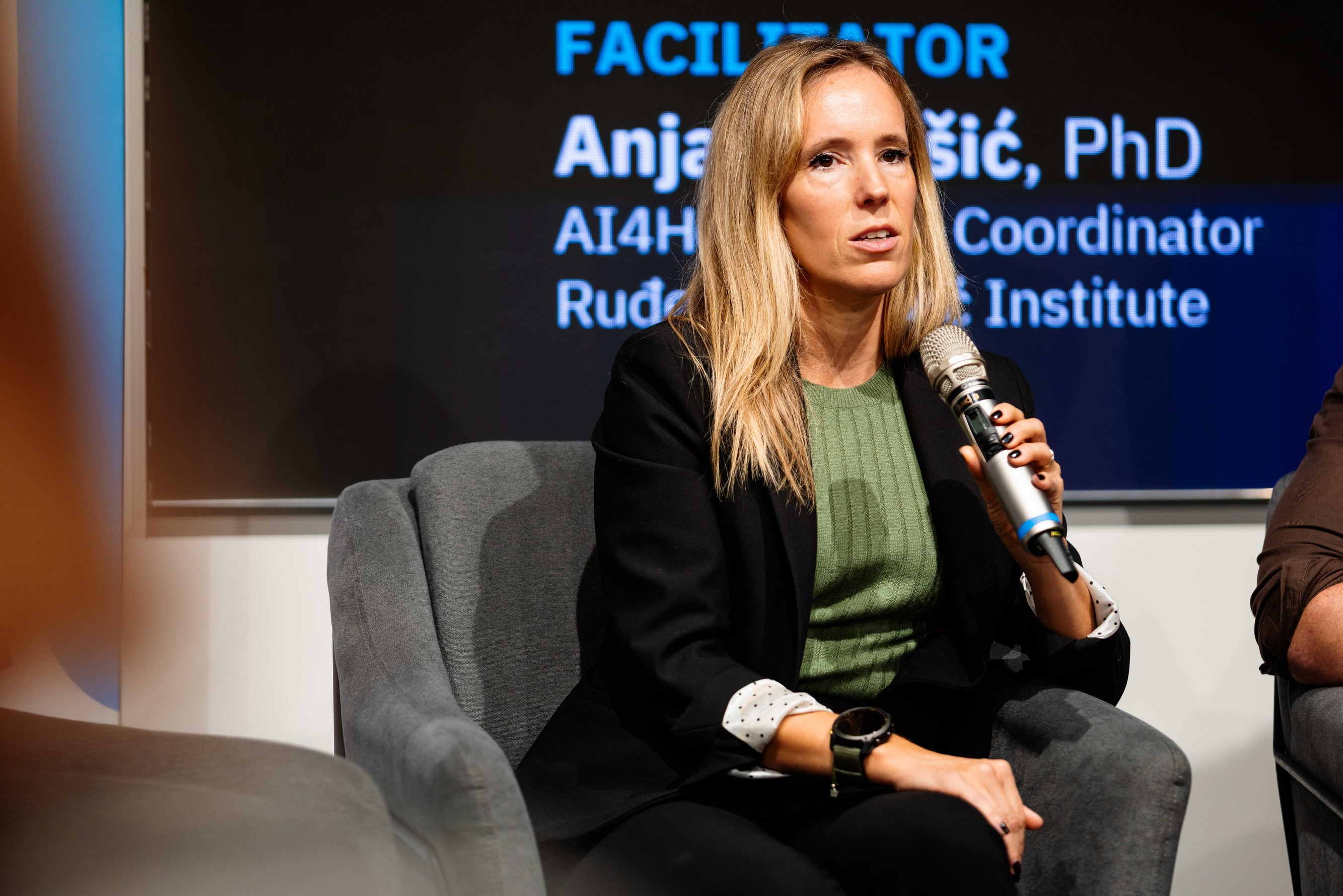
"At the end of a project like this, the most important question is whether the organisations we have worked with are further along than when they first came to us. Today, some of the solutions we have supported are approaching commercialisation, while others are already on the market," said Dr David M. Smith. He thanked the participating organisations for their trust, the project partners for their expertise and commitment, and project coordinator Dr Anja Barešić and the entire team for their work.
"AI4Health.Cro has brought together research institutions, technology companies, startups, hospitals and the public sector in a field where bringing a product to market is particularly challenging. Through the Hub's services, small and medium-sized enterprises have received support in developing competitive AI-based solutions. We are pleased that the Hub will continue its work for another three years," said Diana Krčmar, Head of the Innovation Sector at the Ministry of Economy.
Zrinka Ujević emphasised that the adoption of artificial intelligence in healthcare requires high-quality data, infrastructure, skills and trust. "Artificial intelligence should support our doctors, not replace them. AI4Health.Cro is an excellent example of how European Digital Innovation Hubs connect the scientific community, the healthcare system and entrepreneurs," she said.
Six Healthcare Solutions in Practice
Bringing a healthcare innovation from prototype to practical application requires access to data, clinical validation, regulatory compliance, infrastructure, financing and professionals equipped to use new technologies. These were precisely the challenges AI4Health.Cro addressed in its work with around 50 companies and 30 public-sector organisations.
"Our goal was not simply to deliver a service, but to help each organisation take the next tangible step forward," said Dr Barešić. She added that approximately one-fifth of the innovation testing services involved solutions requiring advanced computing capabilities. To support their development, the Hub facilitated access to national infrastructure and European supercomputing resources through EuroHPC.
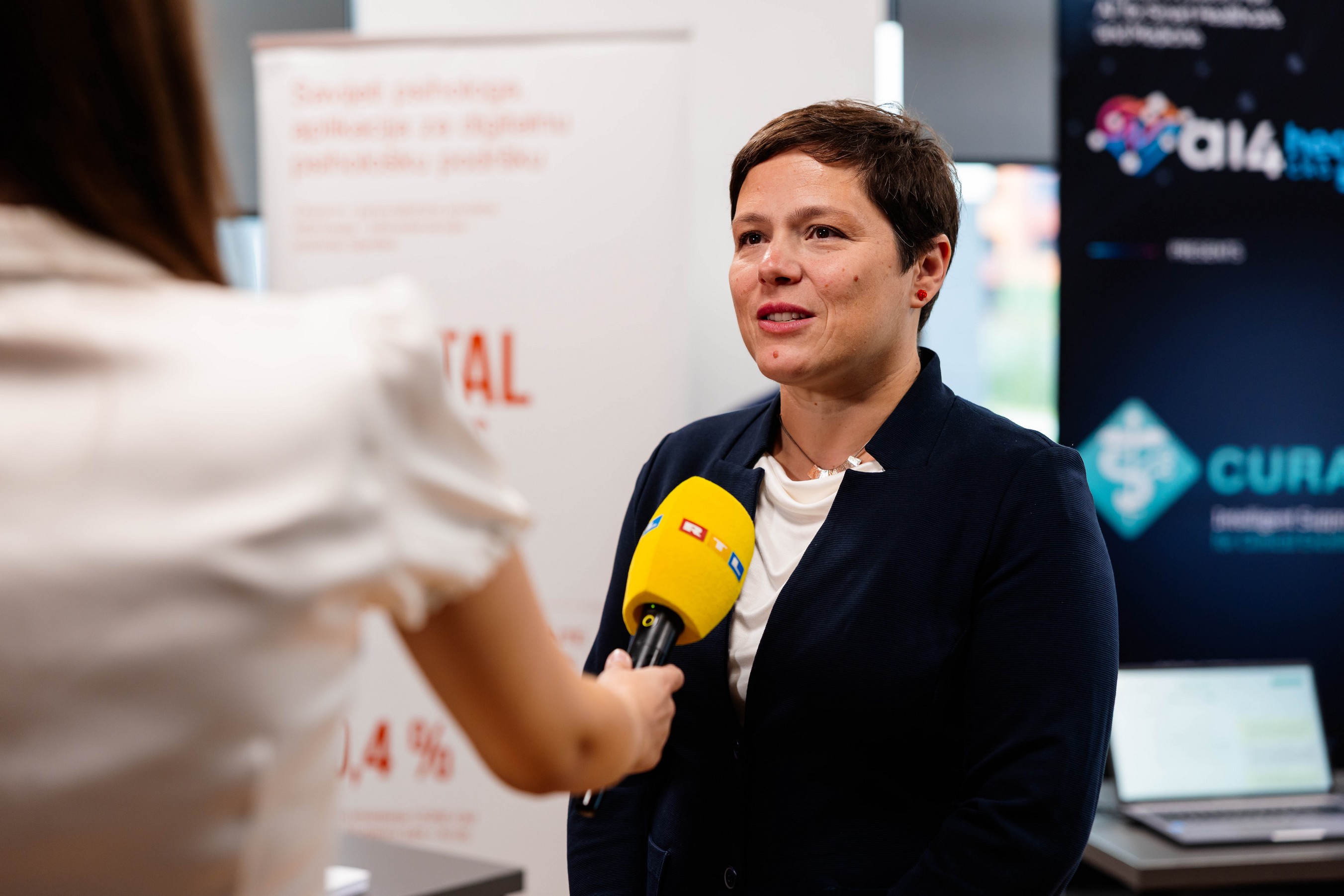
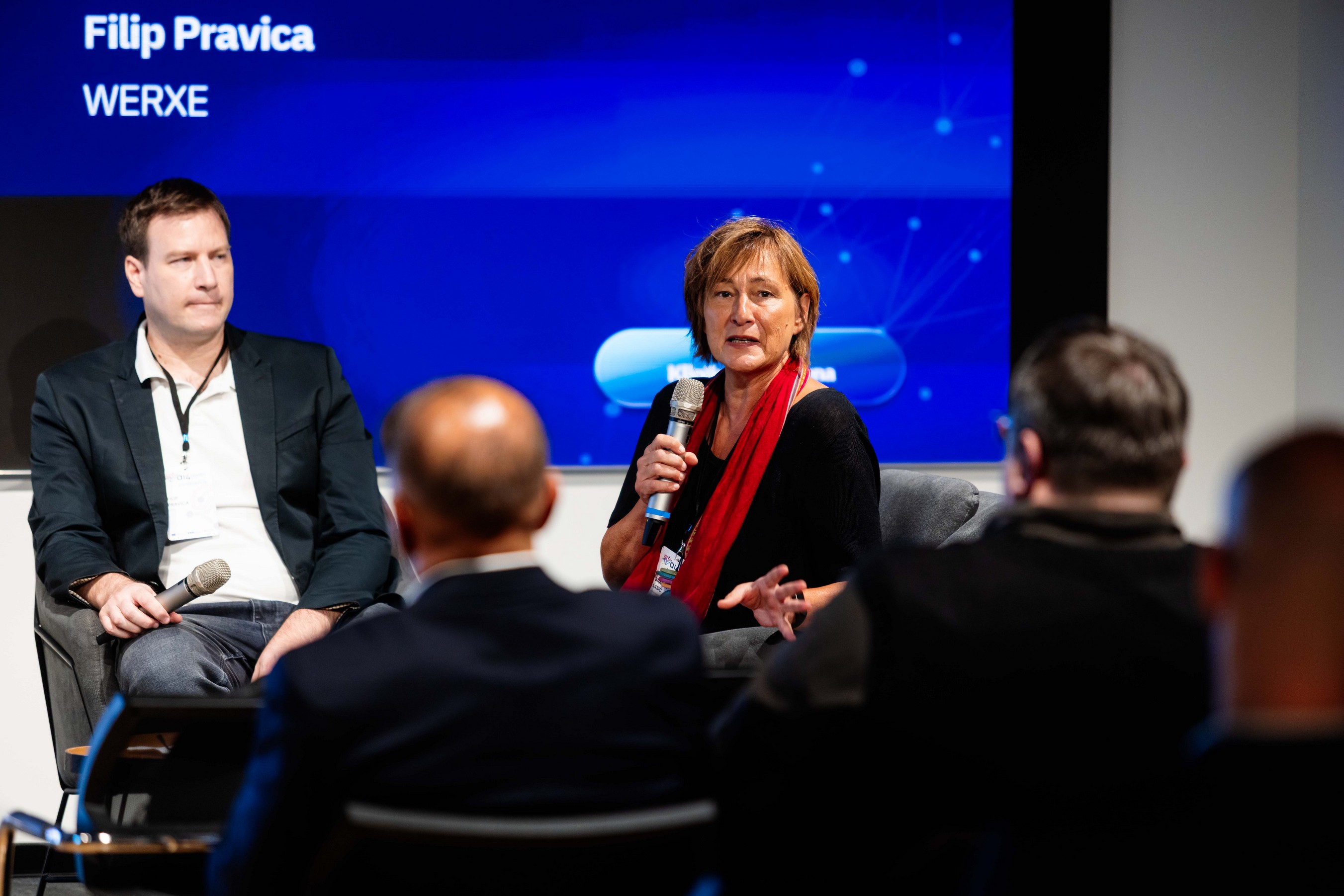
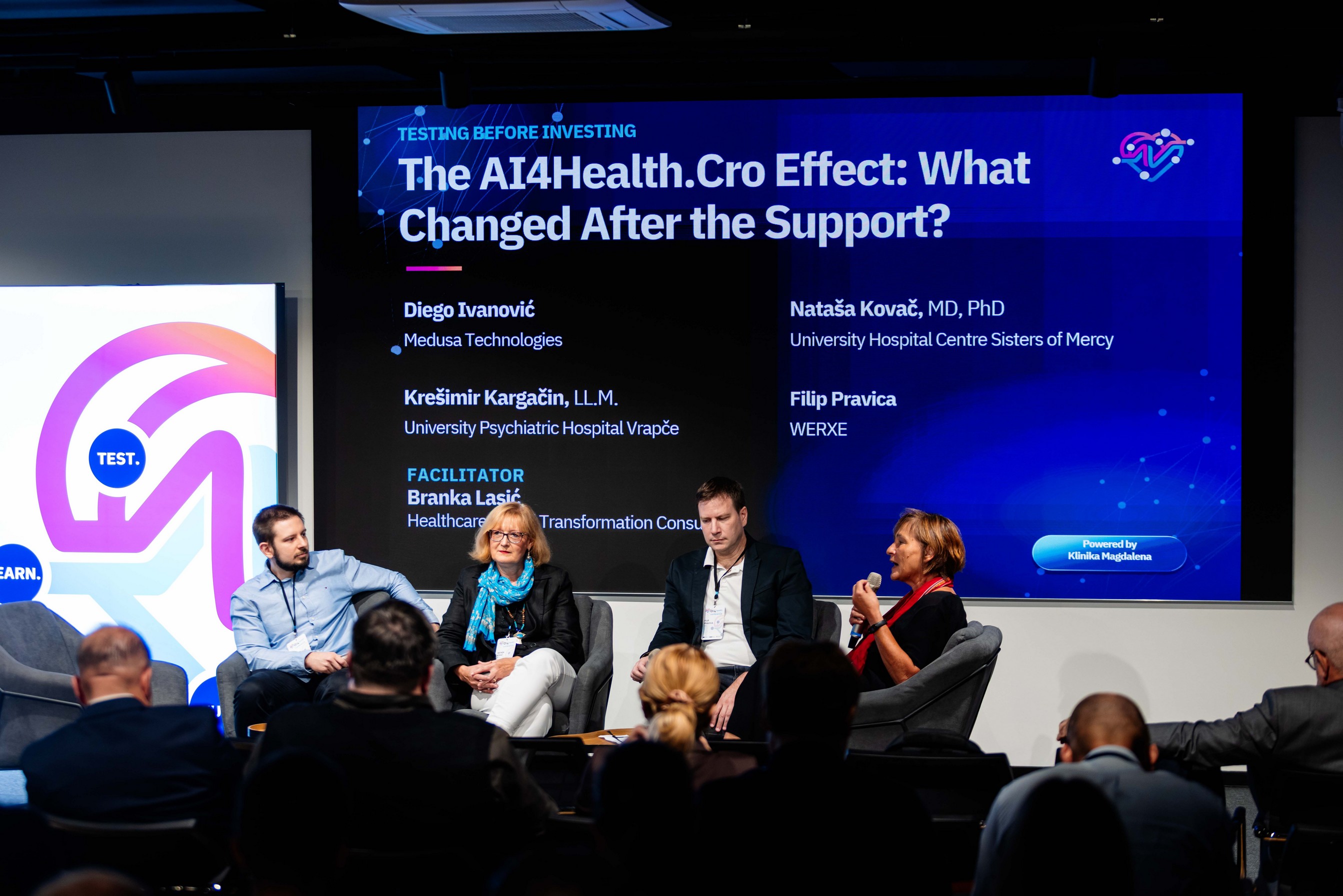
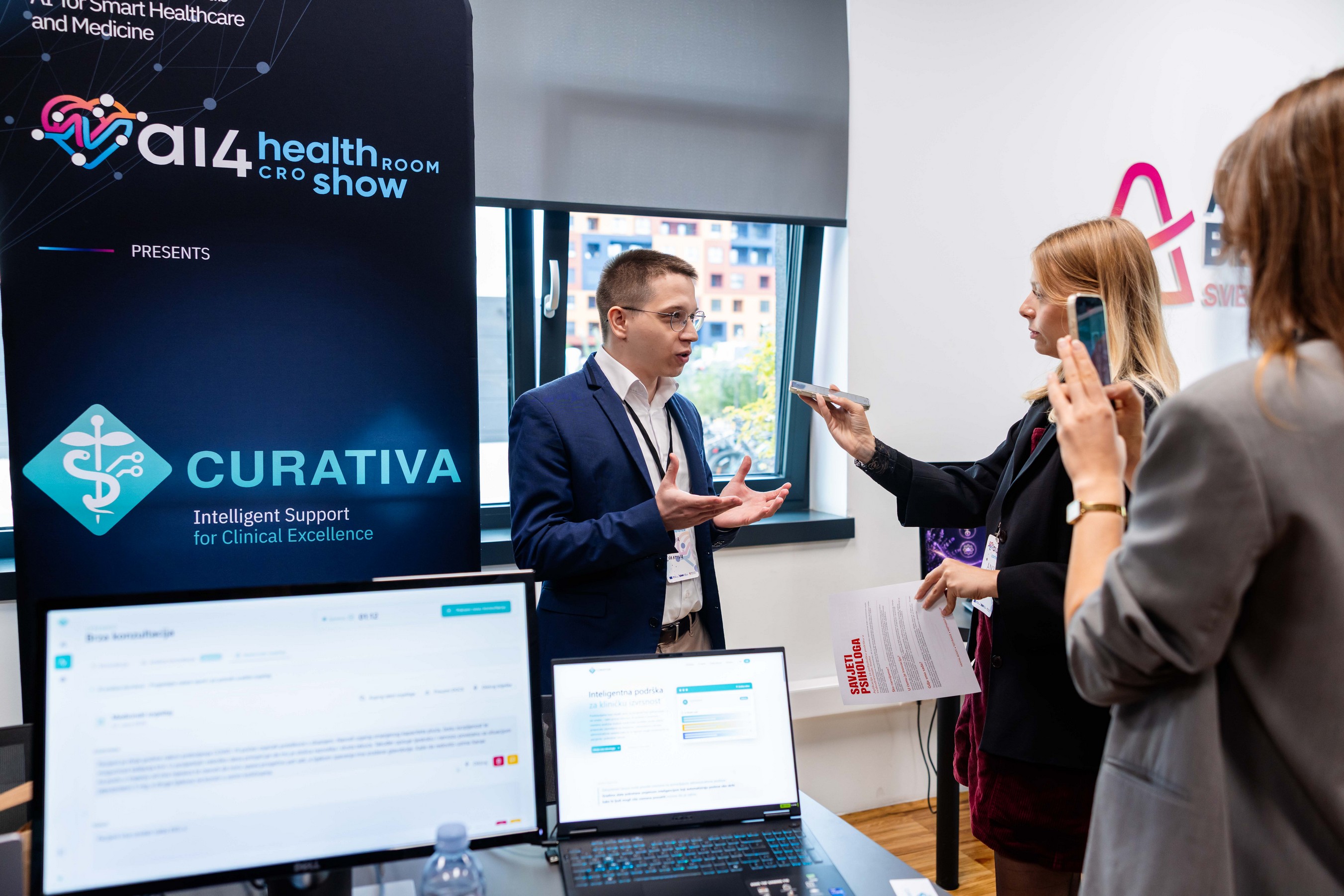
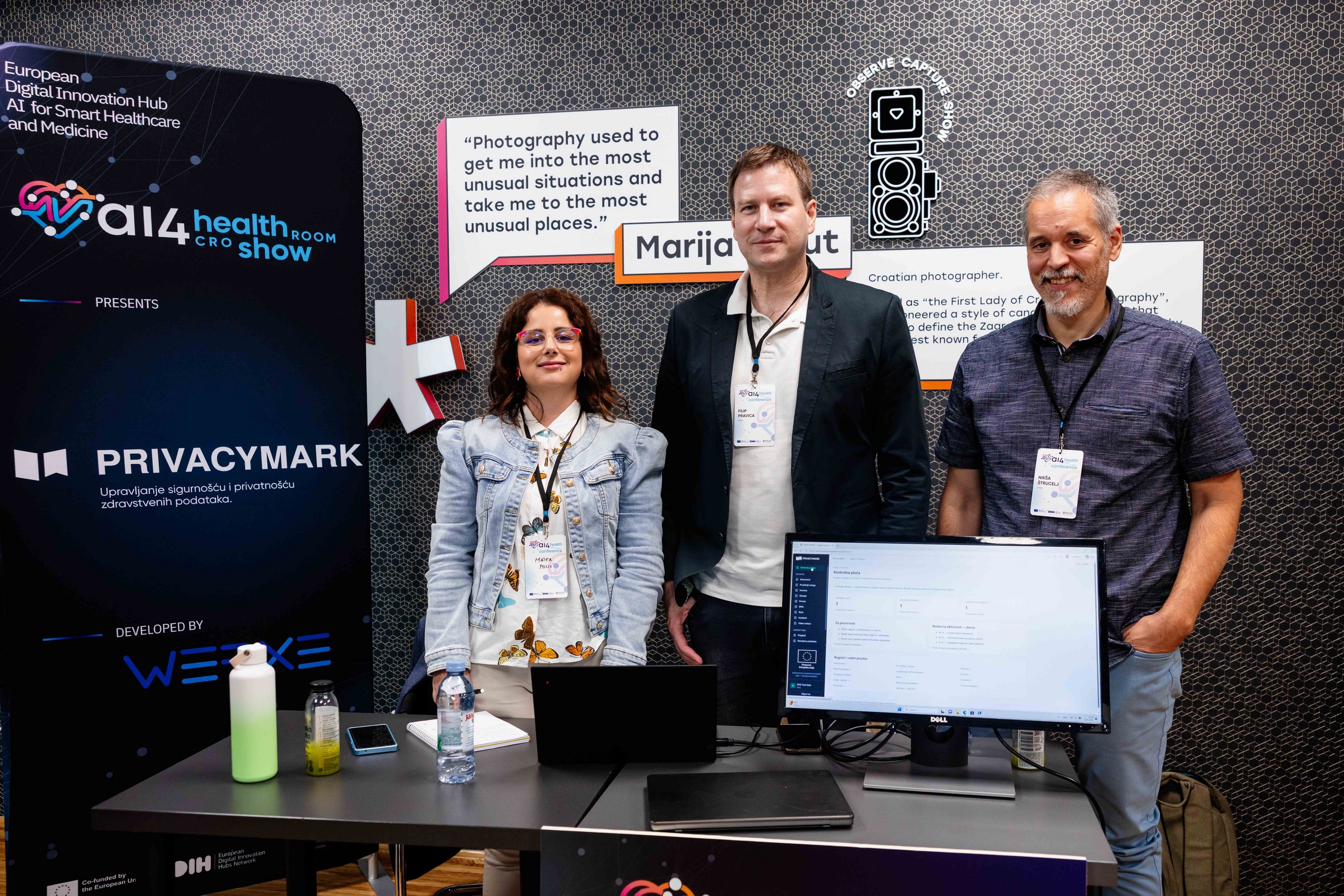
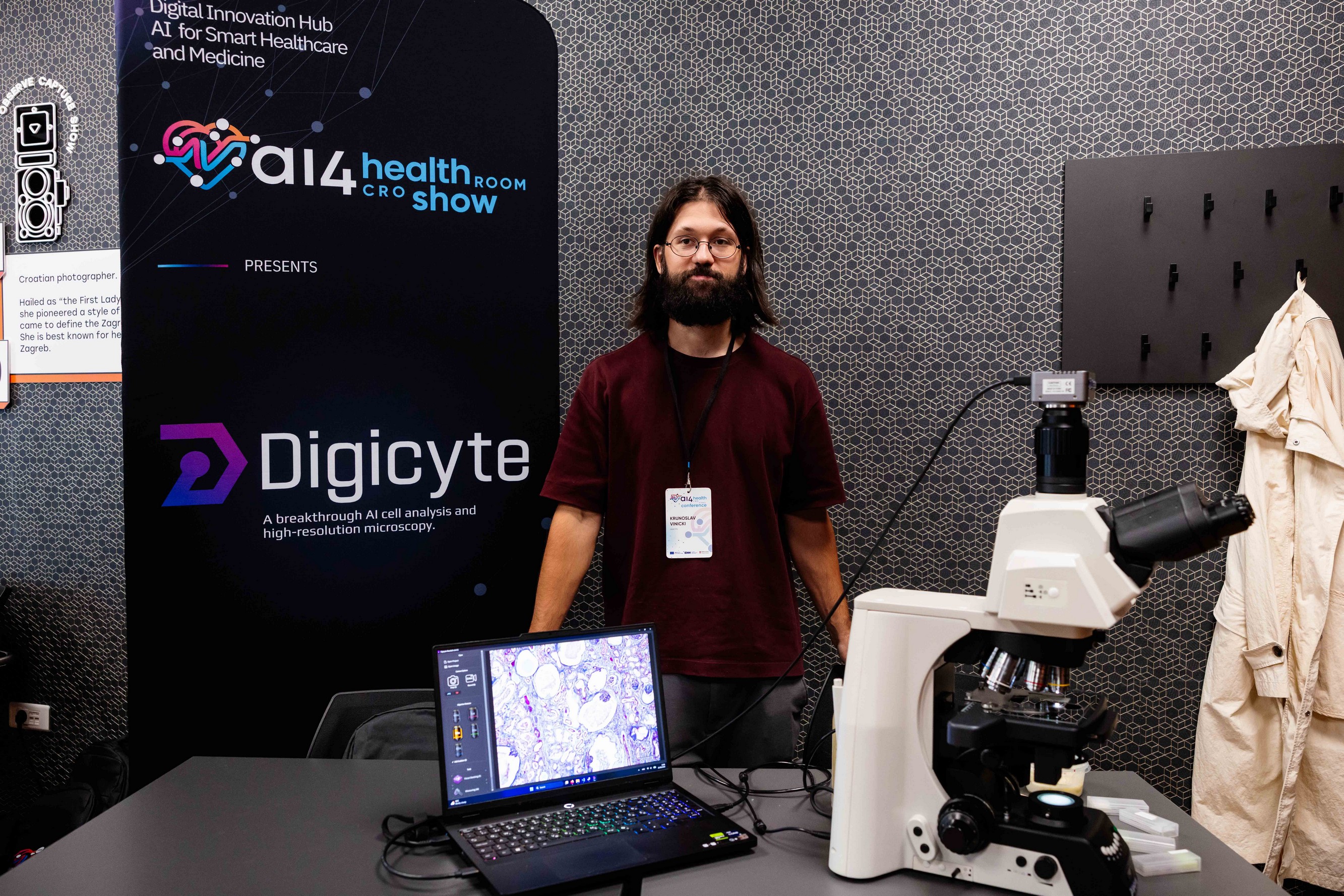
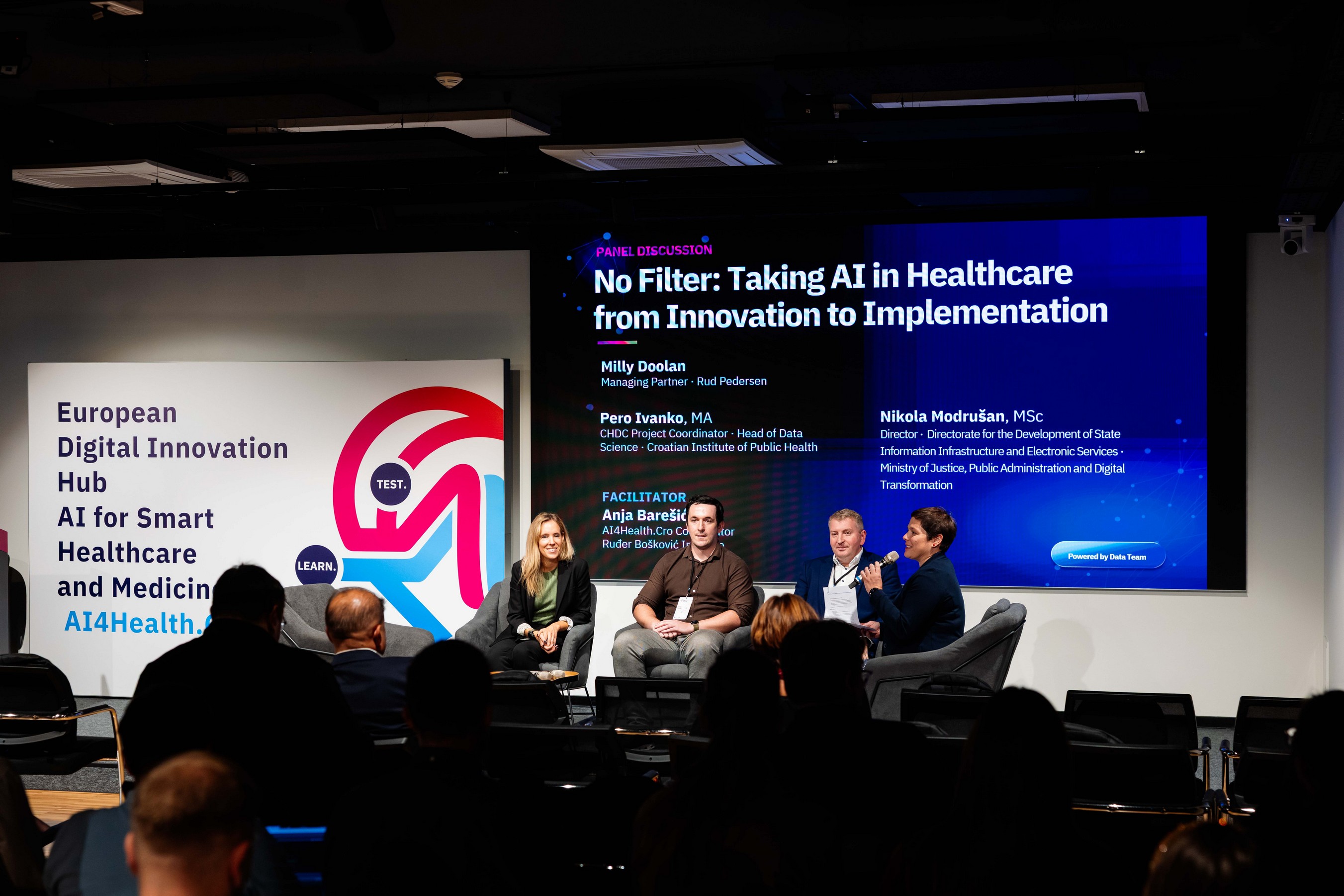
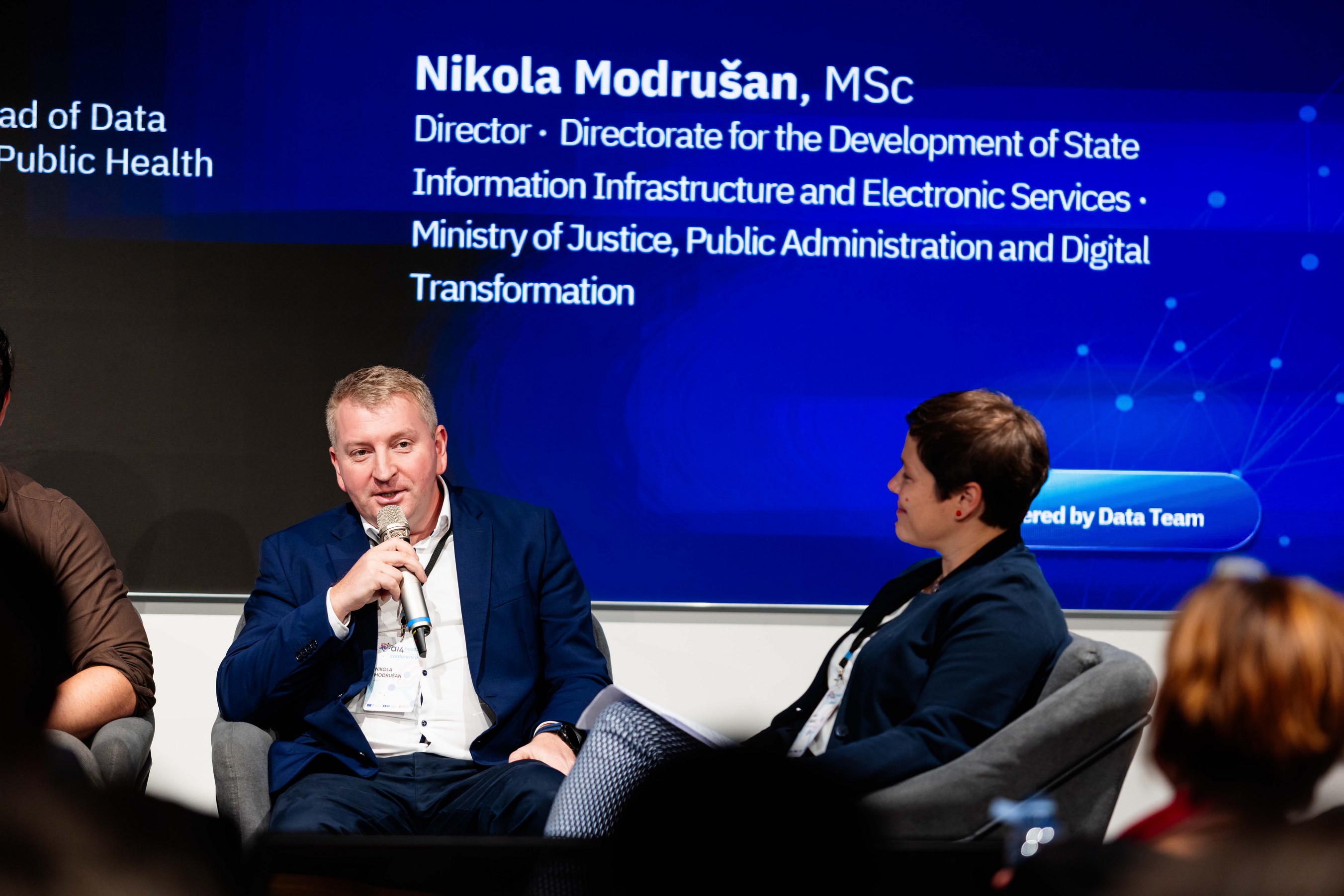
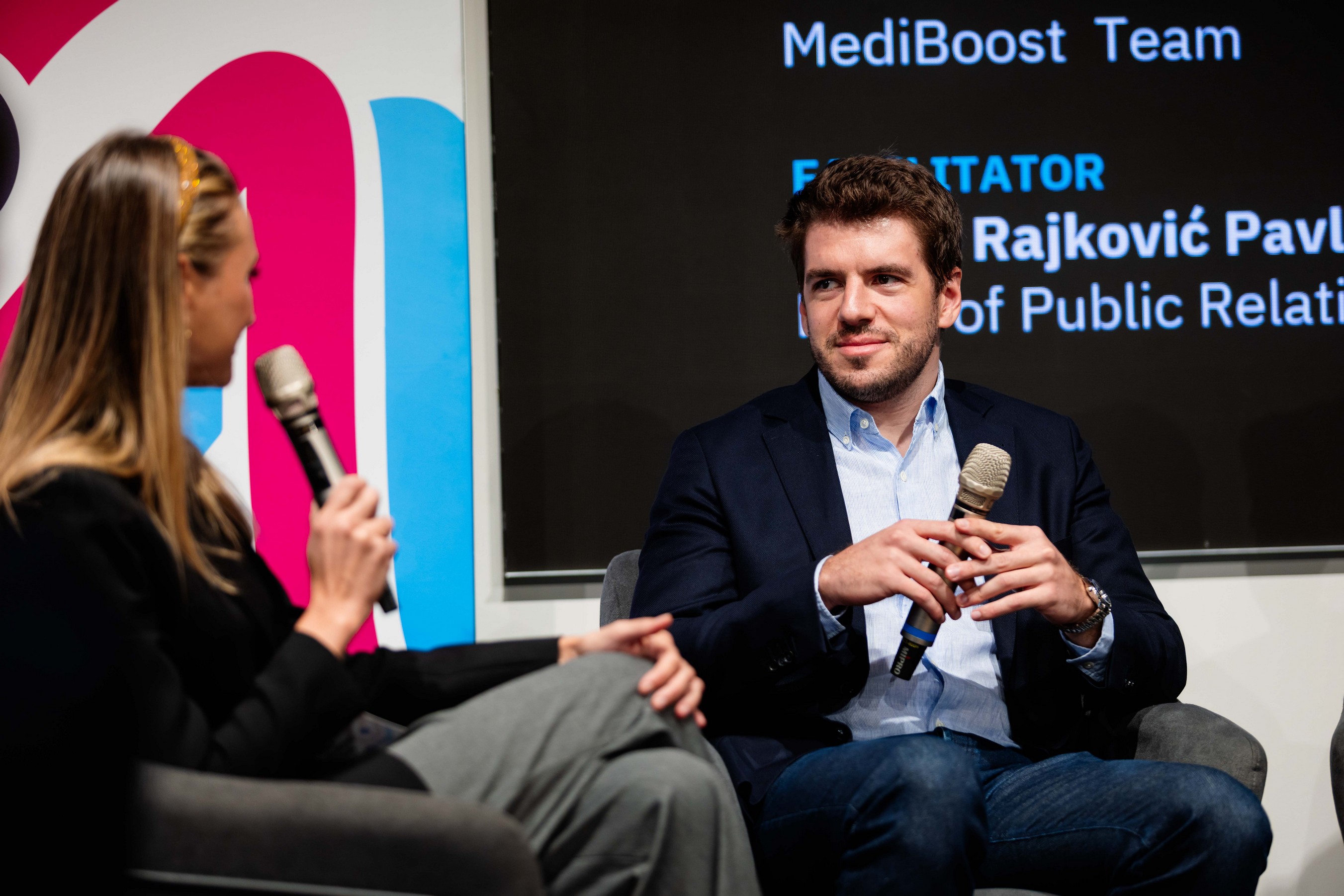
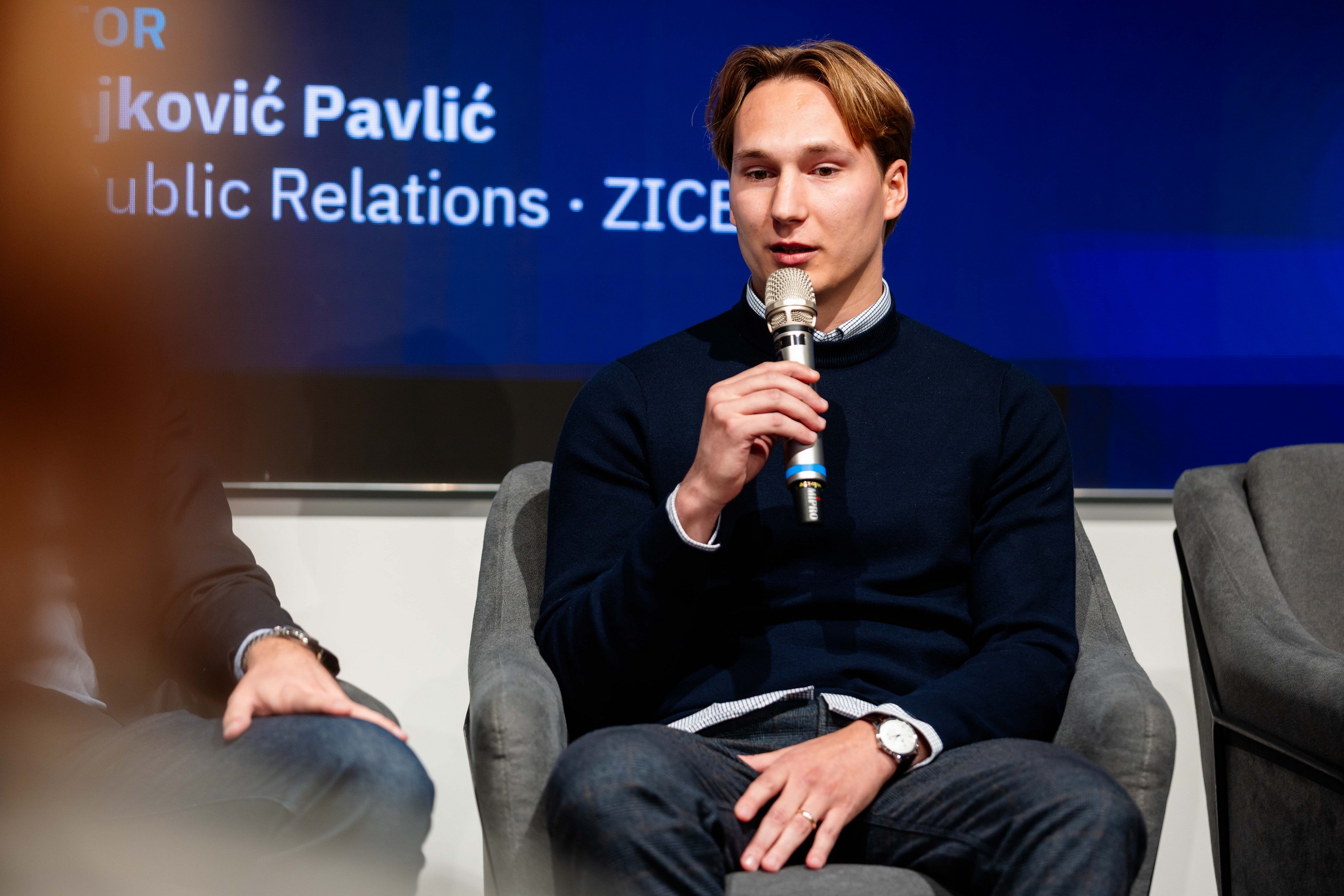
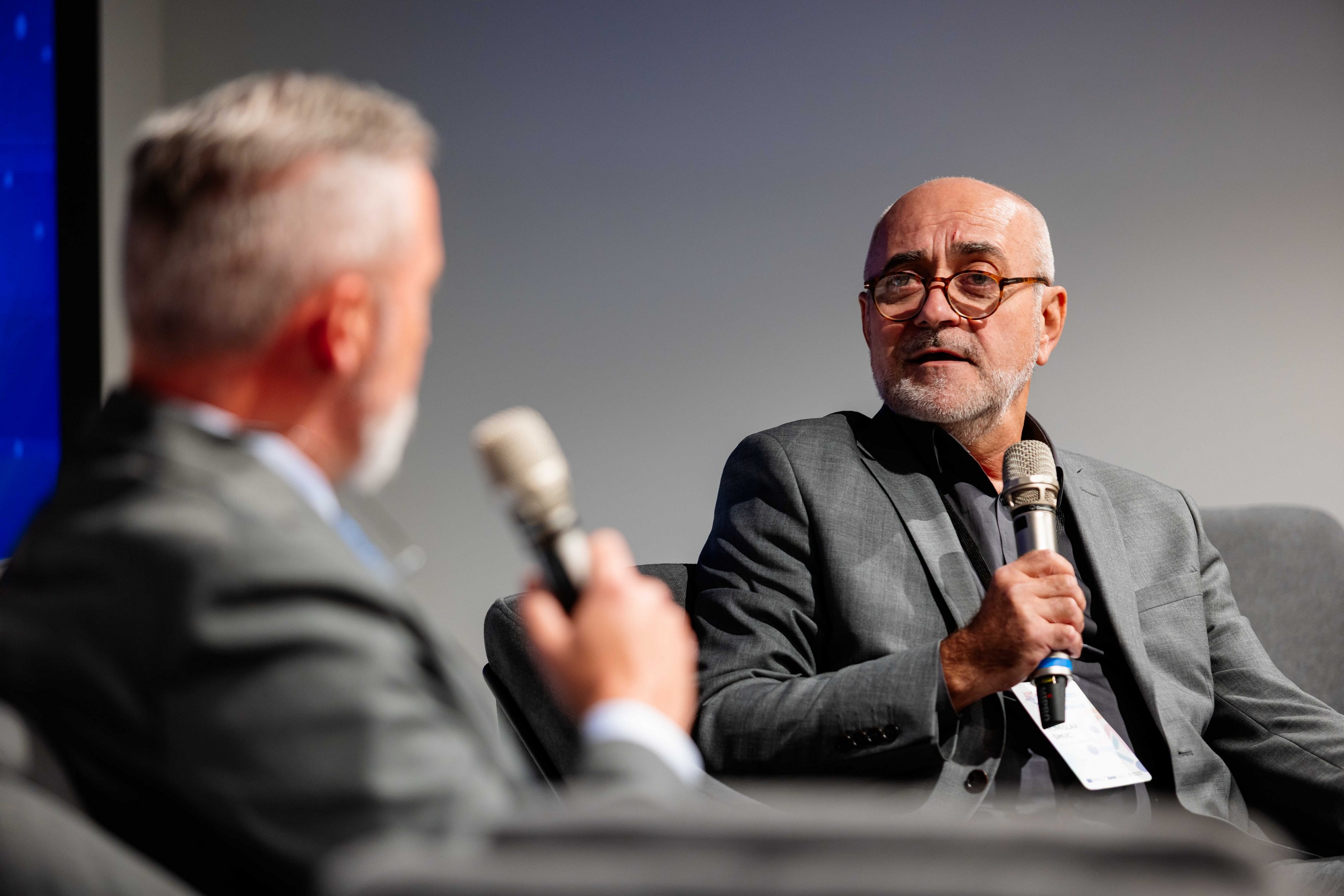
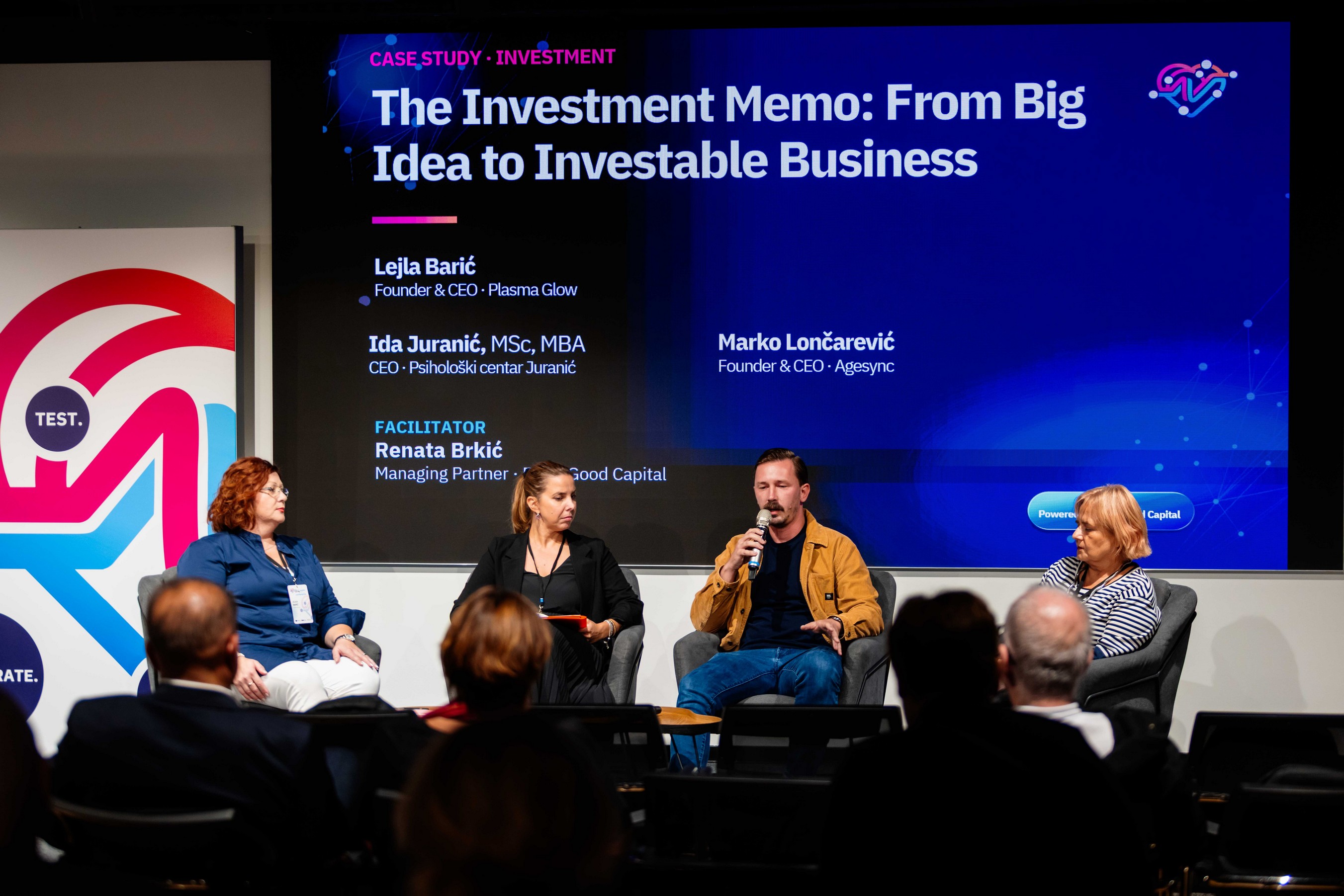
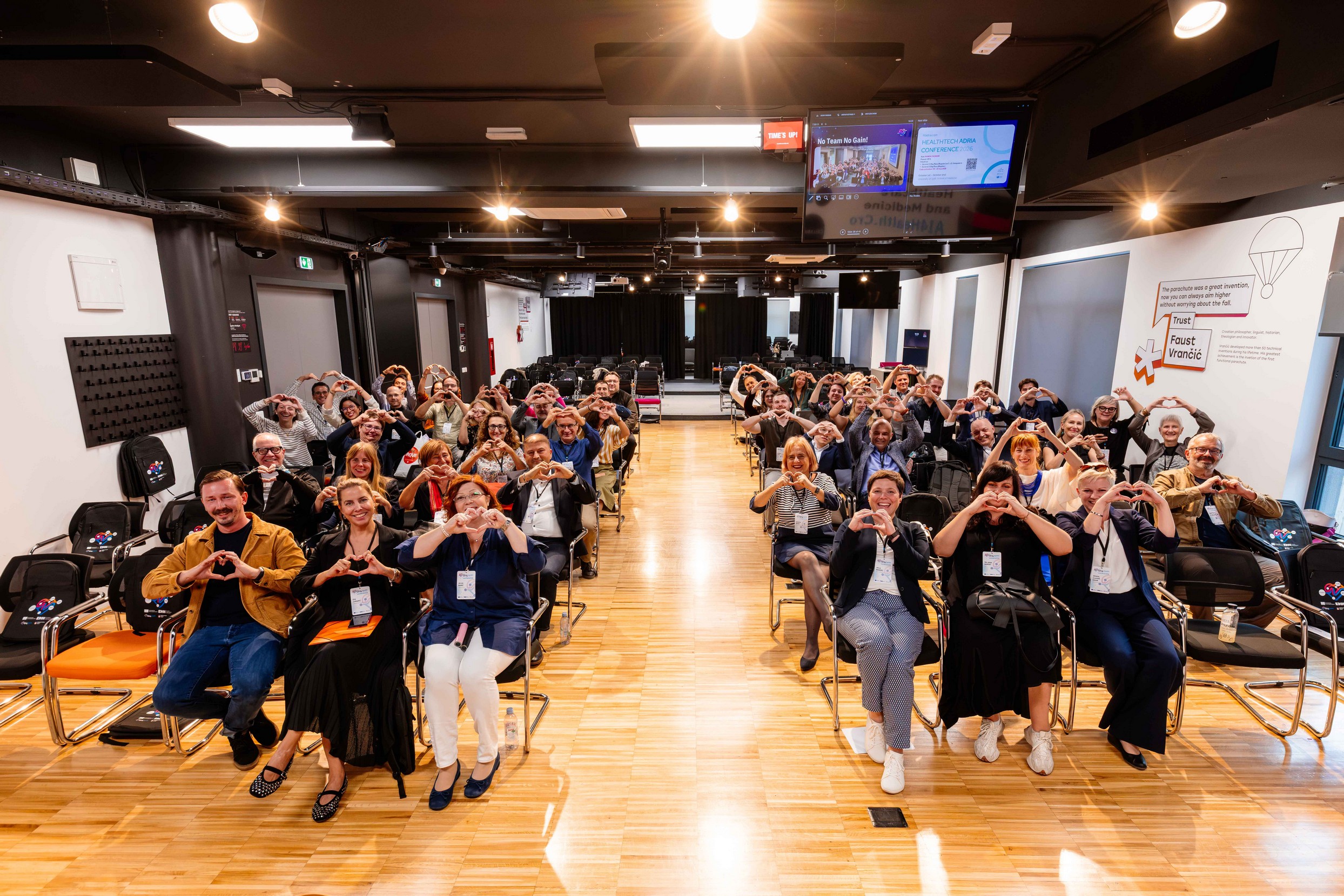
The AI4Health.Cro Showroom featured six healthcare solutions. TIS Grupa and Poliklinika Sabol demonstrated SENDD, a system that analyses infants' spontaneous movements recorded on a mobile phone to support earlier identification of neurodevelopmental risks. IVTECH presented Curativa.ai, an assistant designed to analyse medical data, generate evidence-based recommendations and automate selected administrative tasks. Digicyte showcased ResoluX, software that enhances the resolution of digital cytology images by integrating microscopy, camera technology and image processing. WERXE presented PrivacyMark, a platform designed to help healthcare institutions manage GDPR compliance and cybersecurity requirements.
Plasma Glow demonstrated EEYA, a functional prototype of a home skincare device based on hybrid cold plasma technology. Psihološki centar Juranić presented its digital psychological support solution. Visitors could try a brief self-assessment and an existing 14-day programme developed on the basis of MentalBoost.
Despite their different applications, participating organisations used the project to test how their solutions perform in real-world settings and whether they could demonstrate time and cost savings before further investment or implementation.
Secure Use of Health Data and Digital Training for Physicians
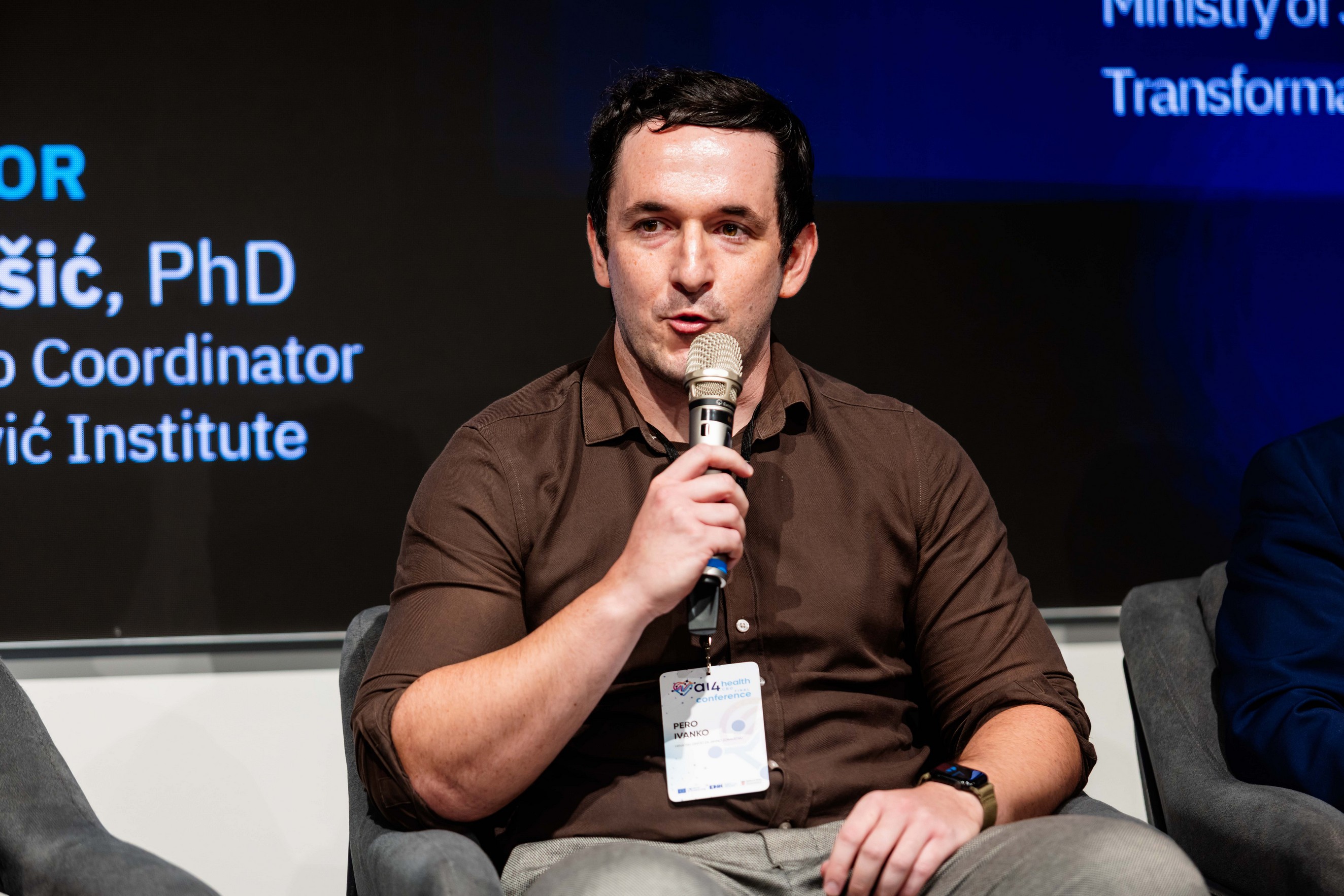
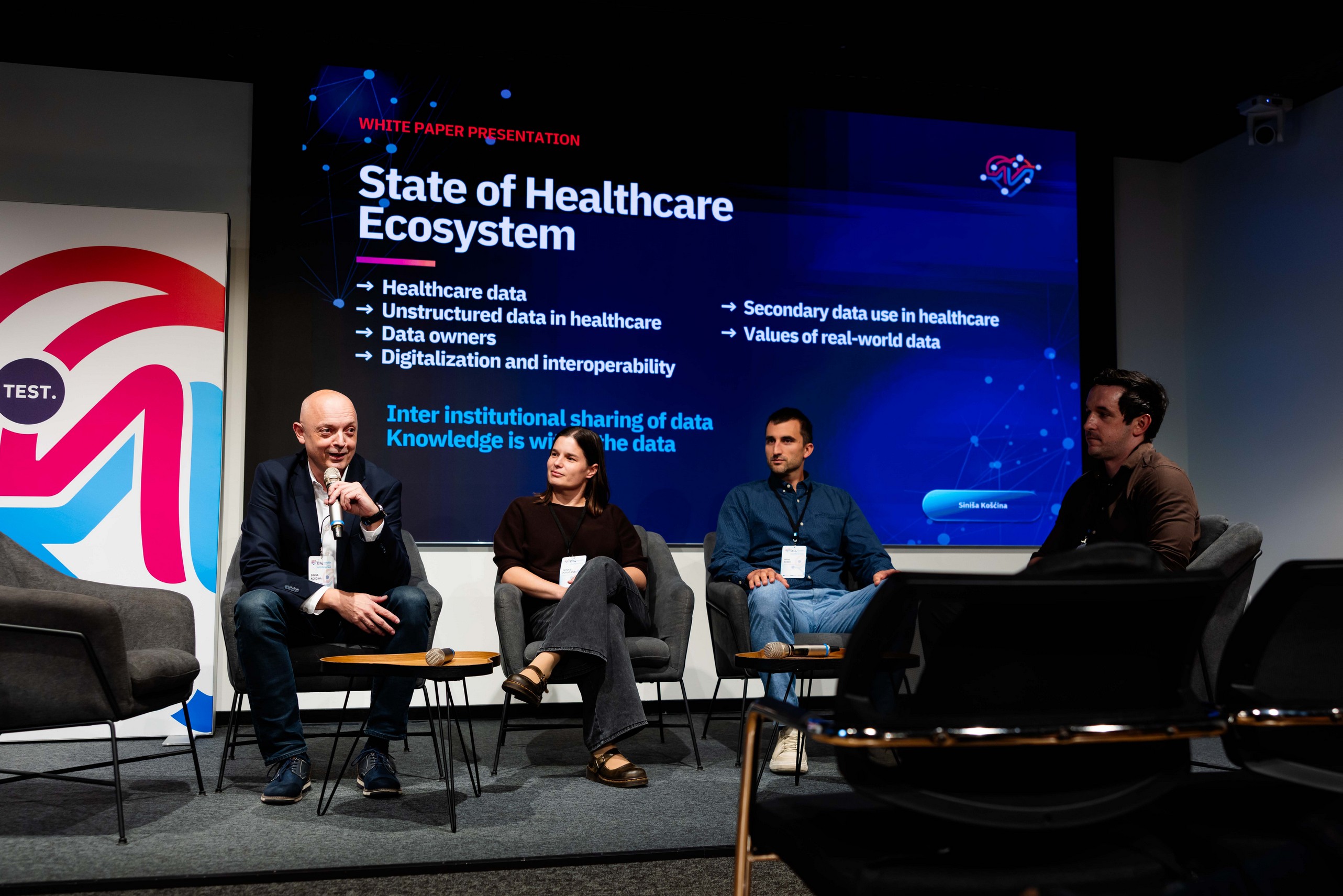
The secondary use of health data was one of the conference's central themes. Through three annual Innovation Challenges, AI4Health.Cro piloted the use of real-world anonymised health data in a controlled environment and developed the first model of a secure processing environment for this purpose. The conference also featured the presentation of a White Paper comparing the situation at the start of the project with the progress achieved over three years and setting out recommendations for the healthcare system, researchers, public institutions and technology companies. The White Paper on the secondary use of health data was presented by members of the AI4Health.Cro data team: Siniša Košćina, Director of Mergers, Acquisitions and Business Development in Healthcare at IN2 Group; Zrinka Potočanac, Solution Architect and Digital Health Consultant at Ericsson Nikola Tesla; Dr Miha Keber, researcher at the Ruđer Bošković Institute; and Pero Ivanko, Head of the Department of Data Science and Analytics at the Croatian Institute of Public Health.
"We need to give innovators access to high-quality data, but within a framework of clear, secure and responsibly established rules," said Barešić. She added that these experiences are particularly relevant as Croatia and Europe prepare to implement the European Health Data Space. The project has also contributed to discussions on the EU Artificial Intelligence Act, Croatia's national AI strategy and the future governance of health data.
The Hub has also worked to strengthen the digital competencies of healthcare professionals. In partnership with the Croatian Medical Chamber, 136 physicians participated in three specialised courses, delivered over two training cycles, covering data, digital systems and artificial intelligence in healthcare.
RBI to Continue Coordinating the Hub
AI4Health.Cro has secured funding from the European Union's Digital Europe Programme for a new three-year phase. The Ruđer Bošković Institute will continue to coordinate the Hub, with Algebra Bernays University and Smion joining the consortium as two new partners. Algebra Bernays brings expertise in education and connecting academic knowledge with industry, while Smion contributes experience in startup development, business model validation, market access and investment readiness.
Dr David M. Smith also expressed particular appreciation to the Faculty of Engineering at the University of Rijeka, Feels Good Capital and the Zagreb Innovation Centre (ZICER) for their contributions during the project's first phase. "The Ruđer Bošković Institute will continue to coordinate AI4Health.Cro with the same objective: to create the conditions in which promising ideas can be tested, developed and, if they prove their value, brought to the people who can benefit from them," he concluded.
