

MetaPatvor Method Accurately Detects Food Fraud and Incorrect Labelling
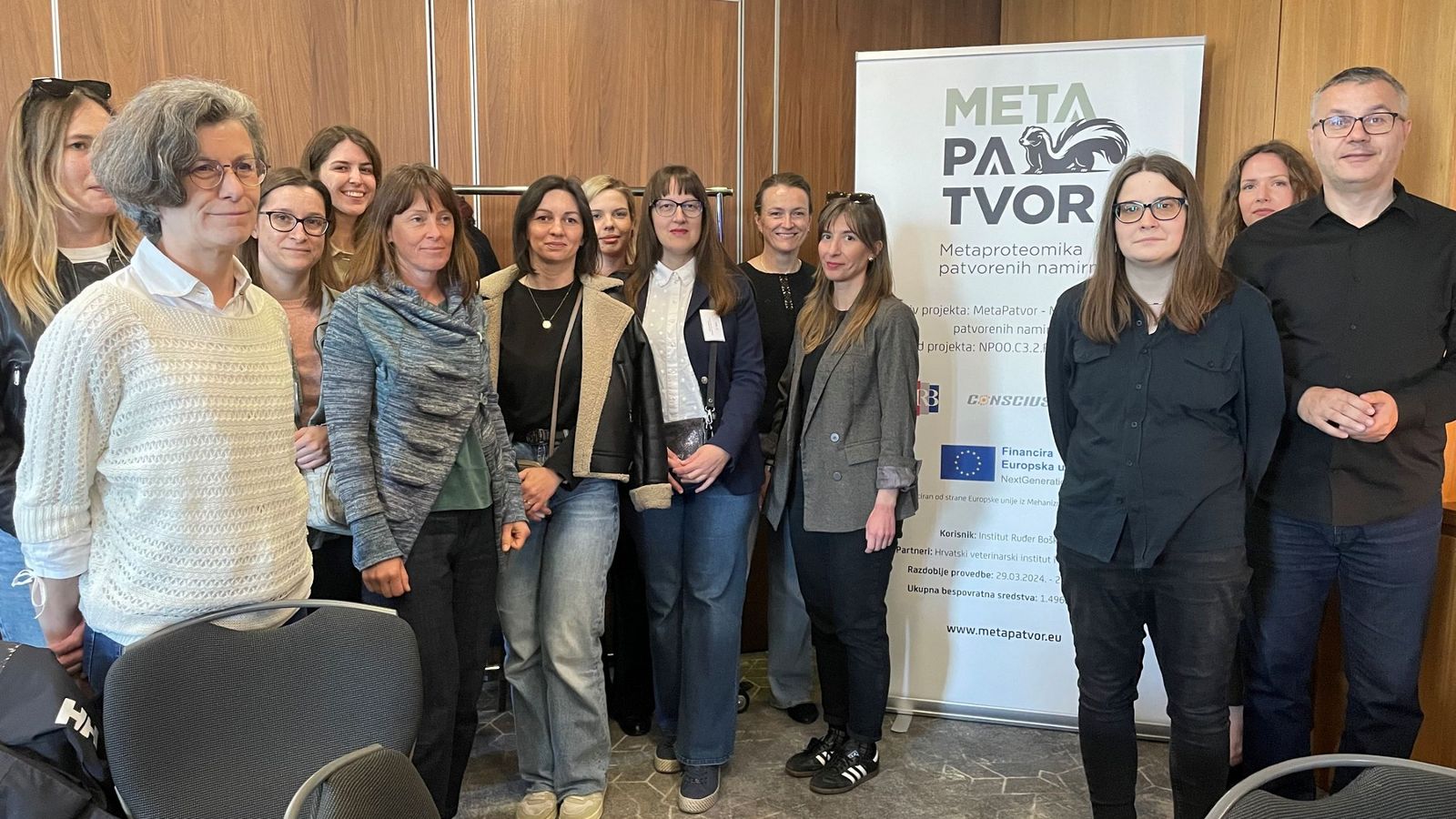
RBI team
The Ruđer Bošković Institute, Division of Molecular Medicine, Laboratory for Bioanalytics, in cooperation with the Croatian Veterinary Institute and the company Conscius, presented today in Zagreb the final results of the project “MetaPatvor – Metaproteomics of Adulterated Food Products”. The project has resulted in an innovative and unique methodology for the rapid and selective detection of adulteration in food products.
Food fraud is most commonly carried out by mixing cheaper types of insect, fish, plant or mammalian tissue into a product declared as more expensive, or by simply substituting a cheaper species for a more expensive one. One example is declaring cheaper bluefin tuna (Thunnus thynnus) as the significantly more expensive yellowfin tuna (Thunnus albacares). Such substitution is carried out by declaring a product as being made entirely from a specific species of fish, cephalopod, beef, pork, veal or a meat mixture of a precisely defined composition, although this is not actually the case. The nutritional value of such products is inadequate, and the product may also pose a health risk.
“An advanced computer programme, based on research in artificial intelligence and expert bioinformatics systems, successfully distinguished all laboratory mixtures, as well as industrial mixtures, which in most cases corresponded to their declarations, such as luncheon meats, pâtés, salamis and sausages. We tested the software package on laboratory samples, that is, mixtures of known composition, and then on unknown samples, namely mixtures of unknown composition. In doing so, we were able to fully distinguish the previously mentioned bluefin tuna from yellowfin tuna,” said Associate Professor Mario Cindrić, project leader. He added that the methodology will significantly reduce the time required to identify adulteration in food products, while increasing the reliability of the results.
The MetaPatvor innovation enables high-resolution mass spectrometers from any manufacturer to be used for the detection of food adulteration, or metaproteomes. This makes the innovation highly competitive in laboratory and control activities, while also giving it broader application potential, ranging from clinical diagnostics and molecular biology to ecology.
The project, worth almost EUR 1.6 million, lasted a total of 27 months and will be completed in July 2026. In addition to Croatian partner institutions, cooperation during the project was expanded to include international institutions through the participation of Dr David Goodlett from the University of Victoria in Canada and the UVic Genome BC Proteomics Centre in Canada. The market need for the MetaPatvor solution has already been validated, an application for an innovative international patent is being prepared, and the final project results will be published in the international scientific literature.
Contact Us
Više informacija