

Satellite DNA — the genome’s overlooked infrastructure
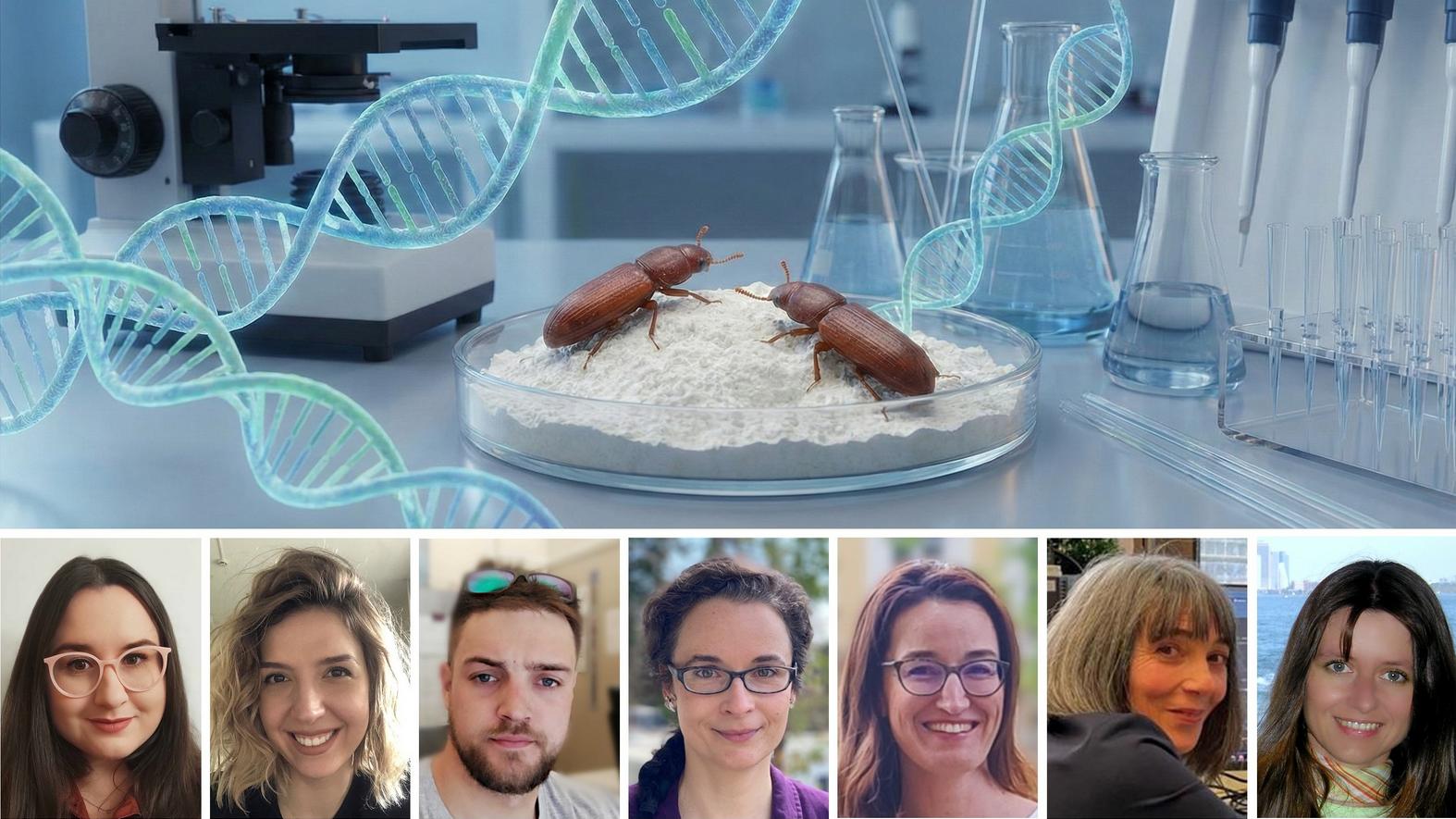
A team of molecular biologists from the Ruđer Bošković Institute (RBI), from the Laboratory for Non-coding DNA, has published a scientific paper showing how dynamic changes in so-called satellite DNA sequences can significantly shape genomes and contribute to differences between very closely related organisms.
The paper was published in the renowned journal Genome Research, one of the most influential journals in genomic biology, and it is also included in the prestigious Nature Index database.
When we talk about the genome, we most often think of genes—the parts of DNA that carry instructions for building and operating an organism. However, genes make up only a small portion of genetic material. A large part of the genome consists of repetitive sequences, including satellite DNA. These are non-coding sequences based on short motifs repeated thousands of times in a row. Because of their monotonous organization and unclear function, they were long neglected and regarded as genomic “junk” and “selfish DNA molecules”.
Although their function has still not been fully clarified, we now know that satellite DNA is often found in centromeres—the central parts of chromosomes that ensure chromosomes are properly distributed into newly formed cells during cell division. While the function of centromeres is the same across different organisms, their satellite DNA differs, which further adds to the controversy surrounding these sequences.
Why flour beetles?
Flour beetles of the genus Tribolium live in cereal products and are well-known pests in food storage facilities. But how did these kitchen-cupboard intruders end up at the center of scientific research?
“Anthropocentric curiosity is understandable, but if we want to shed light on a universal biological question—such as the functional and organizational structure of centromeres—we need, alongside a human model, to include other organisms in our research. For some time now, we have known that flour beetle genomes contain large amounts of satellite DNA, which makes them an excellent model system for studying satellite sequences. However, what was crucial for this research was progress in sequencing methods and bioinformatic tools, which enabled us to reach previously inaccessible parts of the genome,” explains Dr. Brankica Mravinac, the study leader and corresponding author.
What did the scientists discover?
In this study, the researchers focused on two evolutionarily closely related flour beetle species, Tribolium freemani and Tribolium castaneum. These insects can interbreed, but their hybrid offspring is sterile, making them an ideal platform for investigating the differences that separate species.
The scientists first sequenced the genome of T. freemani and computationally extracted tandemly repeated sequences. They identified 135 different satellite DNAs that together make up almost 40% of the genome, with a single type accounting for nearly one third of the total DNA.
By comparing the genome of T. freemani with that of T. castaneum, they found that the dominant differences are not located in genes, but in centromeric regions—built from entirely different, highly abundant satellite DNAs.
Using bioinformatic analyses of both genomes, the scientists were able to determine which ancestral “proto-sequences” these satellite DNAs evolved from, and concluded that their species-specific amplification must have occurred over a relatively short evolutionary period.
“The exciting part of the research was the path that led us to the discovery. None of the methods we used could, on its own, provide a complete answer—only a combination of the most advanced DNA sequencing, computational analyses, and cytogenetic methods enabled us to clarify how completely different sequences are organized in related genomes within functionally equivalent parts of chromosomes,” emphasizes Dr. Damira Veseljak, the paper’s first author, for whom this research is also part of her doctoral work.
Why is this research important?
Evolution does not change only genes, but also the “infrastructure” that surrounds them. The boundary between species is sometimes not drawn in genes, but precisely in the neglected, repetitive part of the genome. Satellite DNAs are important building blocks whose dynamic changes strongly influence the shaping and reshaping of genomes. This, the researchers suggest, may hold part of the answer to why species that can interbreed and whose genes appear almost identical nevertheless produce sterile offspring—as is the case with Tribolium beetles.
“Satellite DNA clearly represents the greatest difference between these evolutionarily close genomes, yet the question remains open as to whether differences in satellite DNA are the cause of speciation or its consequence. Further research in pursuit of that answer will bring us closer to a better understanding of how genomes change and how biological diversity emerges from genetic similarity,” the authors note.
The results of the study, conducted entirely at RBI, were published in the paper titled: “Dynamic evolution of satellite DNAs drastically differentiates the genomes of Tribolium sibling species”. In addition to Dr. Brankica Mravinac and Dr. Damira Veseljak, the research team includes Dr. Evelin Despot-Slade, Dr. Marin Volarić, Lucija Horvat, Dr. Tanja Vojvoda Zeljko, and Dr. Nevenka Meštrović.
The research was fully funded by the Croatian Science Foundation (HRZZ) through project IP-2019-04-5522.
Contact Us
More info