

The CroQCI Project Lays the Foundations for a Quantum-Secure Communication Future
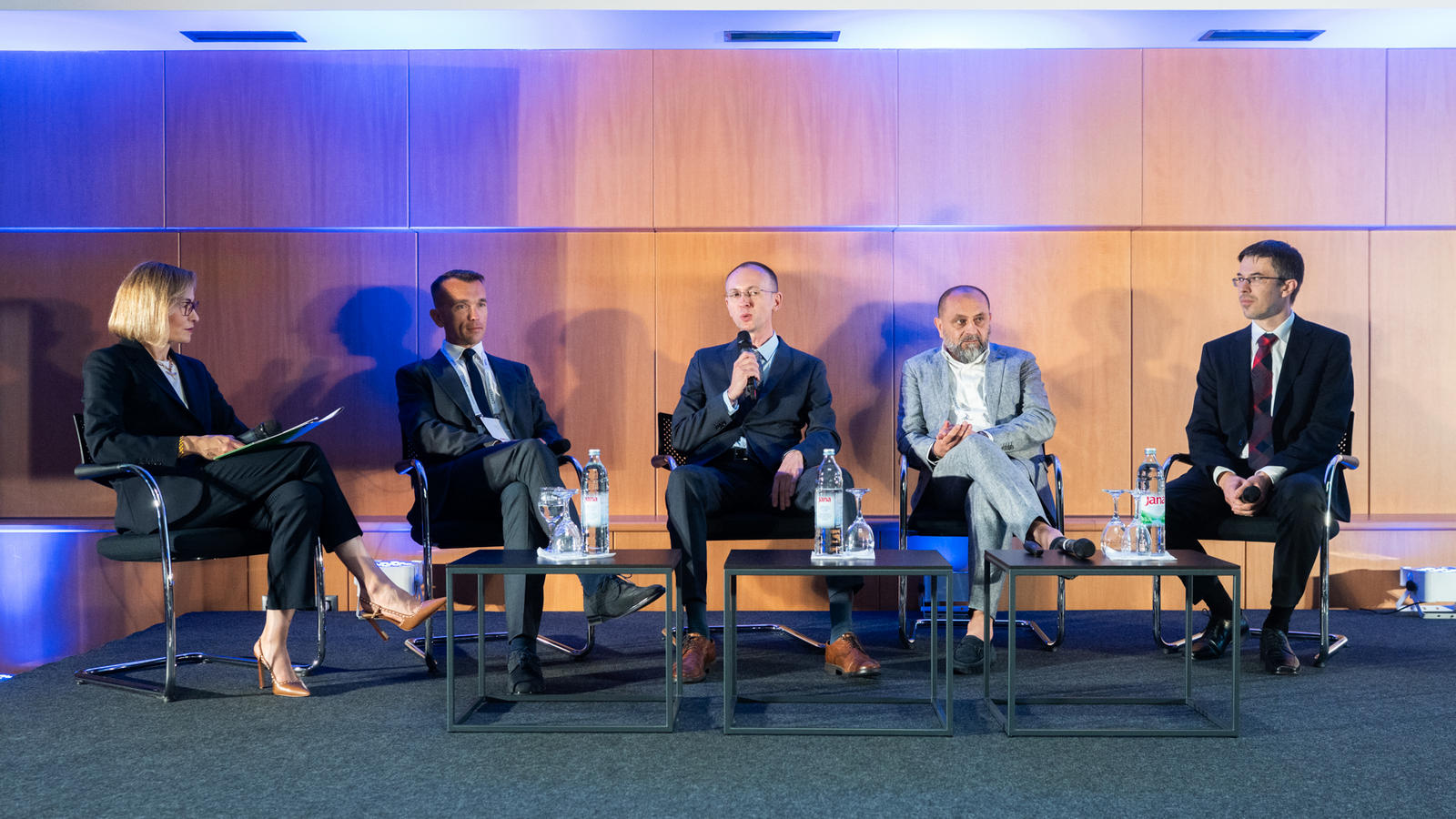
The final event of the Croatian Quantum Communication Infrastructure project, CroQCI, presented the results of one of Croatia’s most important national advances in the field of secure next-generation communications. The project has laid the foundations for the development of quantum communication infrastructure in Croatia, as part of the broader European EuroQCI initiative, which aims to build secure communication networks resilient to the threats posed by the development of quantum computers.
Through the project, elements of a quantum communication network were developed and tested, along with the architecture of the future national QCI infrastructure, terrestrial optical infrastructure, solutions for cryptographic key management, and options for connecting to the future space component of quantum communication. In this way, Croatia has created the prerequisites for connecting to the European quantum communication infrastructure and for participating in the development of a new generation of secure digital networks.
The Ruđer Bošković Institute served as the scientific lead in the CroQCI project, providing expertise in quantum optics, photonics, and quantum communications. The Institute’s participation in this project is a natural continuation of its many years of scientific work and internationally recognized achievements in the field of quantum technologies.
A particularly important milestone was achieved in 2021, when the first demonstration of international quantum communication between three countries, Italy, Slovenia, and Croatia, was successfully carried out as part of the G20 member countries’ meeting in Italy. The Croatian part of the demonstration was led by the Ruđer Bošković Institute, the Faculty of Transport and Traffic Sciences of the University of Zagreb, and Transmitters and Communications Ltd. This achievement demonstrated that Croatia has the knowledge, people, and institutions capable of participating in the most demanding European technological ventures, while also serving as an important precursor to today’s European EuroQCI initiative.
“The CroQCI project is an important example of how long-term investment in scientific excellence, research infrastructure, and internationally competitive projects can be transformed into a concrete contribution to the development of strategic national capacities. For the Ruđer Bošković Institute, participation in this project confirms that scientific institutions play a key role in shaping technologies that will be important for Croatia’s security, resilience, and technological sovereignty. We are particularly pleased that this contribution is being made within a strong consortium led by CARNET, through cooperation between the scientific community, public bodies, and technology partners,” said Dr Marijeta Kralj, Assistant Director of the Ruđer Bošković Institute, in her welcoming address.
“Through the successful implementation of a quantum communication network between eight locations in the City of Zagreb, together with the demonstration of real-world use cases in a production environment, from data centre infrastructure to end-user applications, we have shown that quantum communications are no longer exclusively within the domain of laboratory research. The CroQCI project brought together institutional multidisciplinary expertise in photonics, quantum optics, quantum communications, the development and management of conventional telecommunications networks, cryptography, and network and computer security in general. We integrated quantum technologies as an additional layer into classical telecommunications network systems and cryptographic mechanisms, significantly increasing their level of security against anticipated future cyberattacks by quantum computers,” said Bojan Schmidt, CroQCI Project Manager and Head of the Technology Application and Integration Service in CARNET’s Artificial Intelligence Sector.
“Building on the scientific results we had previously achieved internationally, including the construction of the first, and at that time globally unique, quantum communication network based on quantum entanglement in Bristol in 2019, followed by the demonstration of the first quantum communication between Italy, Slovenia, and Croatia within the framework of the prestigious G20 member countries’ meeting in 2021, we brought this knowledge into CroQCI. We developed and built Croatian quantum communication systems and the first Croatian network for ultra-secure communications, whose security is based on the laws of quantum physics,” said Dr Martin Lončarić, physicist at the Ruđer Bošković Institute and scientific lead of CroQCI.
For the Ruđer Bošković Institute, CroQCI is also an example of how long-term investment in excellence, research infrastructure, and internationally competitive projects can be translated into a concrete contribution to the development of national strategic capacities. Projects funded under Horizon 2020, Horizon Europe, and the European Structural and Investment Funds, as well as the major infrastructure project Open Scientific Infrastructure Platforms for Innovative Applications in the Economy, O-ZIP, have laid important foundations for the Institute’s current role in the field of quantum communications.
The development of quantum communication infrastructure responds to one of the most important security challenges of the digital age: how to protect data, communication channels, and critical systems in the long term in a world where quantum computers will be able to compromise some of today’s cryptographic methods. The CroQCI project is therefore not only a research and technology project, but also a strategic investment in Croatia’s digital resilience. The project results provide a foundation for the further development of secure next-generation communication systems.
CroQCI brought together relevant national expertise, from quantum optics, photonics, and quantum communications to telecommunications networks, cryptography, and computer and network security. This multidisciplinary approach is essential for developing infrastructure capable of responding to the complex challenges of the future.
The project, with a total value of EUR 9.9 million, was funded by the Digital Europe Programme, with national co-financing and support from the Ministry of Science, Education and Youth. The project coordinator is the Croatian Academic and Research Network, CARNET, while scientific leadership was provided by the Ruđer Bošković Institute. Project partners include the University Computing Centre, University of Zagreb, SRCE; the Institute of Physics; the Faculty of Electrical Engineering and Computing, University of Zagreb; the Faculty of Transport and Traffic Sciences, University of Zagreb; Transmitters and Communications Ltd.; and the Office of the National Security Council.