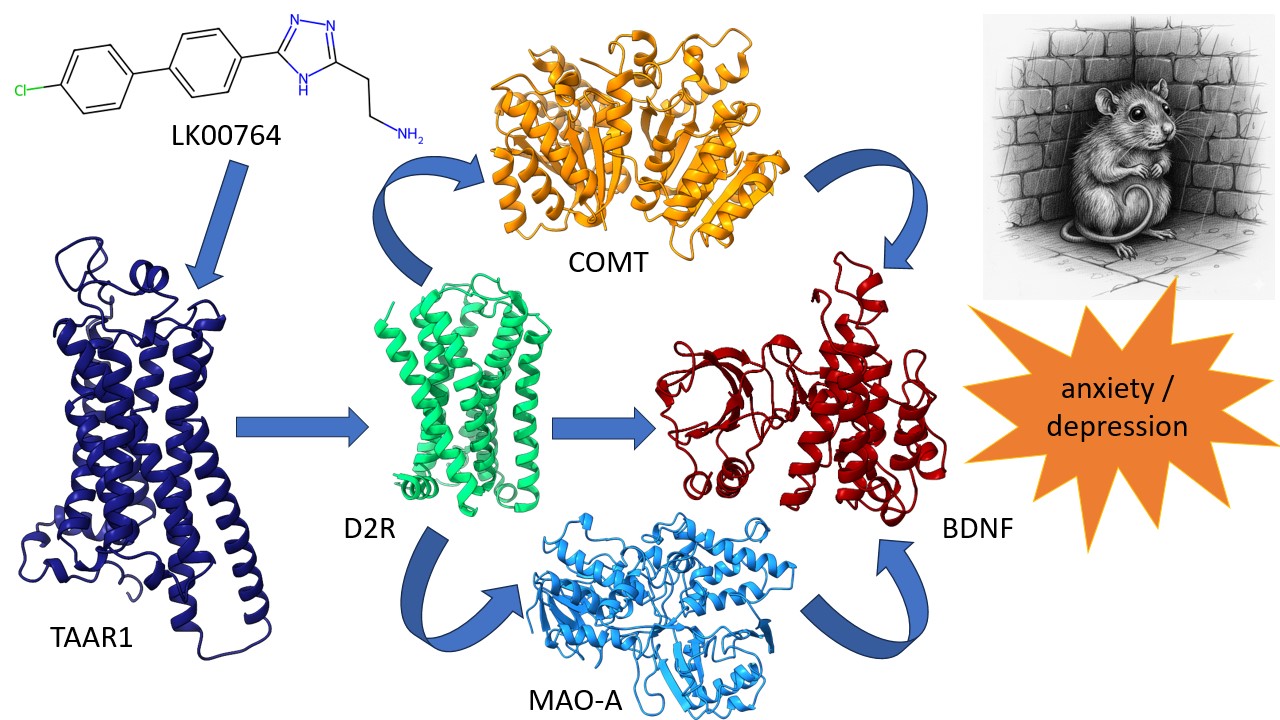
Why Complex PTSD Demands New Solutions
Complex post-traumatic stress disorder (C-PTSD) is distinct from traditional PTSD. It is characterized not only by re-experiencing, avoidance, and hyperarousal, but also by:
- chronic emotional dysregulation
- difficulties in self-identity
- disturbances in interpersonal functioning
- long-term trauma exposure, often beginning early in life
Existing pharmacological treatments provide only partial relief for many patients. There is a clear need for novel, mechanism-informed therapeutics.
This is where the TAAR1 receptor system enters the picture.
TAAR1: A Promising but Underexplored Target
Trace Amine-Associated Receptor 1 (TAAR1) has gained significant research attention in recent years due to its involvement in:
- stress response and emotional regulation
- monoaminergic modulation
- inflammation and neuroimmune pathways
- sleep, motivation, and cognitive flexibility
Unlike traditional neurotransmitter receptors, TAAR1 operates at the intersection of neuromodulation and stress physiology — making it a fascinating target for disorders rooted in dysregulated threat processing.
Key Contributions of Our Article
- Our paper brings together the latest research on TAAR1 biology and its therapeutic potential for C-PTSD, highlighting:
- We discuss how TAAR1 agonists may help normalize disrupted neural circuits associated with chronic trauma.
- The review covers emerging pharmacological data from animal models and early-phase human studies.
- TAAR1 agonists demonstrate potential for improving emotional regulation, reducing intrusive symptoms, and modulating stress-related neurochemical pathways.
- We outline critical next steps for translating TAAR1-targeted therapies into clinical practice — from biomarker identification to personalized medicine approaches.
Why This Work Matters
Complex PTSD affects millions worldwide and remains one of the most challenging conditions to treat. By examining the role of TAAR1, we aim to highlight a therapeutic path that:
- is biologically grounded
- targets core features of chronic trauma adaptation
- may complement or enhance existing treatment modalities
Our hope is that this work stimulates further research, collaboration, and discussion within both the scientific and clinical communities.
Full article: https://www.mdpi.com/2227-9059/13/12/2972