

IRB develops hands-on machine learning exercises and a co-design framework for digital services within the SUSA project
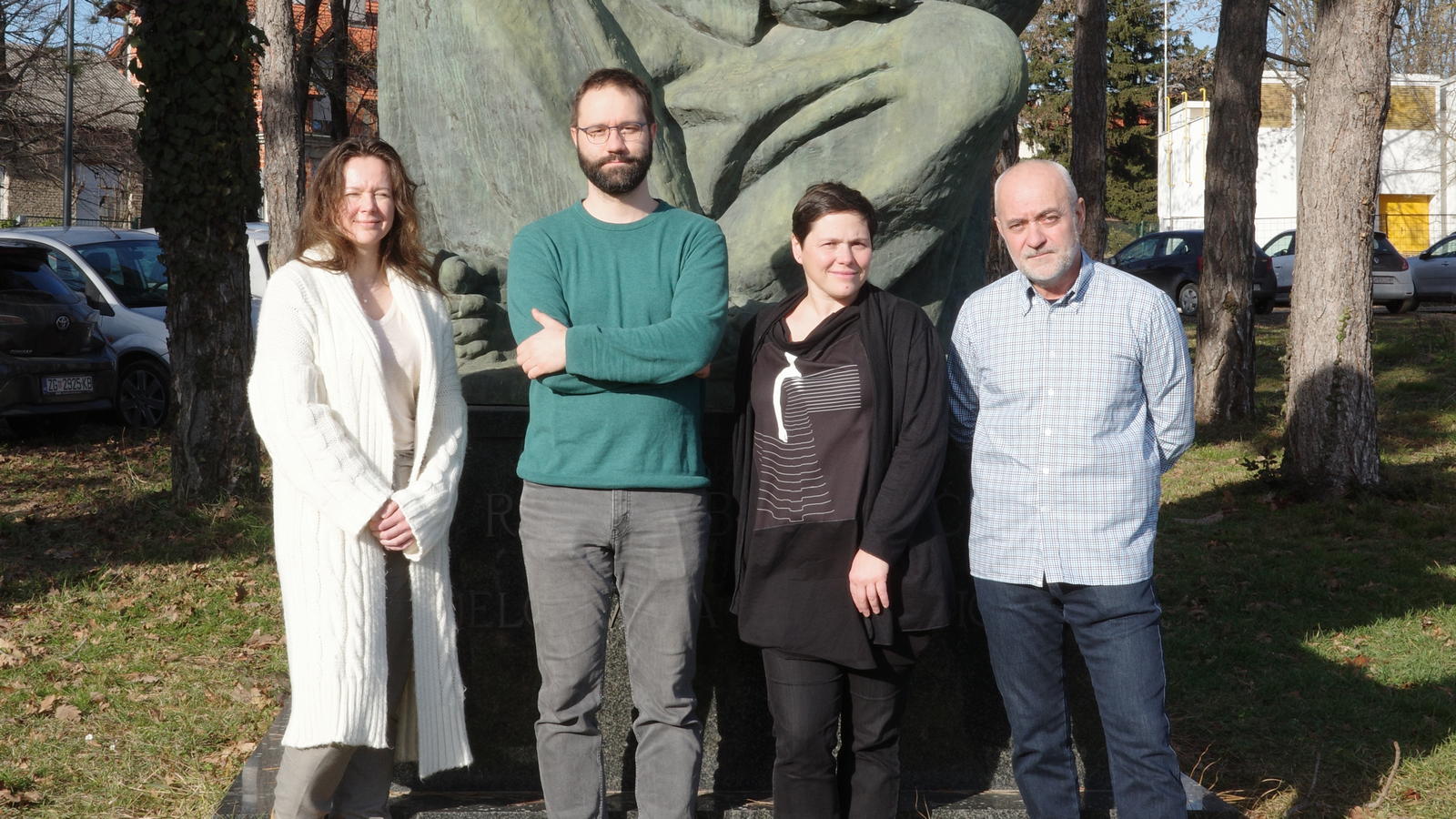
Ilona Kulikovskikh, Matija Piškorec, Anja Barešić and Tomislav Šmuc.
The pan-European SUSA project (Sustainable Healthcare with Digital Health Data Competence) has launched one of the most ambitious educational initiatives aimed at closing the digital skills gap in Europe’s healthcare sector. The consortium brings together 21 partners with the goal of developing modern study programmes and lifelong learning in the field of digital health. The Ruđer Bošković Institute (RBI) participates in SUSA as the consortium’s only research partner.
The RBI team includes scientists from the Division of Electronics: Dr Tomislav Šmuc, Dr Anja Barešić, Dr Ilona Kulikovskikh, and Dr Matija Piškorec.
Within the project, RBI will develop practical (hands-on) machine learning exercises for students in biomedical disciplines, focusing on real-world applications in data analysis and digital health. In addition, it will develop a new framework for the co-design of digital services in healthcare and biomedical domains, to better align digital solutions with the needs of users, systems, and the profession. RBI will also provide research internships for students involved in the project, strengthening knowledge transfer from the research environment into education and future practice.
Implemented across nine European countries, the project aims to train 6,558 students by its completion and to further upskill 660 healthcare professionals with advanced digital health competencies. The SUSA model is built around 20 shared learning outcomes, promotes collaborative and data-driven learning, and supports the broader European vision of a more sustainable and healthier society.
Academia–industry collaboration: a focus on applicable digital skills
Notable examples of collaboration include integrating the European Health Data Space (EHDS) concept into teaching through hybrid lectures and interactive workshops, evaluating learning outcomes, and launching a cross-border virtual laboratory for signal processing and spectral analysis in cooperation with the University of Zagreb. The aim is to strengthen practical skills, digital literacy, and inclusive design in education.
Project partners are already reporting tangible results: from new courses and multimedia educational resources (e.g., University College Dublin), to demonstrations of platforms for remote patient monitoring (Gnomon Informatics), to the launch of new study programmes in medical engineering, informatics, and precision medicine (Aristotle University of Thessaloniki). In the 2025/2026 academic year, the University of Zagreb will launch a joint graduate programme in biomedical engineering, while partners are also increasing SUSA’s visibility at European digital skills forums.
By participating in SUSA, RBI further reaffirms its role in developing competencies at the intersection of artificial intelligence, biomedicine, and digital health, with a particular emphasis on applied knowledge, interdisciplinarity, and involving students in research work.