

Following Meeting in Japan, Key Steps Confirmed for the Further Development of the DONES Programme
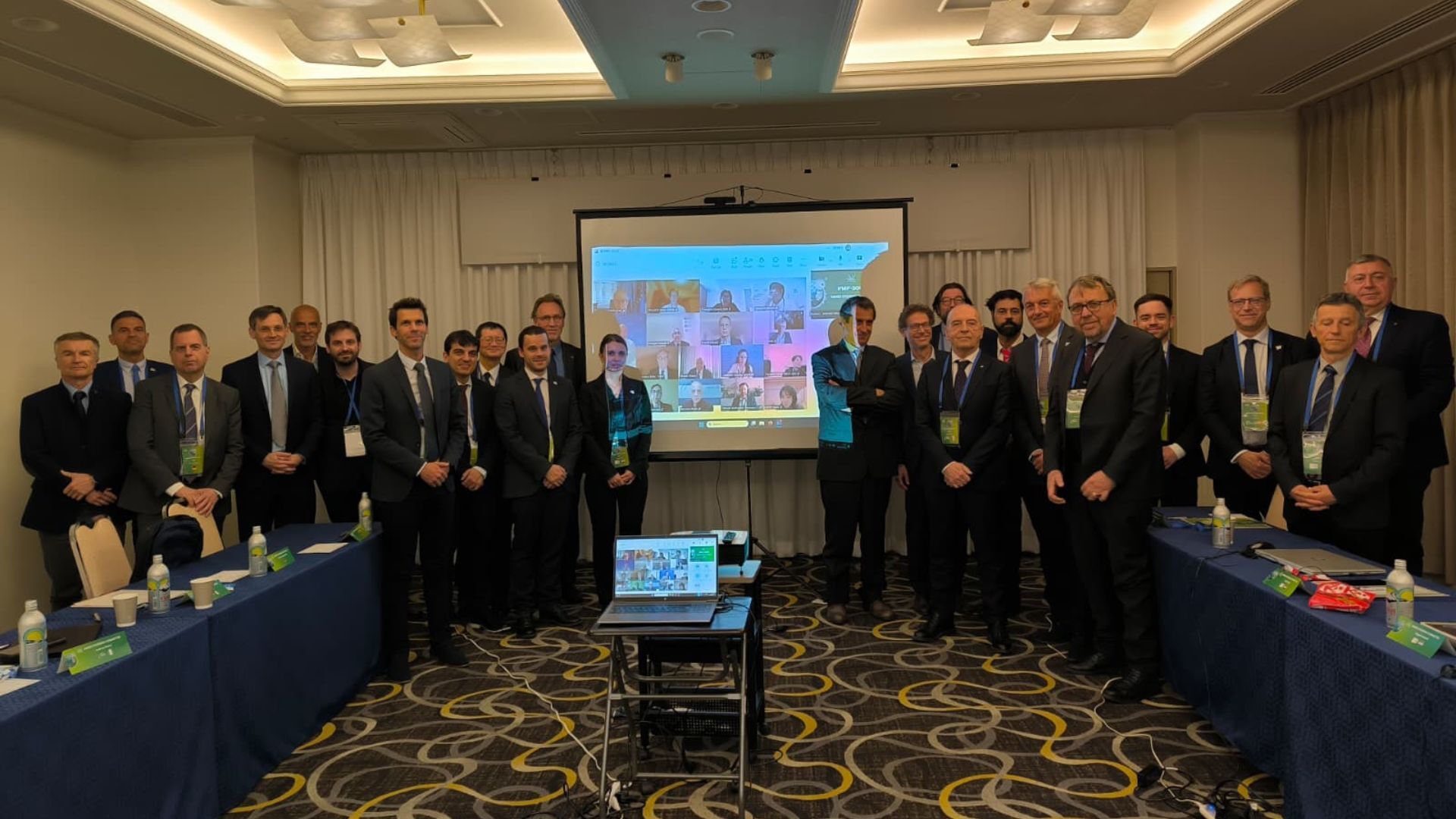
At a meeting of the DONES Programme Steering Committee, held in the Japanese city of Misawa, key steps were confirmed for the further development of the international DONES Programme, one of Europe’s most important projects for the future of fusion energy.
Among the key decisions taken at the meeting, Philippe Cara was appointed Programme Manager, Ivan Podadera was appointed Technical Director, and the establishment of the Scientific and Technical Advisory Committee (STAC) was officially confirmed, together with two thematic working groups: one on intellectual property protection and one on the experimental programme.
The meeting brought together representatives of 14 countries, including delegates and experts from the five DONES Programme parties — IFMIF-DONES España, the Ruđer Bošković Institute, QST, F4E and INFN — as well as officials from the European Commission and EUROfusion. The meeting was originally scheduled to take place at the QST Rokkasho Institute, but was moved to Misawa following a safety warning after the earthquake of 20 April.
Progress of the DONES Programme and Key Decisions
The Steering Committee reviewed the progress of the DONES Programme, with a particular focus on the revision of key governance documents and the adoption of the 2025 Annual Report, which summarises the achievements and progress made over the past year, as well as the Work Plan for 2026.
“It is important to distinguish between the IFMIF-DONES experimental facility and the facility utilisation programme, which is called DONES. The goal is not only to build the facility, but to plan its use over several decades in fusion research, as well as beyond fusion,” said Dr Tonči Tadić, National Coordinator for DONES.
“The IFMIF-DONES facility will be crucial for testing the resistance of materials to intense neutron radiation, such as that expected in the future European DEMO fusion power plant. However, the DONES Programme also envisages use of the facility in research beyond fusion. Additional research areas range from biomedicine and the production of medical isotopes, through research in nuclear physics and astrophysics, to studies of material structure and industrial neutron tomography. The task of the newly established STAC is to coordinate all of this.”
Particular attention was given to the progress made in preparations for the delivery of IFMIF-DONES facility components being prepared by Spain, Euratom and Croatia. Cooperation between the Croatian and Spanish teams is progressing well, and technical specifications for two thirds of the Croatian components have either been defined or are close to completion. The delivery of Croatian components is expected in the 2029–2030 period.
Croatian Equipment for IFMIF-DONES Expected in Granada in 2029–2030
The meeting also presented the schedule of upcoming Design Reviews for equipment to be delivered to the facility by member countries. Croatia will deliver special HROC and ACMC cranes with remotely operated equipment for facility maintenance, heat exchanger systems for cooling the molten lithium curtain, and four modules in the TIR section for diagnostics of the accelerated ion beam and the molten lithium curtain. The equipment will be delivered by the Ruđer Bošković Institute, which acts as the national Implementing Agency for DONES.
The design of the Croatian components is being jointly developed by the Ruđer Bošković Institute, the Institute of Physics, the Faculty of Mechanical Engineering and Naval Architecture of the University of Zagreb, and the Mechanical Engineering Faculty of the University of Slavonski Brod.
“The equipment delivery procedure is very strict and is based on the procedure used by the European agency Fusion for Energy, F4E. The final decision on quality at each stage of design and production is not made by Croatia alone, but by joint Design Review panels composed of the DONES Programme Management and all members,” said Dr Tadić. “We expect everything to proceed smoothly and for our equipment to arrive in Granada on time, in the 2029–2030 period.”
The IFMIF-DONES facility has been included in the ESFRI Roadmap as infrastructure of strategic importance for the EU. This means that it must have a regulated user access system and that its construction must be aligned with European radiation protection regulations. Each member country also hosts a number of devices supporting the DONES Programme, including equipment at the Ruđer Bošković Institute.
DONES Programme Director Philippe Cara also reported on the work of the Programme’s dedicated working groups: one on intellectual property and one on the experimental programme at the IFMIF-DONES facility. Representatives of the Ruđer Bošković Institute participate in both working groups. It is necessary to define the protection of intellectual property of DONES members that will conduct separate experiments at the IFMIF-DONES facility or provide services to the private sector within their allocated quota. Croatia, Italy and Japan each have a reserved 5 percent experimental quota at the facility. Of particular importance is the fact that the Ruđer Bošković Institute, on behalf of the other members, collects and maintains a dedicated database of potential experiments at the IFMIF-DONES facility.
Interest from New Countries in Joining the Programme
The extension of observer status for another year was also confirmed for several current observers, while the participation of the Polish consortium Scientific and Industrial Center for New Energy Technologies, CeNTE, as an observer in the Steering Committee was agreed.
“The accession of new members to the DONES Programme does not change the position of Croatia, Italy or Japan. It is likely that, in the interest of future new members — for example Germany or France — Spain’s share would be reduced, although it is also possible that the partners may decide to build a second ion accelerator,” said Dr Tadić.
“For now, funding has been secured for one accelerator at the IFMIF-DONES facility. If both accelerators are built, as envisaged in the facility’s long-term development plan, this would halve the duration of all experiments because we would have twice the neutron intensity. All the equipment we are delivering has been designed with the expectation that we will first have one accelerator, and then both.”
The next meeting of the DONES Programme Steering Committee will be held in Granada in October 2026.