
Frontiers for Young Minds is an international journal published by Frontiers, with significant social reach, intended for students, teachers, and science enthusiasts, created around the idea that scientific discoveries should not remain closed within the academic community. The journal publishes age-appropriate, educational versions of current research for readers aged eight to fifteen, it helps young readers understand specific scientific topics, it encourages critical thinking, and it sparks interest in different fields of science. It is also distinguished by its review process, in which young readers, guided by mentors, assess whether the text is clear and engaging. In this way, young people are educated while also being actively included in the scientific process.
This is the second article by these IRB scientists in the journal. The first, published in 2024, dealt with transposons, mobile genetic elements that can change position within the genome, and the new article focuses on satellite DNA.
What Is the “Dark Matter of the Genome”?
When they hear the word genome, most people think of genes, but genes usually make up less than 2% of total DNA. The rest was long considered useless, a kind of genetic ballast that in science communication came to be called the “dark matter of the genome”, drawing an analogy with astronomy, where dark matter makes up most of the universe and for a long time was unknown and poorly understood. In the “dark matter of the genome”, satellite DNA and transposons usually dominate, the sequences addressed in these two articles.
Satellite DNA consists of short segments that repeat thousands of times throughout the genome. The name comes from early experiments in the 1960s, when, during DNA isolation, this part separated as a distinct “satellite” component. For a long time, these repeating segments seemed like the most boring part of the genome, but thanks to the development of new DNA sequencing methods, knowledge about their roles is advancing rapidly.
Why Is the “Dark Matter of the Genome” Important?
DNA sequences that repeat in tandem share a common feature, they are the fastest-changing components of the genome, where cellular mechanisms can quickly alter the length of the arrays. The consequences of these changes are far-reaching, and every organism has its own composition of satellite DNA, which influences the evolution and function of the genome and thus contributes to biodiversity on Earth.
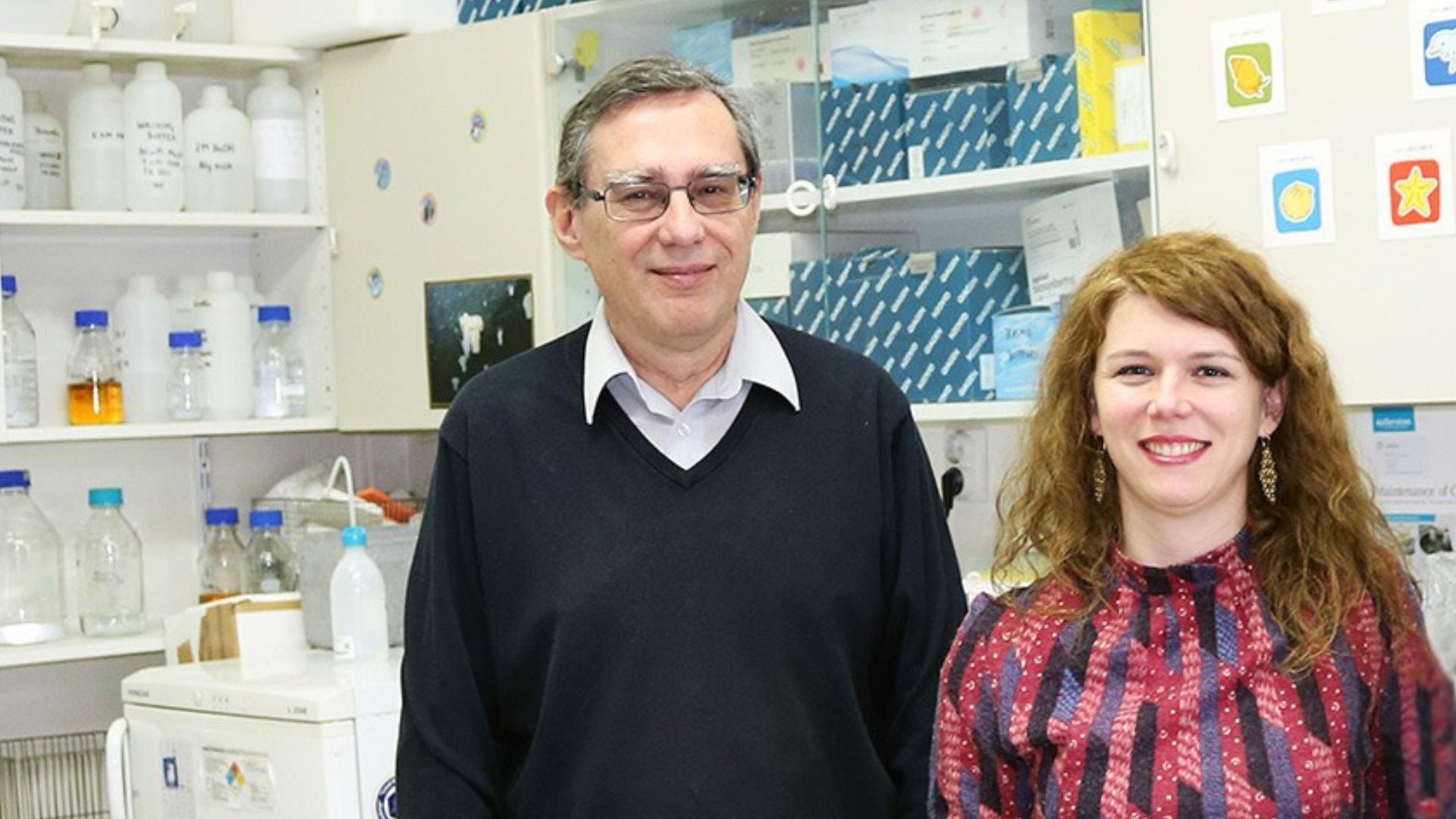
“At the cellular level, satellite DNA performs several key functions”, Šatović-Vukšić emphasizes. “For example, it helps ensure the proper distribution of genetic material during cell division because it is found in centromeres, parts of chromosomes where a complex protein structure is built that is responsible for separating chromosomes into new cells. Errors in this process result in serious problems for the cell and the entire organism.” Satellite DNA can also help organisms survive unfavorable conditions. Stress can be caused by environmental changes, exposure to toxic chemicals, or other factors. When cells are under stress, complex mechanisms involving satellite DNA repeats are activated or silenced, helping the organism regulate many processes.
“Changes in the number of repeats in some human satellite DNA are associated with certain diseases”, Plohl said. The number of repeats can be a marker for some diseases, and changes in array length can predict the severity of symptoms. Understanding the dynamics of satellite DNA changes therefore becomes important for understanding the mechanisms that keep our bodies healthy. Research in rodents has shown that microsatellites, satellite DNA with very short repeat units, can also influence social behavior. In voles, the number of repeats in front of a particular gene affects how social the animals are, a larger number of repeats leads to a tendency to form close bonds with other individuals.
Microsatellites are scattered throughout the genome, and the lengths of their arrays are unique to each individual, forming what we know as a “DNA fingerprint”. DNA fingerprinting is routinely carried out in laboratories and is used in forensics to match DNA found at a crime scene with a suspect’s DNA, and also to establish relatedness.
Emphasis on Science for Young People
In schools, the genome is mostly taught through genes, and the rest of DNA is rarely mentioned. Satellite DNA, although it makes up a significant part of the genome, often remains insufficiently explained. Articles like this, written for children and young people aged 8 to 15, offer an opportunity to change that from an early age. In this case, it is achieved by adapting the language without losing scientific accuracy, through a visually enriched and interactive process.
“We believe that this form of science communication represents a valuable contribution to education and to fostering interest in science among younger age groups”, Šatović-Vukšić noted.
The peer-review process is highly educational for everyone because scientists receive feedback that pushes them to think from the perspective of a young reader. It is an opportunity to improve clear and responsible science communication. And the young reviewer discovers that science is not a textbook with ready-made answers, but a dynamic process in which their questions “how?” and “why?” also make sense.