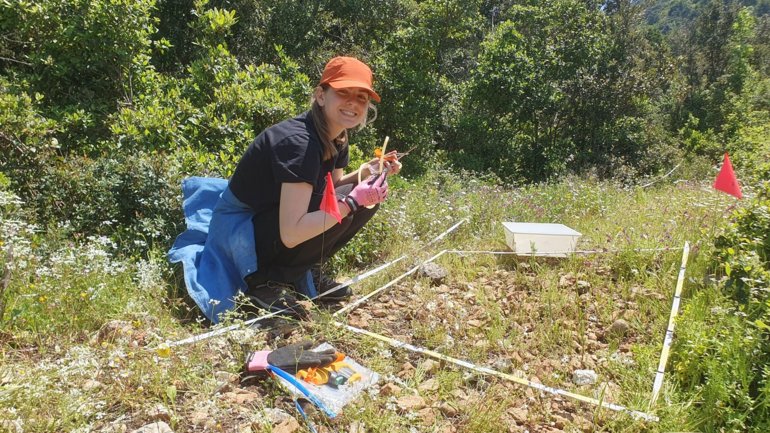

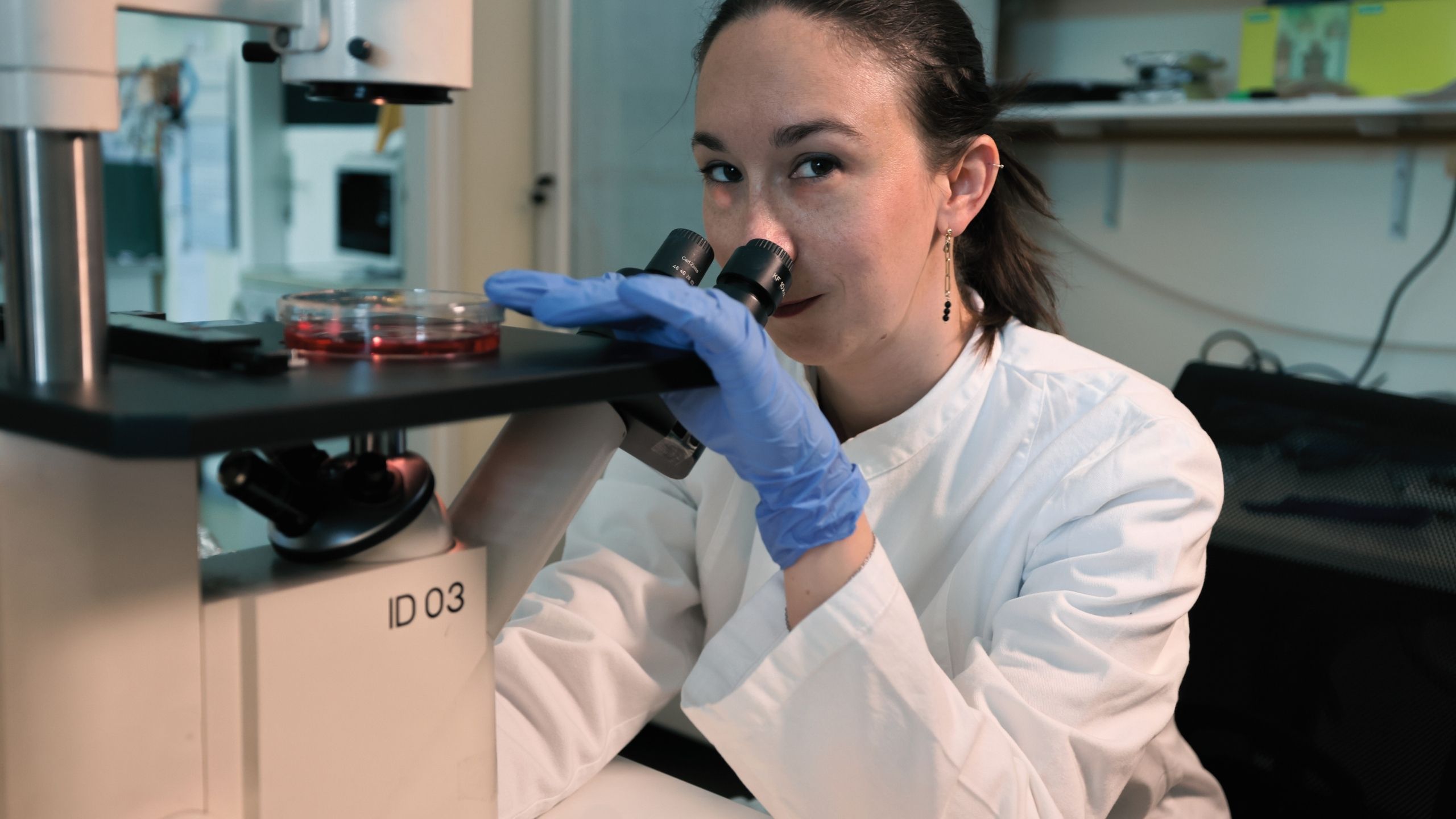
In one sentence, Sonja confirms what we have already stated, “My field of science studies how our body defends itself against infectious diseases, but also what happens when the immune system does not work well and allergies, autoimmune diseases, or tumors develop.”
Immunity is not a “separate system,” it is a hub for everything
Today, Sonja works as a research associate at the Ruđer Bošković Institute, at the Department of Molecular Medicine, in the Laboratory for Personalized Medicine. When she was just starting out, what surprised her most was the fact that the immune system is not a story unto itself. It is connected to other parts of the body, such as metabolism, the nervous system, or hormones, and it is constantly “talking” to other systems.
The second surprise came with a deeper understanding of immunology itself, the same types of cells can play completely different roles depending on where they are, in which tissue, and in what context. In laboratory practice, this means nothing is black and white, because the same signal in one environment can trigger defense, and in another can cause harm.
This way of thinking, which presents immunity as a system of fine tuning rather than a system that switches on at the flip of a switch, is now crucial for oncology as well.
Who responds when a tumor dies?
Sonja’s current research focus can be summed up in one almost cinematic question, can the death of a tumor cell “alarm” the immune system to attack the tumor, or can it, paradoxically, help the tumor develop and spread more easily?
In other words, not every cell death is the same. Sometimes it is a quiet shutdown with no consequences, and sometimes it is an event that sends danger signals, as if a siren goes off in the tissue. The immune system then has to decide whether to launch a counterattack or, under certain conditions, respond in a way that benefits the tumor.
Within her project, Sonja studies precisely the signals that appear after cell death, and then observes how immune cells recognize those signals and how they respond.
An important part of the job is also what is often skipped in the popular image of science, methodical work that makes it possible to see precisely what is happening inside cells and tissues. It is done step by step, without too much improvisation, with clearly measurable changes. This is exactly where it is decided whether an idea will remain an interesting hypothesis or become a mechanism that can be used in treatment.
Future therapies will not be “stronger,” but more precise
In oncology, it has long been known that it is not enough to attack a tumor, it is important to understand how the tumor communicates with its environment, including immune cells. That is why knowledge of how the immune system responds to a tumor, and to the signals coming from the tumor, is the foundation for developing smarter therapies.
“Better understanding of these mechanisms opens the path to more precise and more effective therapies, which in the future could offer greater efficacy and fewer side effects,” Sonja tells us.
At a time when the word immunity is often reduced to internet advice and short recipes for boosting it, the work of Dr. sc. Sonja Marinović is a reminder that the immune system is not something you simply strengthen, it is something you must understand.
Because in the context of tumors, sometimes we are not looking for stronger immunity, but for more accurate immunity, the kind that will recognize the right signal at the right moment, and choose the side that saves tissue, not the one that unknowingly helps disease.