
In one sentence, her field can be summed up like this, she investigates how stressors such as pollution and elevated temperature affect ant behavior.
The queen’s longevity and the colony’s “logistics”
One of the first surprises in this field was the discovery that the queen of the black garden ant, Lasius niger, can live for more than 25 years. But even more than individual facts, what fascinates the researcher is the way ants function as a community, their communication, division of labor, and coordination within the colony. Precisely by studying such behavioral patterns, she says, we can learn a great deal that we can also recognize in everyday life.
A PhD as a series of projects, insecticides and climate
Antonia Smolić PhD consists of several different projects, and she is currently especially excited because she will soon begin an experiment in which she will track the effects of a commonly used insecticide on ant behavior. The species in question is Mediterranean, it mostly inhabits trees and lives in twigs, it is not a pest, and it can be beneficial to people because it feeds on pests that often cause problems.
In addition to her doctoral work, she also participates in the project “Adriatic islands as natural laboratories of climate change, are insects resilient to global warming?”, which examines how ants use microclimates and whether they can avoid elevated temperatures through changes in behavior and physiology.
From planning to fieldwork, “it takes a village”
In the part of the research related to her PhD, she is involved in all stages of work, from planning and procuring equipment, through designing experiments, to caring for the ants. Although a PhD is often perceived as an individual path, she emphasizes that high quality work is hard to imagine without a good mentor, collaborators, and support from one’s surroundings.
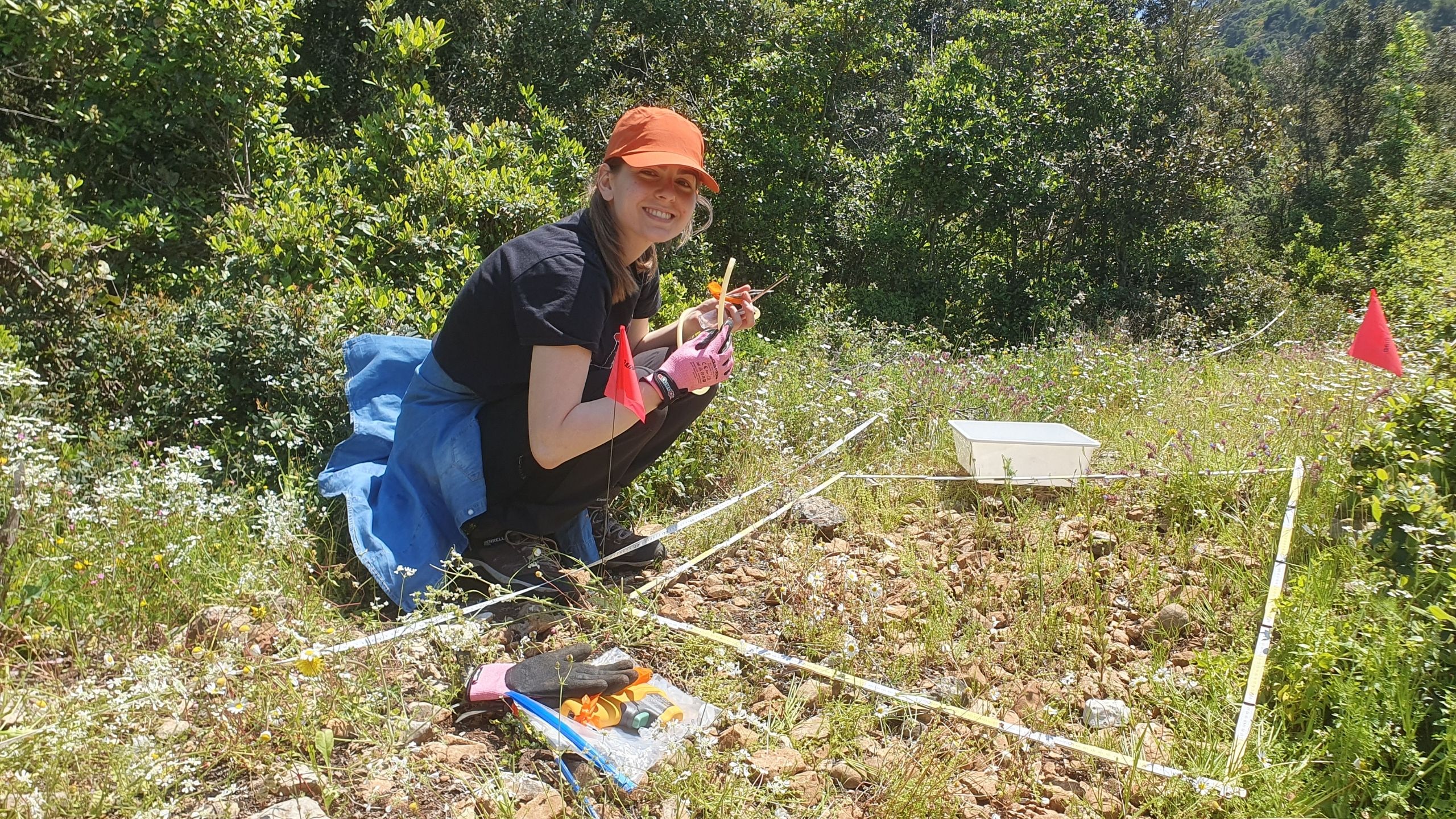
In the Adriatic islands project, she helps as much as she can, from preparing the terrain for recording with a drone and thermal camera, through standardized ant sampling, to laboratory work after returning from the field.
Why are ants important indicators of change?
This research helps us understand how global warming and pollution affect insects, and therefore ecosystems. Ants play multiple roles in nature, they are often called ecosystem engineers, because by building anthills they aerate the soil and enrich it with nutrients, and they also contribute to the dispersal of the seeds of many plants.
In addition, ant colonies can persist in the same place for years, even decades, which makes them excellent for tracking long term changes and the cumulative effects of environmental stressors. That is why ants are not only interesting, they are also a valuable “tool” for understanding a changing world, often one that is changing faster than we think.