
However, scientists at the Ruđer Bošković Institute show that theoretical physics can be something entirely different, a foundation for developing advanced medical technologies.
With exactly that idea in mind, the Micro4Nano project was developed, focused on creating multifunctional nanocarriers, microscopic systems thousands of times thinner than a human hair, that can be used for precise tissue imaging or targeted drug delivery.
“Our task in the project is to explain the behaviour of materials at the quantum and nanoscale,” explains Dr Ivor Lončarić, RBI’s principal investigator on the project. “Put simply, we study how these materials behave at the level of individual atoms and molecules, because those properties determine whether a nanocarrier will successfully find its target in the body or bind to something else.”
While most of the project consortium focuses on experimental aspects, the RBI team makes a key contribution through theoretical modelling and simulations. Thanks to these simulations, experimental teams can design materials with precisely the desired properties more efficiently, from colours that glow under specific light, to capsules that dissolve only in the presence of particular cells.
The goal is more than ambitious, to enable nanocarriers to deliver a drug only to tumour cells, without damaging healthy tissue, which would be a major step toward personalised and less invasive medicine. Technology for nonlinear microscopy is also being developed, enabling detailed observation of living cells and tissues in three dimensions, with extraordinary precision.
Young researchers as drivers of change
Young researchers play a special role in the project. Through exchange programmes known as secondments, scientists spend months at partner institutions around the world.
Two RBI PhD students spent several weeks at a pharmaceutical research institute in Malaysia, where they not only gained new knowledge but also ran workshops on simulations and machine learning. For one of them, it was their first contact with pharmaceutical research and their first experience organising an educational event. For the other, who had never been outside Europe before, the experience showed that science is done in much the same way everywhere, despite cultural differences.
Science is becoming less individual and more of a team sport. Just like in a team sport, no matter how good the best player is, you will not get far without a strong team.
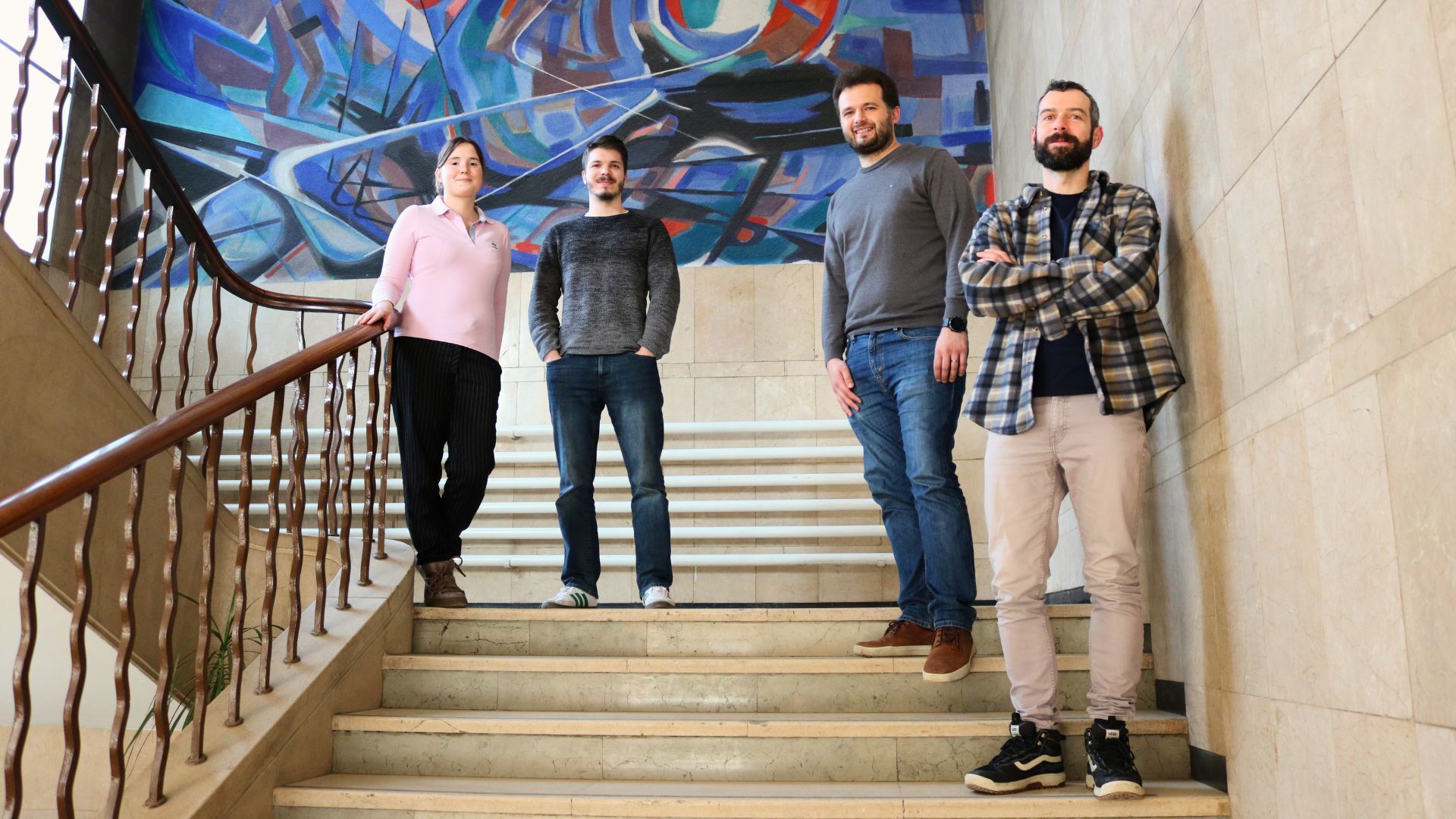
Before Dr Lončarić, the project was led by Dr Luca Grisanti, an Italian scientist from the Division of Theoretical Physics who worked at RBI for several years before returning to Italy. Dr Grisanti highlights the mobility of young scientists as crucial for broadening horizons and accelerating the path to new discoveries. “If you are always in the same environment, you will keep pushing in a similar direction, repeating some of the mistakes others have already made. If you start talking to people doing similar things on the other side of the world, it allows you to see things from a different perspective, changing the way you conduct your research and moving forward much faster,” explains Dr Grisanti.
Interdisciplinarity and people as the strongest tool
Alongside the international experiences of the researchers, the Micro4Nano project is an example of genuine interdisciplinarity, connecting physics, chemistry, biology, and pharmacy. It shows that when synergy is established between different ways of looking at the same problems, theoretical physicists can provide experimentalists with a fundamental physical understanding of their results, while experimentalists offer feedback on what is practically feasible.
At the same time, the project shows that having the most expensive equipment is not a prerequisite for world-class science, the most important resource is people. Knowledge, a willingness to collaborate, and openness to learning are what push the boundaries of what is possible.
“Science is becoming less individual and more of a team sport,” the interviewees emphasise. “Just like in a team sport, no matter how good the best player is, you will not get far without a strong team.”
The Ruđer Bošković Institute certainly has a team that can play in an international league. Through projects such as Micro4Nano, Croatian scientists are not only contributing to the development of advanced technologies for the medicine of the future, they are also confirming that people, their knowledge, creativity, and mutual collaboration, are the strongest tool of any scientific institution.
The Micro4Nano project is funded by the European Union through the Horizon 2020 programme under the Marie Skłodowska-Curie Actions, MSCA-RISE, with a total amount of €795,800 for the period 2021 to 2026.